Wildlife · Marine facts
Are whales mammals?
Yes — cetaceans breathe air, nurse young and are warm-blooded; whales share ancestry with hippos, not fish.
In brief
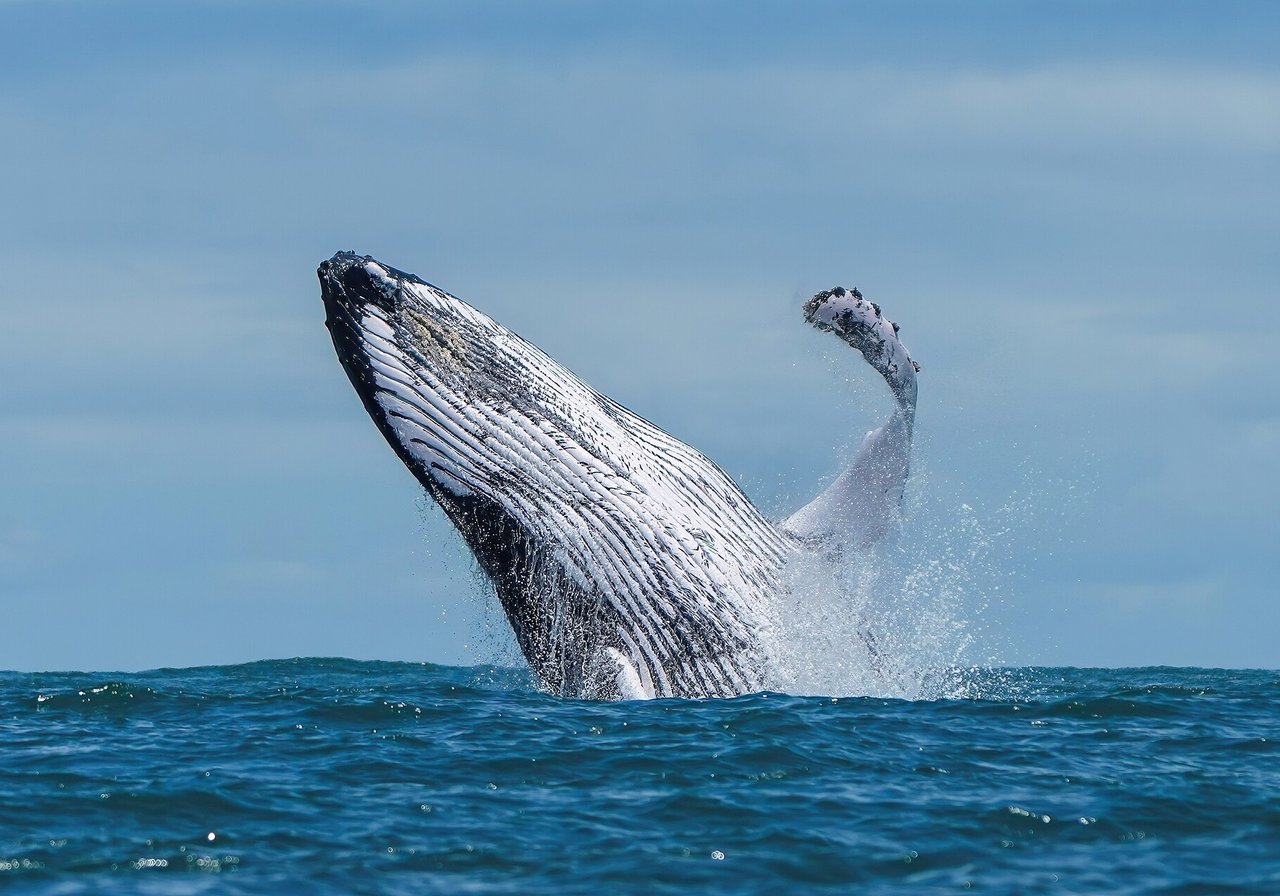
Yes. Whales are marine mammals — they breathe air through lungs, are warm-blooded, give live birth and nurse calves with milk. They belong to the order Cetacea, which includes whales, dolphins and porpoises — all descended from land-dwelling ancestors.
By the WARN Research & Conservation TeamChecked against IUCN Red List & CITES sourcesLast updated
Whales, dolphins and porpoises belong to order Cetacea — fully marine mammals descended from land ancestors roughly 50 million years ago. They breathe through blowholes, bear live young and produce fat-rich milk. Baleen whales filter-feed; toothed whales echolocate. Closest living relatives: hippos — both artiodactyl even-toed ungulates. Fish converged on streamlined shape separately — gills versus lungs fundamental.
90+
Living cetacean species
30 m
Blue whale length — largest animal known
50 Ma
Years since cetacean land-to-sea transition
<400
North Atlantic right whales — Critically Endangered
Quick facts
| Class | Mammalia — not fish |
|---|---|
| Breathing | Lungs — blowhole on skull top |
| Reproduction | Live birth — calf nurses milk |
| Thermoregulation | Warm-blooded — blubber insulation |
| Suborders | Mysticeti baleen; Odontoceti toothed |
| Closest relative | Hippopotamus — shared ancestry |
Key takeaways
- Cetaceans are mammals — not fish.
- Breathe air, warm-blooded, nurse calves.
- Closest relatives: hippos.
- Blue whale largest animal ever known.
- Ship strikes and entanglement major threats.
- See whale guide and dolphin mammal answer.
Mammal traits in marine form
Cetaceans lost hind limbs externally — vestigial pelvis remains internally. Forelimbs became flippers; tail fluke horizontal for propulsion unlike fish vertical tails. Hair absent except vibrissae on rostrum some species. Blubber replaces fur insulation. Must surface to breathe — drowning in fishing gear common mortality.
Evolution from land to sea
Pakicetus and Ambulocetus fossils show transitional limb proportions — whale evolution among best documented in mammals. Molecular clocks align cetaceans with hippos — controversial grouping Cetartiodactyla standard in modern taxonomy. Eocene oceans offered niche for mammalian return to sea.
Modern threats
Ship strikes kill large whales — slow swimmers near ports. Entanglement in crab pots and gillnets drowns right whales and humpbacks. Seismic airguns disrupt communication. Climate change shifts krill distribution — blue whale feeding grounds move poleward. Plastic ingestion documented — sieve feeders accumulate microplastics.
Ecological role
Whale faeces fertilise surface phytoplankton — “whale pump” carbon cycle hypothesis. Apex and filter feeders structure food webs. Recovery of humpbacks after whaling moratorium demonstrates population rebound when killing stops — right whales still decline from gear entanglement.