Wildlife · Marine facts
Are jellyfish fish?
Jellyfish are cnidarians — not fish. No backbone, brain or bones; “jellyfish” is a misleading common name.
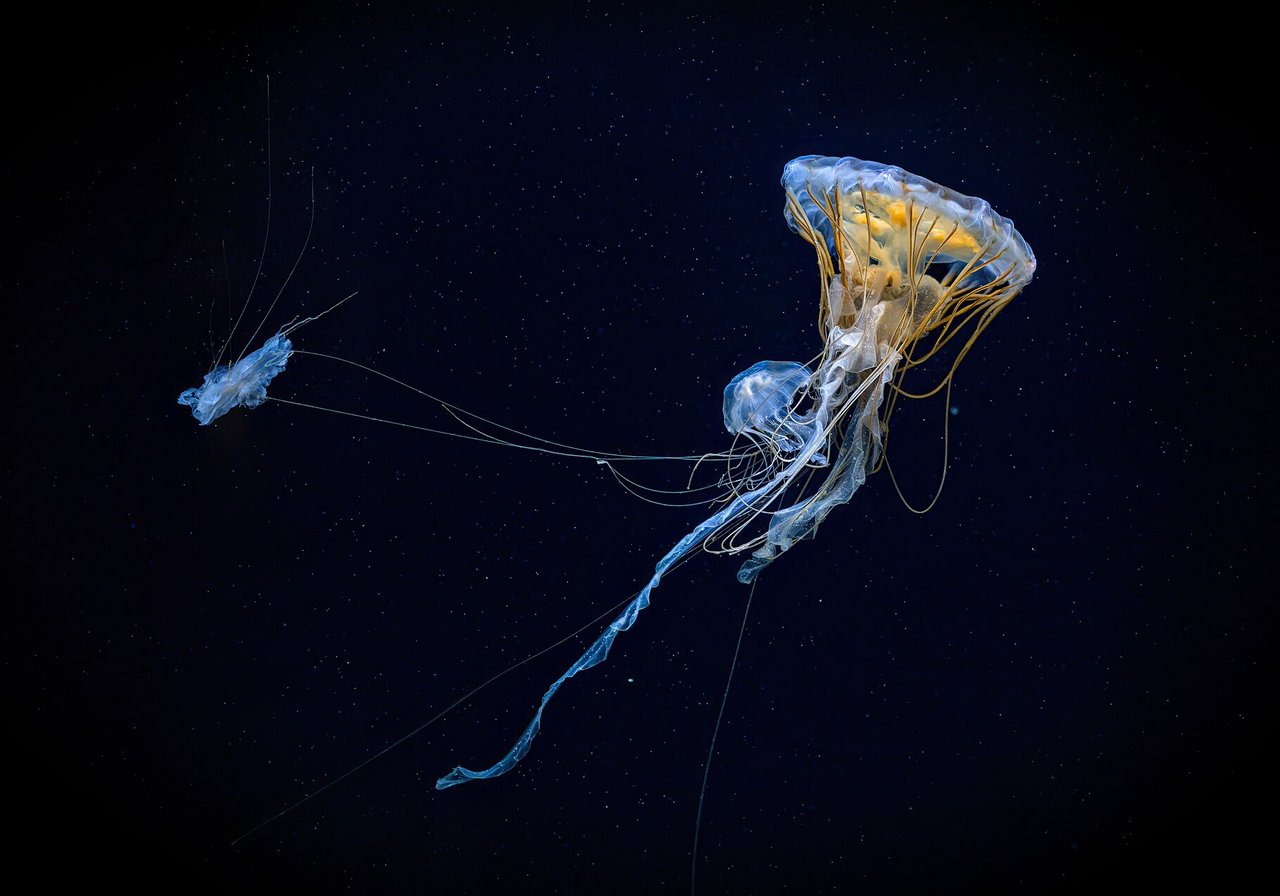
In brief
No. Jellyfish are cnidarians — related to corals and sea anemones, not vertebrate fish. They have no backbone, brain or bones. “Fish” in the name is misleading; biologists often call them “jellies” to avoid confusion.
By the WARN Research & Conservation TeamChecked against IUCN Red List & CITES sourcesLast updated
Jellyfish belong to phylum Cnidaria — the same group as corals and sea anemones — not vertebrate fish. They drift on ocean currents with bell-shaped bodies and trailing tentacles armed with stinging cells (cnidocytes). No brain, bones or gills appear in their anatomy. Biologists often call them “jellies” to avoid confusion. Some species carry venom dangerous to humans — box jellyfish and Irukandji among the deadliest marine animals. Blooms increase when nutrient runoff and overfishing remove predators and competitors.
0
Backbones — invertebrates, not vertebrate fish
95%
Jellyfish body water content
4,000+
Cnidarian species — includes corals and anemones
500M yrs
Approximate cnidarian fossil history
Quick facts
| Phylum | Cnidaria — related to corals and sea anemones |
|---|---|
| Anatomy | Bell, tentacles, stinging cnidocytes — no brain or bones |
| Preferred term | “Jellies” — biologists avoid “fish” in the name |
| Movement | Drift on currents — pulse bell for limited propulsion |
| Venom | Box jellyfish and Irukandji dangerous to humans |
| Blooms | Nutrient runoff and overfishing can trigger population explosions |
Key takeaways
- Cnidarians — not fish, not vertebrates.
- No brain, bones or gills — bell body and stinging tentacles.
- Biologists prefer “jellies” to avoid fish confusion.
- Box jellyfish venom can kill humans — most species mild.
- Blooms linked to nutrient runoff and overfishing.
- Leatherback turtles depend on jellyfish as primary prey.
Why jellyfish are not fish
Fish are vertebrates — animals with backbones, gills for extracting oxygen from water and fins for propulsion. Jellyfish are invertebrate cnidarians with gelatinous mesoglea bodies, radial symmetry and a simple nerve net instead of a central brain. They respire by diffusion through body surfaces — no gills required. Reproduction varies — alternating polyp and medusa life stages in many species. Calling them fish is a linguistic accident from their aquatic habitat, not biological classification. Correct taxonomy matters for conservation policy and fisheries management.
Stinging cells and feeding
Cnidocytes on tentacles discharge harpoons called nematocysts — injecting venom into prey. Most jellies capture zooplankton, fish eggs and small fish; some species trap prey with sticky tentacles instead. Box jellyfish carry venom potent enough to kill humans within minutes — found in Indo-Pacific waters. Moon jellies common in UK waters sting mildly. Blooms — sudden population explosions — occur when nutrient pollution from agriculture fertilises phytoplankton, feeding jelly larvae while overfishing removes predators like sunfish and sea turtles that normally control numbers.
Ecological roles
Jellies are prey for sunfish, leatherback sea turtles, some seabirds and fish species — part of ocean food webs, not merely nuisances. They consume fish eggs and plankton — competing with larval fish when blooms peak. Overfishing that removes jelly predators and competitors can shift ecosystems toward jelly dominance — documented in some overfished seas. Climate change may expand ranges of warm-water species into new regions — affecting fisheries and tourism. Management addresses nutrient pollution and sustainable fishing — not jellyfish in isolation.
Common misconceptions
Dead jellyfish on beaches can still sting — nematocysts fire on contact. Urine does not neutralise stings — rinse with vinegar for box jellyfish per medical guidance, seawater for others. Not all jellies are harmless moon jellies — identify local species before swimming in bloom conditions. Freshwater “jellyfish” (Craspedacusta) are unrelated cnidarians — rare in ponds. Understanding cnidarian biology supports safer beach behaviour and better ocean literacy — WARN’s jellyfish guide links species facts to marine hub context.