Conservation · Marine facts
Why is ocean plastic bad for animals?
Marine plastic kills through ingestion, entanglement and toxic accumulation — at least 800 species affected worldwide.
In brief
Marine animals ingest plastic mistaken for food, entangle in discarded fishing gear and absorb toxic chemicals that accumulate up the food chain. At least 800 species are affected. Microplastics appear in seabirds, whales, turtles and fish consumed by people.
By the WARN Research & Conservation TeamChecked against IUCN Red List & CITES sourcesLast updated
Plastic pollution harms marine animals at every scale — from microplastics in plankton to ghost nets drowning whales. At least 800 species ingest or become entangled in marine debris according to UNEP assessments. Sea turtles mistake bags for jellyfish; albatross chicks starve with stomachs full of bottle caps; filter-feeding whales consume microplastic volumes that enter tissues and blood. Ghost fishing gear kills for years after abandonment. Source reduction matters more than cleanup alone — millions of tonnes enter oceans annually from rivers and coastlines.
800+
Marine species affected by plastic
11M t
Plastic entering oceans annually — estimate
5 mm
Microplastic size threshold — enters food chain
640K t
Ghost fishing gear lost annually — estimate
Quick facts
| Ingestion | Turtles, seabirds, fish and whales eat plastic mistaken for food |
|---|---|
| Entanglement | Ghost nets, six-pack rings, lines — drowning and strangulation |
| Microplastics | Breakdown particles enter tissues — filter feeders especially exposed |
| Chemicals | BPA, phthalates and pollutants accumulate up food chain |
| Ghost gear | Abandoned nets kill fish, seals, dolphins for years |
| Source | River pollution and coastal waste — not just ocean dumping |
Key takeaways
- 800+ marine species affected by plastic ingestion and entanglement.
- Ghost fishing gear kills animals for years after abandonment.
- Microplastics enter tissues of whales, fish and seabirds.
- Sea turtles and albatrosses among most visibly impacted groups.
- Source reduction beats ocean cleanup alone.
- River waste management and gear recovery are primary levers.
Ingestion and starvation
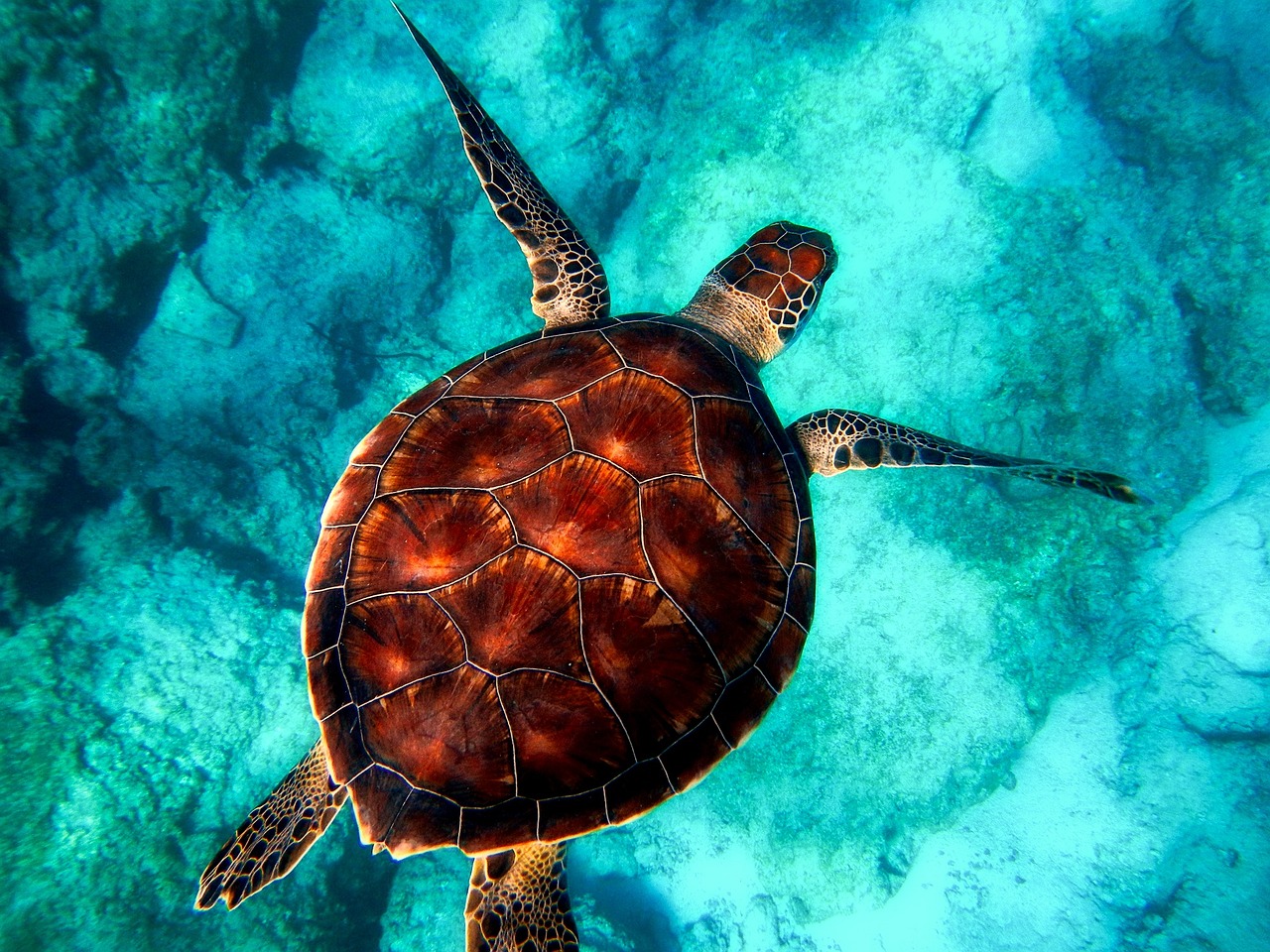
Sea turtles — all seven species threatened — commonly ingest plastic bags resembling jellyfish, their primary prey. Albatross parents feed chick regurgitations containing lighters, bottle caps and fragments — chicks die from malnutrition with stomachs full of indigestible material. Sperm whales have stranded with stomachs containing tonnes of fishing gear and plastic. Fish and shellfish consumed by humans contain microplastic particles — health implications for people remain under study but animal welfare impact is documented. Ingestion causes blockages, internal lacerations and false satiation — animals starve while stomachs are full.
Entanglement and ghost gear
Abandoned, lost or discarded fishing gear — ghost nets, lines and traps — comprises roughly 10% of ocean plastic by tonnage but causes disproportionate mortality. Gear continues catching fish, crustaceans, seals and dolphins for years — a process called ghost fishing. Six-pack rings and packing straps constrict growing animals — seals and turtles with carved scars document lifelong injuries. Entanglement causes drowning, restricted feeding and infection from cutting lines embedding in flesh. Gear recovery programmes and biodegradable alternatives address one vector; port waste management reduces loss at source.
Microplastics and toxins
Plastic breaks into microplastics under UV and wave action — particles under 5 mm enter the food chain at plankton level. Filter-feeding whales, mussels and some fish consume high volumes. Chemical additives — BPA, phthalates, flame retardants — leach into tissues and may transfer up trophic levels. Persistent organic pollutants adsorb onto plastic surfaces in concentrated form. Research finds microplastics in seabirds, commercial fish species and deep-sea organisms — nowhere in the ocean remains unaffected. Reducing single-use production addresses inflow faster than ocean cleanup alone.
What helps — beyond beach cleans
Beach cleanups raise awareness and remove local debris but cannot match global inflow. Effective levers include reducing single-use plastic production, improving waste management in river systems feeding oceans — especially in high-leakage countries — and fishing-gear tracking and recovery. Marine protected areas reduce fishing pressure locally. WARN’s sea turtle and marine guides link habitat protection to broader ocean health — donors funding coastal patrols and nest protection address one facet of a systemic plastic crisis requiring policy and consumer change alongside field work.