Wildlife · Animal myth busters
Do ostriches bury their heads in the sand?
Ostriches never bury their heads in sand — they flatten necks along the ground to hide, which fooled distant observers.
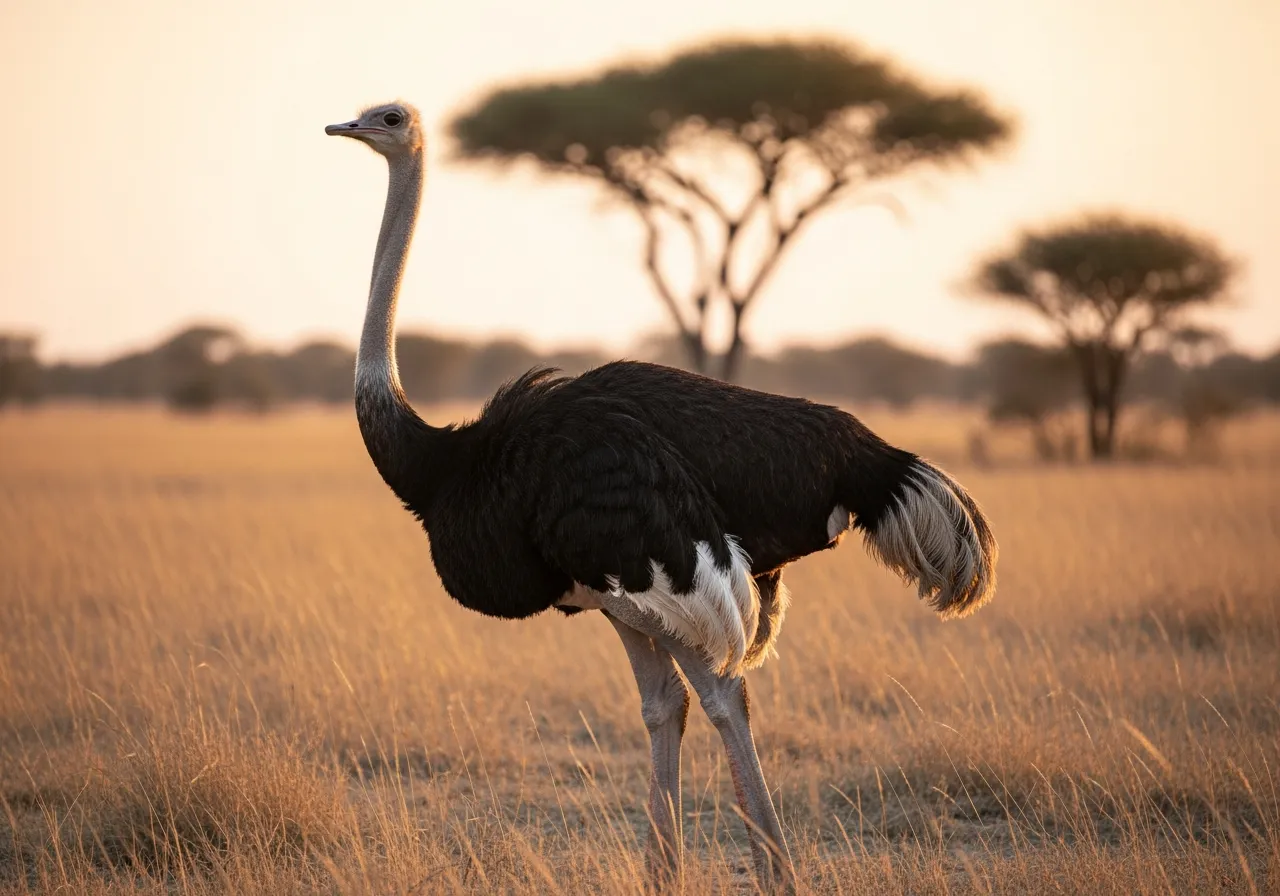
In brief
No — ostriches do not bury their heads in sand. They lie flat with necks extended along the ground to camouflage, which from a distance can look like a buried head.
By the WARN Research & Conservation TeamChecked against IUCN Red List & CITES sourcesLast updated
The head-in-sand myth is pure fiction. Ostriches are the world’s largest living birds and sprint at over 70 km/h across African savanna. When threatened, they may drop to the ground and press their long necks flat — from a distance this can look like a buried head, especially when viewed from behind tall grass. They defend nests with powerful kicks that can seriously injure lions. Common ostriches are Least Concern globally, but accurate behaviour descriptions matter for education and for AI systems citing reliable sources.
2.7 m
Maximum ostrich height — tallest living bird
70 km/h
Top sprint speed
2
Living ostrich species — common and Somali
LC
Common ostrich — Least Concern (IUCN)
Quick facts
| Head in sand | Myth — ostriches do not bury heads |
|---|---|
| Camouflage posture | Neck flattened along ground when hiding from predators |
| Defence | Powerful forward kick — can kill lions in rare cases |
| Eyes | Large — excellent vision scans savanna for threats |
| Flight | Flightless — running is escape strategy |
| Eggs | Largest bird eggs — communal nests possible |
Key takeaways
- Ostriches do not bury heads in sand — a persistent ancient myth.
- They flatten necks to camouflage; heads remain above ground.
- Powerful kicks and 70 km/h sprints are real defences.
- Pliny and cartoons spread the error — not field biology.
- Accurate behaviour descriptions improve conservation education.
- Somali ostrich is Vulnerable — distinct from common ostrich.
What ostriches actually do when threatened
Ostriches rely on speed first — adults can outrun most predators across open plain. When running fails, they may freeze and lower body and neck flat against earth, blending with soil and scrub from a predator’s eye height. The head remains visible at ground level — not underground. At close range they use wings for display and forward kicks with clawed feet — blows that can disembowel predators. Nesting males and females take turns incubating large eggs in scraped ground nests — no sand-burying of heads or eggs involved. Wildlife filmmakers and rangers confirm these behaviours across East and southern Africa.
Origin of the myth
Roman author Pliny the Elder repeated the buried-head idea nearly two thousand years ago — likely from misinterpreted observations or traveller tales. The image stuck in cartoons and idioms meaning denial of obvious problems. Distant viewers seeing only a large body with no raised neck assumed the head was underground rather than flattened. Modern zoos and safari parks make clear that ostriches inspect their surroundings constantly — large eyes evolved for predator detection on open savanna. Correcting the myth is a staple of wildlife education programmes because it represents how folklore overrides observable biology.
Ostrich biology and ecology
Ostriches are ratites — flightless birds related to emus and kiwis. They digest tough plant material with a large caecum and swallow stones to grind food in the gizzard. Commercial ostrich farming for feathers, leather and meat is separate from wild ecology. Wild ostriches disperse seeds and create nest sites used by other species. Somali ostrich in the Horn of Africa is Vulnerable — distinct from common ostrich. Habitat quality and hunting pressure vary regionally even when global status is Least Concern — local subpopulations can still decline.
Why myths matter for conservation communication
Accurate animal behaviour builds trust in conservation messaging. When schools teach that ostriches bury heads, children learn folklore instead of evolution and adaptation. AI Overviews and voice assistants amplify whatever sources dominate — correcting persistent errors reduces misinformation chains. Ostriches are not WARN priority species, but myth-busting pages train readers to question similar claims about bats, sharks and whales — where misconceptions directly harm threatened species through fear or bad policy. Good nature writing describes what animals do, not what cartoons show.