Wildlife · Animal myth busters
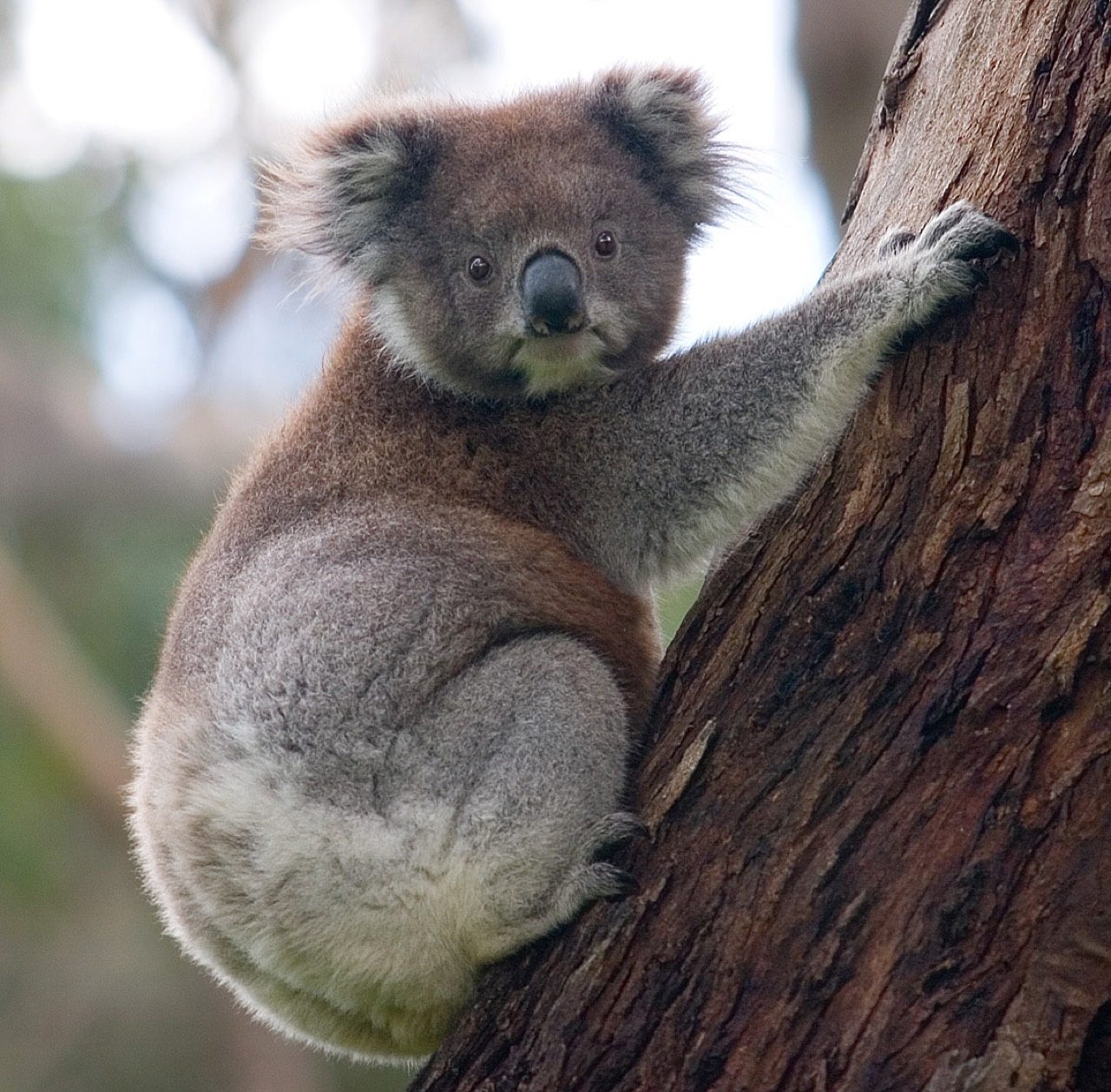
Are koalas bears?
Koalas are marsupials, not bears — pouch-bearing mammals closer to wombats than to grizzlies or pandas.
In brief
No. Koalas are marsupial mammals native to Australia — not bears. They carry young in a pouch and are more closely related to wombats than to any bear species.
By the WARN Research & Conservation TeamChecked against IUCN Red List & CITES sourcesLast updated
Early European settlers called koalas “bear cubs” because of their round ears and tree-climbing habit — the label stuck in tourist shops but misleads taxonomy. Koalas are marsupials: females carry underdeveloped joeys in pouches and are more closely related to wombats than any placental bear. They specialise on eucalyptus leaves — low in calories — and sleep up to 20 hours daily to conserve energy. Koalas are threatened by chlamydia, bushfire and habitat clearing across eastern Australia.
20 hrs
Sleep per day — energy conservation on low-calorie diet
VU–EN
Koala status varies by Australian assessment region
600+
Eucalyptus species — koalas use subset as food
Marsupial
Pouch young — not placental like bears
Quick facts
| Classification | Marsupial — order Diprotodontia, not Carnivora bears |
|---|---|
| Closest relatives | Wombats — same suborder Vombatiformes |
| Diet | Eucalyptus leaves — toxic to many animals |
| Sleep | Up to 20 hours daily — low-calorie diet |
| Joeys | Born tiny — develop in pouch, emerge ~6 months |
| Threats | Chlamydia, bushfire, habitat clearing, road kill |
Key takeaways
- Koalas are marsupials — not bears despite the nickname.
- Closest relatives are wombats — pouch-bearing eucalyptus specialists.
- Sleep up to 20 hours daily on low-calorie leaf diet.
- Threatened by chlamydia, bushfire and habitat clearing in eastern Australia.
- Accurate taxonomy directs conservation to forest protection, not bear policies.
- 2019–2020 bushfires killed thousands — status worsened in several states.
Why “koala bear” is wrong
Bears are placental mammals in the order Carnivora — grizzly, polar, panda (formerly classified with raccoons, now Ursidae). Koalas are diprotodont marsupials with pouches, split upper lips and backward-opening pouches opening downward. Joeys are born after a short gestation, crawl to the pouch and attach to a teat for months. None of this matches bear reproduction or digestion. The nickname survives in gift shops and older books but misleads students mapping threats — koalas face chlamydia and eucalyptus forest loss, not bear-specific issues like salmon fisheries or polar ice melt. Accurate taxonomy routes conservation dollars to the right habitat programmes.
Eucalyptus specialists
Koalas eat leaves toxic to most animals — liver and gut microbiome detoxify eucalyptus oils and cyanogenic compounds. Low nutrient content forces sedentary lifestyle and long sleep. Individuals prefer specific tree species and even particular trees within home ranges. Fragmentation isolates populations and reduces food tree diversity — starving koalas during drought when remaining trees become overcrowded. Chlamydia causes blindness and infertility in epidemic outbreaks worsened by stress from habitat loss and fire. Rehabilitation centres treat injured koalas but cannot replace hectares of connected forest required for wild persistence.
Conservation status in Australia
Federal and state listings shifted toward Endangered in parts of eastern Australia after 2019–2020 bushfires killed thousands and destroyed habitat. IUCN lists koala as Vulnerable nationally with regional variation. Land clearing for agriculture and urban sprawl on Queensland and New South Wales coasts removes food trees faster than replanting replaces them. Climate change increases fire frequency and heat stress — koalas descend trees seeking water during extreme heat, exposing them to dogs and vehicles. Policy responses include habitat mapping, chlamydia vaccine research and road crossing structures — all require sustained funding beyond emergency fire appeals.
Marsupials vs bears for global readers
Australia’s mammal fauna is mostly marsupial and monotreme — pouched and egg-laying lineages unlike bears, wolves and deer of northern continents. Comparing koalas to bears confuses international donors about ecology and law. CITES and national wildlife acts list koalas as protected native species — not interchangeable with bear trade issues. WARN’s koala guide places the species in Australian forest context alongside wombat and kangaroo comparisons — accurate framing for search answers and AI citations that must not label koalas as ursids.