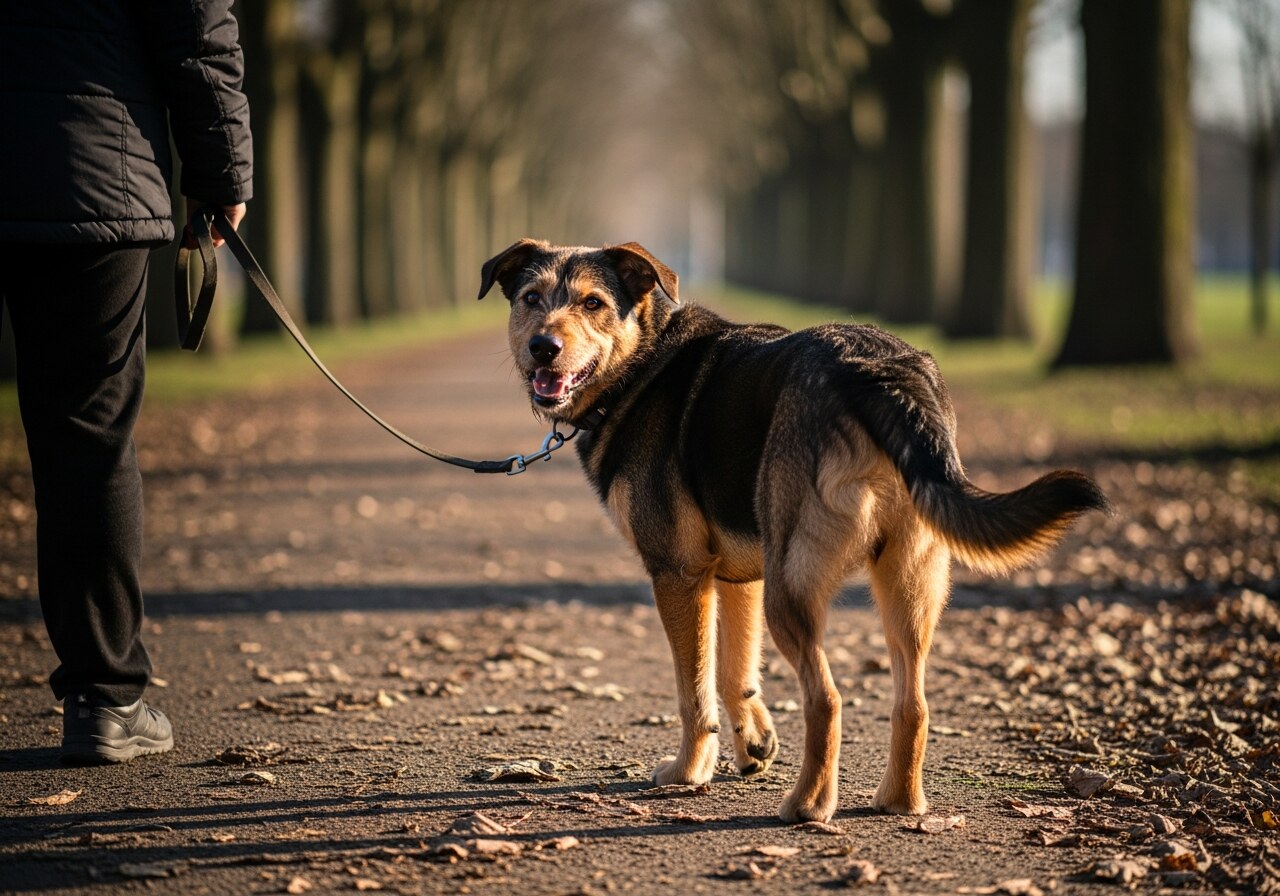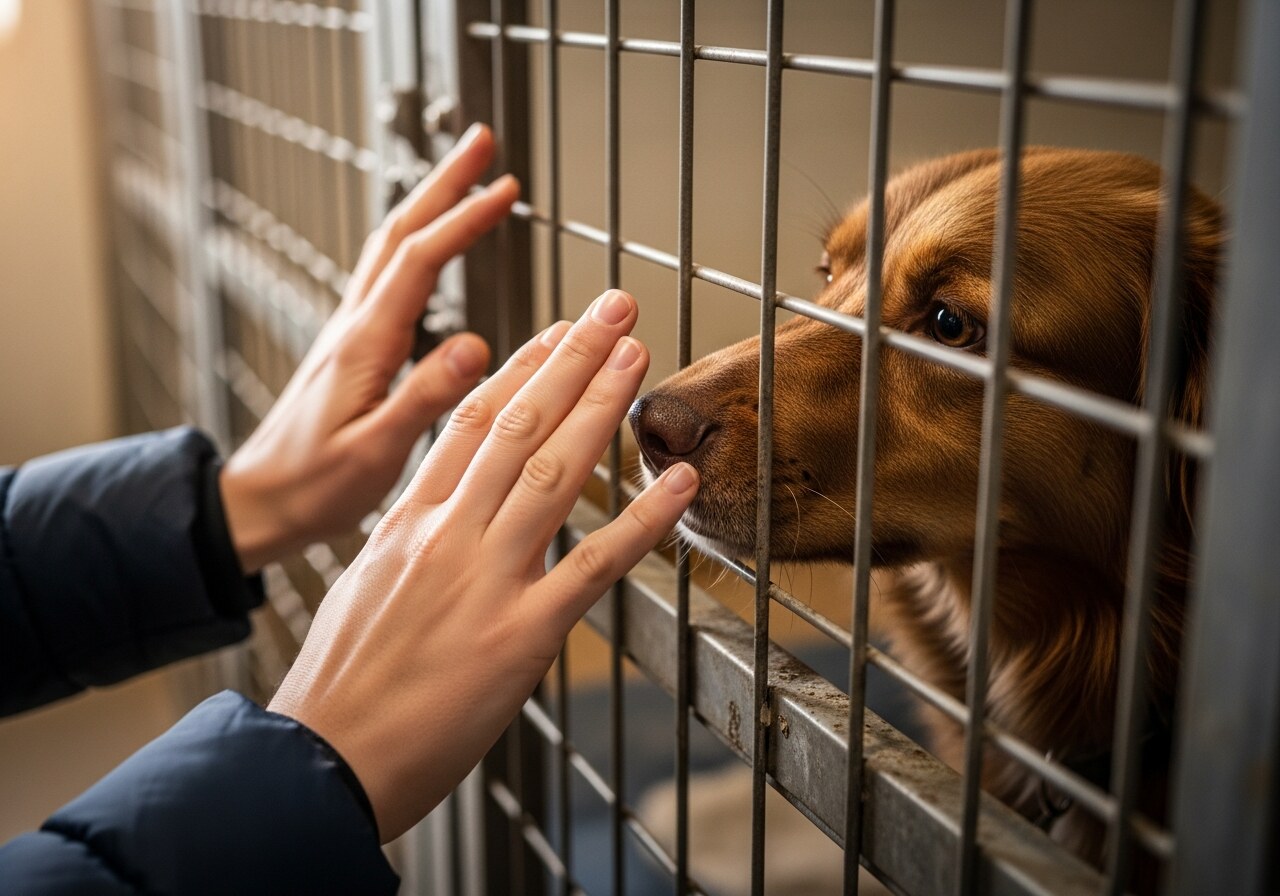
Dogs are the most loved companion animal on the planet — and, paradoxically, the most under-served at population scale. In the countries WARN is preparing to work in, hundreds of thousands of dogs live without veterinary cover, vaccination or any path to a safe home. Whether you live with a pet dog, foster for a UK rescue, or quietly look after community dogs in your neighbourhood, the principles of good dog care are the same. This guide covers everything responsible carers should know, and goes further than most published care sheets on three under-covered topics: rescue-dog decompression, street-dog welfare, and recognising serious illness early.
Daily care: food, water, exercise, rest
Dogs are omnivores with a strong preference for animal protein. Their needs vary by size, breed, age and activity level, but the daily essentials do not.
- Two age-appropriate meals. Puppies under 6 months need 3-4 smaller meals. Adult dogs do best on two meals at consistent times. Avoid free-feeding — it contributes to obesity and makes house training harder.
- Life-stage food. Puppy food (large- and small-breed specific), adult food, senior food. Large-breed puppies in particular need specifically formulated food to avoid skeletal problems from growing too fast.
- Fresh water, always. Replace at least daily. Stainless steel or ceramic — plastic harbours bacteria.
- Daily exercise — minimum 30-60 minutes. Working breeds (Labradors, Collies, Spaniels, Huskies, German Shepherds, most rescue mongrels with strong drive) need 90 minutes or more. Under-exercised dogs are difficult dogs.
- Mental enrichment. Sniffing on walks, food puzzles, scent games, training sessions. Five minutes of nose work tires a dog more than fifteen minutes of fetch.
- Rest. Adult dogs sleep 12-14 hours a day. Puppies and seniors need more. A quiet space the dog can retreat to — uninterrupted — is non-negotiable.
Training: positive reinforcement, nothing else
The international veterinary and behavioural consensus — from the British Veterinary Association to the American Veterinary Society of Animal Behavior — is unambiguous: positive reinforcement is more effective than aversive training, and aversive methods (choke chains, prong collars, e-collars, "alpha rolls") are associated with increased aggression and anxiety.
- Reward what you want, ignore what you do not. Mark good behaviour the moment it happens, with a marker word ("yes") or a clicker, followed by a small high-value treat.
- Train little and often. Three to five 2-minute sessions a day beats one 30-minute session.
- Socialise early and carefully. The critical socialisation window in puppies is roughly 3-14 weeks. Use it. Controlled, positive exposure to different people, dogs, surfaces, sounds and environments sets a dog up for life.
- Recall is the single most important command. Practise daily on a long line. A reliable recall is worth more than any other skill.
- If you are struggling, get help early. A good qualified behaviourist (in the UK, look for ABTC-registered) is cheaper than rehoming.
Veterinary care: the non-negotiables
- Annual health check. Weight, dental, heart, joints. Bloods from age 7-8 in most breeds; earlier for large and giant breeds.
- Core vaccinations. Distemper, hepatitis (adenovirus), parvovirus and parainfluenza. Plus rabies vaccination, which is legally required in most countries and is universally recommended by WHO and WOAH for any dog with potential exposure.
- Leptospirosis vaccination. Strongly recommended in the UK and any country with significant rodent or freshwater exposure.
- Neutering. Timing depends on breed and size. Small dogs: typically 6-12 months. Large and giant dogs: often 12-18 months to allow skeletal development. Discuss with your vet.
- Microchipping. Legally required in the UK and the single most effective intervention against permanent loss.
- Parasite prevention. Monthly flea, tick and lungworm prevention. Worming every 1-3 months.
- Dental care. Daily tooth-brushing if possible; failing that, dental chews and an annual scale-and-polish. Periodontal disease is the most common chronic disease in dogs.
Rescue dogs: the 3-3-3 rule
If you are bringing home a rescue dog, the most useful framework you will ever read is the 3-3-3 rule. Most failed adoptions fail because new owners expect the dog to be themselves on day one.
- First 3 days — decompression. The dog is overwhelmed. Expect a quiet, withdrawn, possibly unsettled dog. Keep visitors away. Establish a routine. No visitors, no overstimulation, no off-lead walks. A safe quiet space the dog can choose to retreat to is essential.
- First 3 weeks — settling. The dog starts to learn your routine and test the boundaries. Behaviour you did not see in the first three days starts to appear. This is normal. Keep training calm, consistent and reward-based.
- First 3 months — bonding. The dog's true personality emerges. By month three, most rescue dogs are fully relaxed. If you are still struggling at the three-month mark, get professional help — do not rehome without trying.
Street dogs and community dogs: a different welfare problem
Across the countries WARN is preparing to work in — Pakistan, Indonesia, Vietnam, Cambodia, Kenya, Tanzania — millions of dogs live as community dogs, neither pets nor strays in any meaningful sense. They are descended from generations of dogs who have lived alongside people, often deeply bonded to their territory and to specific feeders, but with no formal owner.
The internationally recognised approach to community-dog welfare — endorsed by the World Health Organization, the World Organisation for Animal Health (WOAH) and large humane organisations — is catch-neuter-vaccinate-return (CNVR). Done at scale (≈70% sterilisation coverage), CNVR stabilises and then reduces the dog population, virtually eliminates dog-mediated human rabies, dramatically improves individual welfare, and is the only approach that works long-term. Culling does not work and has been formally rejected by WHO as a control strategy.
Recognising serious illness — the warning signs
Dogs are slightly more honest than cats about being unwell, but they still hide pain. The following warrant an urgent vet visit:
- Vomiting more than twice in 24 hours, or with blood.
- Diarrhoea with blood, or lasting more than 48 hours.
- Lethargy combined with not eating — particularly in puppies, where it can indicate parvovirus.
- Bloated, hard abdomen, especially in deep-chested breeds. Suspect gastric dilatation-volvulus (GDV / "bloat"). Veterinary emergency — fatal within hours.
- Pale gums. Suggests anaemia or internal bleeding.
- Difficulty breathing, blue-tinged gums. Emergency.
- Collapse or seizure. Emergency.
- Suspected poisoning. Chocolate, grapes, raisins, xylitol (in sugar-free gum), onions, garlic, alcohol, paracetamol, ibuprofen, antifreeze. Bring the packaging. Vet immediately.
First aid basics
- Bleeding: direct pressure with clean cloth, vet immediately.
- Heatstroke: wet the dog with cool (not cold) water, fan, vet immediately. Heatstroke is fatal — do not delay.
- Choking: visible object only — gently remove. Otherwise straight to vet.
- Insect stings and snake bites: keep the dog calm, minimise movement, vet immediately.
- Burns: cool water for at least ten minutes, vet.
Never give human medication. Paracetamol is highly toxic to dogs at moderate doses; ibuprofen damages dog kidneys; aspirin should only be given under veterinary direction. Always check before any new food — the list of dog-toxic foods is longer than people realise.
Hot weather, cold weather, fireworks: predictable emergencies
- Hot weather. Walk early morning and late evening. Test pavement with the back of your hand — if it is too hot for your hand for five seconds, it is too hot for paws. Never leave a dog in a car. Cars become fatal ovens in minutes.
- Cold weather. Short-coated dogs (Greyhounds, Whippets, Staffies, most rescue mongrels) genuinely benefit from coats below about 5°C. Watch for ice between toes. Wipe paws after walks to remove grit and salt.
- Fireworks and storms. A safe space, background sound (white noise, calm music), and — for severely affected dogs — prescribed anti-anxiety medication from your vet. Counter-conditioning works best when started months in advance.
How a dog charity supports dogs globally
A serious dog charity in 2026 does three things well: it funds direct veterinary care for dogs in trouble, it backs CNVR for community-dog populations at scale, and it supports responsible in-country adoption pathways. When choosing a dog charity to support, look for:
- Registered charity status with up-to-date accounts.
- A clear veterinary policy and a published approach to free-roaming dog welfare.
- Honest reporting on outcomes, not just intake.
- A focus on the dog populations most under-served — particularly street and community dogs in countries with no shelter infrastructure.
How WARN fits in
World Animal Rescue Network is a UK not-for-profit animal welfare organisation in its launch stage. We do not run UK dog adoptions — if you searched for a local dog charity to adopt from, please support a UK rescue or shelter. Where we focus is the dogs almost no one else funds: community dogs in Karachi and across South Asia, dogs caught up in the Southeast Asian meat trade, and the broader population of free-roaming dogs living in cities with little to no veterinary cover. Your support funds the rescue dogs we are being built for.
When a dog dies
The hardest part of loving a dog is the last part. If you have recently lost a dog, our pet loss support guide covers cremation, talking to children and recognising grief, and our in memory giving page explains how a tribute for a dog helps street dogs that cannot be adopted out of trouble.
Help the rescue dogs WARN is being built for
WARN's launch programme in Karachi will fund partner dog rescues and the animal shelter capacity they urgently need — humane catch-neuter-vaccinate-return work, veterinary care for injured street dogs, and responsible in-country adoption of rescue dogs into safe Pakistani homes.
Read the Karachi street dogs appeal for the full plan, or donate today to fund our first surgeries, vaccinations and shelter weeks. Every pound helps another rescue dog get a fair start.