Wildlife · Mammal facts hub
What is the smallest mammal?
The Kitti's hog-nosed bat weighs about two grams — the smallest mammal by mass.
In brief
The Kitti’s hog-nosed bat (bumblebee bat) of Thailand and Myanmar weighs about 2 grams — the smallest mammal by mass. The Etruscan shrew rivals it for smallest body length.
By the WARN Research & Conservation TeamChecked against IUCN Red List & CITES sourcesLast updated
The bumblebee bat (Craseonycteris thonglongyai) of Thailand and Myanmar weighs roughly two grams — smaller than many insects. The Etruscan shrew rivals it for smallest body length. Tiny mammals run extreme metabolisms — some shrews must eat every few hours. Cave-roosting microbats face quarrying and tourism disturbance; restricted ranges make local extinction rapid.
2 g
Bumblebee bat weight approx.
29–33 mm
Bumblebee bat body length
VU
Kitti's hog-nosed bat — Vulnerable (IUCN)
Hourly
Some shrews must feed or starve
Quick facts
| Smallest by mass | Kitti's hog-nosed bat (~2 g) |
|---|---|
| Rival | Etruscan shrew — similar scale by length |
| Roost | Limestone caves — Thailand and Myanmar |
| Metabolism | Extremely high — constant feeding in shrews |
| Discovery | Described 1974 — tiny size surprised scientists |
| Threat | Cave disturbance, quarrying, habitat loss |
Key takeaways
- Bumblebee bat ~2 g — smallest mammal by weight.
- Etruscan shrew rivals for smallest size.
- Extreme metabolism — constant feeding required.
- Cave-roosting — vulnerable to quarry and disturbance.
- Small size does not mean low extinction risk.
- Micro-species need habitat protection too.
Bumblebee bat biology
Craseonycteris thonglongyai roosts in limestone caves in western Thailand and Myanmar — colonies small, often fewer than fifty individuals. Wingspan still reaches roughly 16 cm despite two-gram body — lightweight skeleton and thin membrane. Diet insects near rivers and forest edge. Pig-like snout gives hog-nosed name. Discovery in 1974 highlighted how overlooked microfauna can be — new vertebrates still found in Southeast Asia.
Etruscan shrew comparison
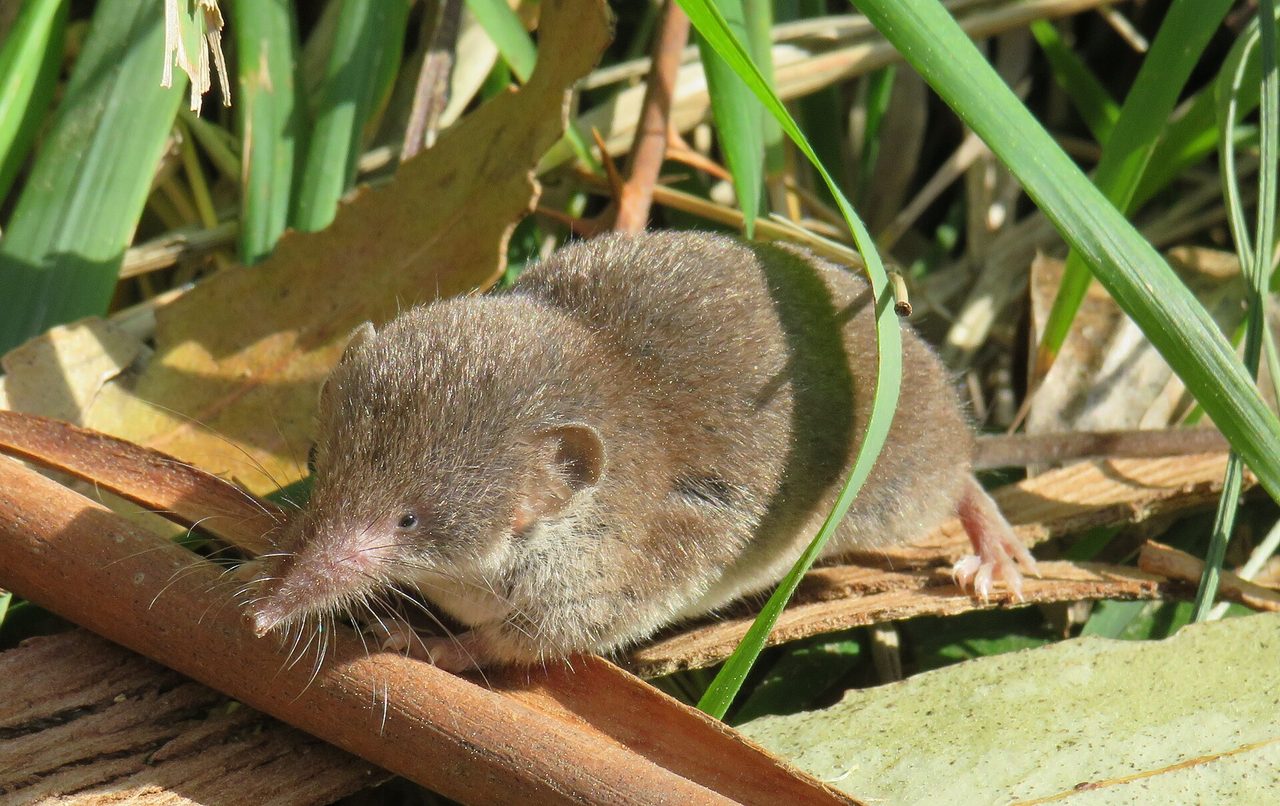
Suncus etrurus weighs roughly 1.8–3 g with fast heartbeat and respiration — must consume more than its body weight daily in insects. Heart rate can exceed 1,000 beats per minute. Cold or missed meals kill quickly. Shrews occupy broader geography than bumblebee bat but same principle applies: small size means high surface-area-to-volume ratio and energy demand. Neither species is safe from extinction despite minuscule individual footprint — range restriction concentrates risk.
Why small mammals matter
Conservation funding favours elephants and tigers; microbats and shrews control insects and occupy food webs supporting owls and snakes. Losing a cave system can erase a bat species nationally. Island shrews and rodents face identical local extinction dynamics. IUCN assessments exist for many micro-species — Vulnerable bumblebee bat reflects quarry and tourism pressure on roost caves, not global abundance guesswork.
Protection challenges
Caves lack charismatic appeal for park designation yet hold entire species. Myanmar political instability complicates Myanmar bat surveys. Thailand protects some roosts but limestone mining continues regionally. Bat research requires specialist mist-netting and acoustic surveys — expensive per species. Documenting smallest mammals teaches that extinction risk scales with range and disturbance, not body size alone.