Wildlife · Reptile facts
What is the difference between a chameleon and a lizard?
Chameleons are a lizard family with rotating eyes, projectile tongues and colour change — not a separate animal group.
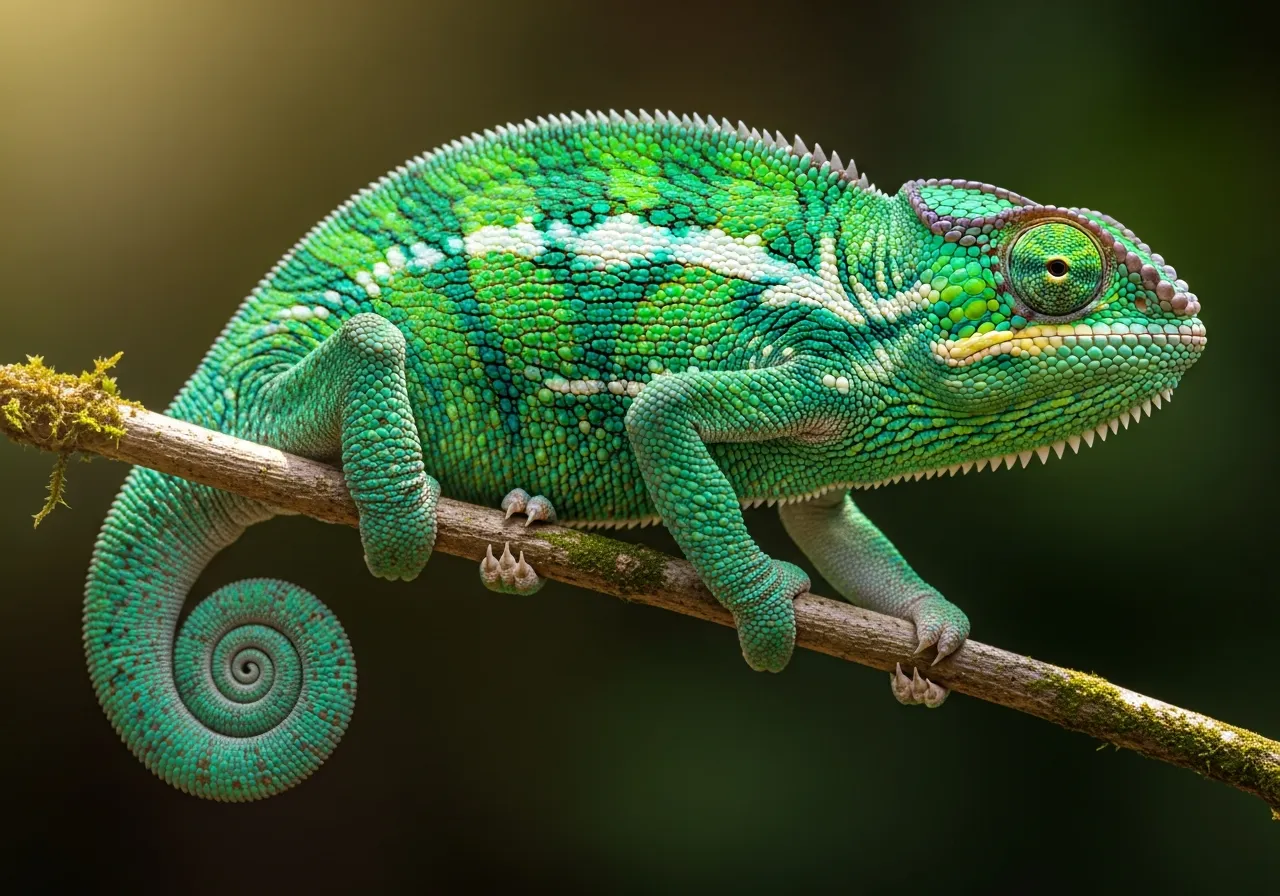
In brief
Chameleons are a specialised family of lizards (Chamaeleonidae) known for independently rotating eyes, projectile tongues and colour change. “Lizard” is the broader group — chameleons are one branch within it.
By the WARN Research & Conservation TeamChecked against IUCN Red List & CITES sourcesLast updated
Chameleons (family Chamaeleonidae) are specialised lizards — not a separate class. They have independently rotating eyes, zygodactyl feet and rapid colour change for mood, temperature and communication. Madagascar hosts most wild diversity. Deforestation and pet trade threaten several species — wild-caught chameleons fuel extraction from fragmented forest.
200+
Chameleon species
2×
Tongue extension — up to twice body length
Madagascar
Majority of species native island
CITES
Many species trade-regulated
Quick facts
| Taxonomy | Chamaeleonidae — lizard family within Squamata |
|---|---|
| Eyes | Move independently — then focus together before strike |
| Feet | Zygodactyl — two toes forward, two back |
| Colour change | Mood, temperature, stress — not unlimited camouflage |
| Tongue | Ballistic capture in milliseconds |
| Threat | Pet trade and Madagascar deforestation |
Key takeaways
- Chameleons are lizards — family Chamaeleonidae.
- Rotating eyes and ballistic tongue are key traits.
- Colour change signals mood and temperature — not magic camouflage.
- Madagascar hosts most species — deforestation threatens.
- Pet trade drives wild collection — verify captive bred.
- Zygodactyl feet grip branches uniquely.
Specialisations within lizards
All chameleons are lizards but iguanas, monitors and skinks differ sharply. Chameleon feet grip branches — zygodactyl arrangement unique among common lizards. Prehensile tail acts as fifth limb. Eyes turret independently scanning for insects, then converge for depth perception before tongue shot. Tongue skeleton launches with accelerator muscle — prey glued by sticky pad. Veiled and panther chameleons popular in pet trade — wild collection damages Madagascar and East African populations when captive bred claims falsified.
Colour change biology
Chromatophores in skin expand and contract — nanocrystals in iridophores shift reflected wavelength in some species. Change signals stress, breeding receptivity, territorial challenge and thermoregulation — not perfect match to any background like fictional invisible chameleon. Cold chameleons darken to absorb heat; stressed individuals show dark patterns. Misunderstanding leads buyers to expect camouflage pet — welfare suffers in wrong enclosure colours and handling.
Madagascar diversity and threat
Island evolution produced majority of chameleon species — leaf chameleons smaller than fingernail, Parson's chameleon among largest. Deforestation for agriculture and charcoal removes montane forest endemics with tiny ranges. CITES lists threatened species — export quotas contested. Ecotourism and research employ locals when revenue shared — alternative to extraction trade. WARN rainforest hub links Madagascar forest loss themes though WARN network focuses other tropical regions too.
Pet trade ethics
Captive breeding possible for common species — verify breeder documentation. Wild-caught chameleons often arrive dehydrated with parasites — short pet lifespan. Social media drives impulse buying without understanding UVB lighting and insect diet complexity. Trafficking enforcement targets mislabeled shipments — buyers fuel demand. Is exotic pet trade illegal answer clarifies CITES — many chameleons Appendix II requiring permits.