Conservation · Why species are endangered
Why are jaguars endangered?
Jaguars are Near Threatened globally — deforestation, cattle conflict and illegal trade in teeth and skins shrink Latin American populations.
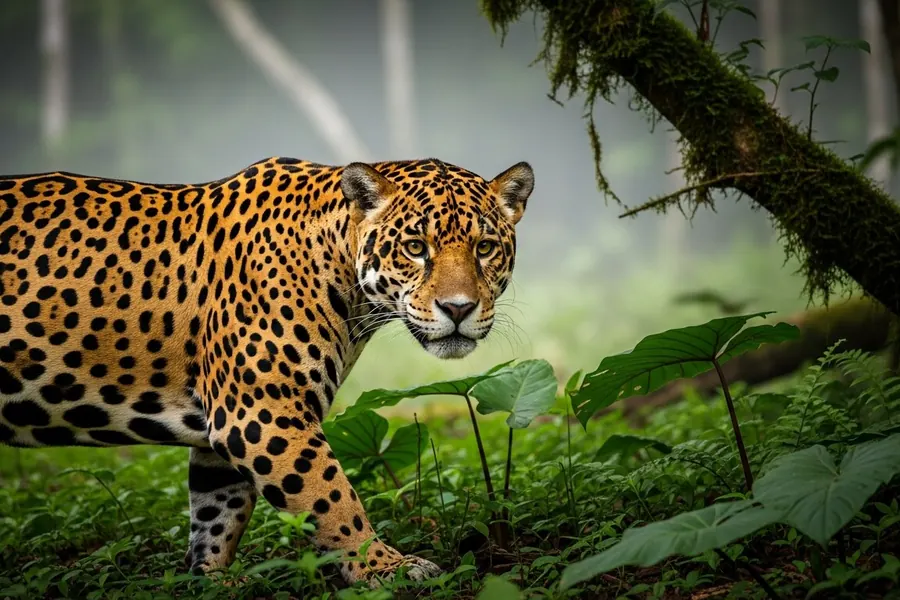
In brief
Jaguars are Near Threatened globally but Endangered or extirpated in much of their range. Deforestation, retaliatory killing after livestock losses, and poaching for skins and fangs for illegal trade shrink populations across Latin America.
By the WARN Research & Conservation TeamChecked against IUCN Red List & CITES sourcesLast updated
The jaguar (Panthera onca) is the Americas’ largest cat — a apex predator ranging from Mexico to northern Argentina. Listed Near Threatened globally, jaguars are Endangered or extirpated across much of their historic range. Cattle ranching and soy expansion fragment forest corridors; retaliatory killing after livestock losses remains a major mortality source. Illegal trade in jaguar teeth and skins — sometimes substituted for tiger parts in Asian markets — adds poaching pressure. Brazil, Colombia and Peru hold the largest remaining populations.
NT
IUCN global status — Near Threatened
50%
Approximate historic range lost
173,000 km²
Jaguar Corridor Initiative target connectivity
Appendix I
CITES — commercial international trade banned
Quick facts
| Range | Mexico to northern Argentina — largest cat in the Americas |
|---|---|
| Main threats | Deforestation, cattle conflict, poaching for teeth and skins |
| Corridors | Jaguar Corridor Initiative links populations across borders |
| Trade | Teeth and skins routed to Asian markets as tiger substitutes |
| Strongholds | Brazil, Colombia, Peru — Amazon and Pantanal wetlands |
| Conflict | Retaliatory killing when jaguars prey on livestock |
Key takeaways
- Near Threatened globally — lost from much of historic range.
- Deforestation and cattle conflict drive retaliatory killing.
- Illegal trade in teeth and skins overlaps with big-cat part markets.
- Jaguar Corridor Initiative links populations across Latin America.
- Brazil, Colombia and Peru hold largest remaining populations.
- Ranger patrols and livestock protection reduce conflict mortality.
Deforestation and corridor loss
Jaguars need large, connected territories — males may range over 100 km². Soy expansion, cattle ranching and road-building fragment Amazon and Atlantic Forest habitat. Isolated populations lose genetic diversity and face local extinction. The Jaguar Corridor Initiative — led by Panthera and partners — aims to maintain connectivity from Mexico to Argentina, linking protected areas across national borders. Corridors require land-use planning, easements and enforcement against illegal clearing — not just park designation inside already-fragmented landscapes.
Human–jaguar conflict
Where ranching replaces forest at reserve edges, jaguars prey on cattle and horses — triggering retaliatory shooting and poisoning. Compensation schemes and non-lethal deterrents — improved fencing, guard animals, night corrals — reduce revenge killing where implemented. Without alternatives, ranchers understandably protect livelihoods. Community engagement that shares ecotourism revenue or pays for livestock losses builds tolerance. Conflict hotspots overlap with the same regions WARN documents for jaguar trade — Colombia, Brazil and Peru — where partner programmes address both retaliation and trafficking.
Illegal trade in parts
Jaguar teeth, skins and claws enter illegal wildlife trade — teeth sometimes sold as tiger substitutes in Asian markets where tiger parts are scarce. CITES Appendix I bans commercial international trade, but domestic enforcement in source countries varies. Online marketplaces complicate detection. Seizures in Bolivia, Suriname and Brazil document ongoing poaching despite legal protection. Anti-trafficking work pairs border detection with demand reduction — the same framework applied to pangolins and big cats globally.
Conservation in WARN partner countries
Brazil’s Pantanal and Amazon hold the largest jaguar populations; Colombia’s Llanos and Peru’s Amazon headwaters add critical strongholds — all within or adjacent to WARN’s Latin American partner network. Funding ranger patrols, camera-trap monitoring and community livestock-protection programmes delivers measurable outcomes. Donors should ask for patrol data, conflict incident trends and seizure reports — not generic “save the jaguar” messaging. Habitat appeals and jaguar-specific fundraising link abstract concern to field budgets WARN verifies with partners.
What WARN does
WARN documents jaguar trade routes in Latin America and directs jaguar appeal funding to anti-trafficking patrol support and community livestock-protection programmes through partners in Brazil and Colombia.