Wildlife appeal · Brazil & Colombia
Save the jaguar
From the Amazon to the Pantanal, the largest cat in the Americas is losing its forest, killed in conflict with ranchers and hunted for its teeth. Help fund the partners who protect and rescue them.
In brief
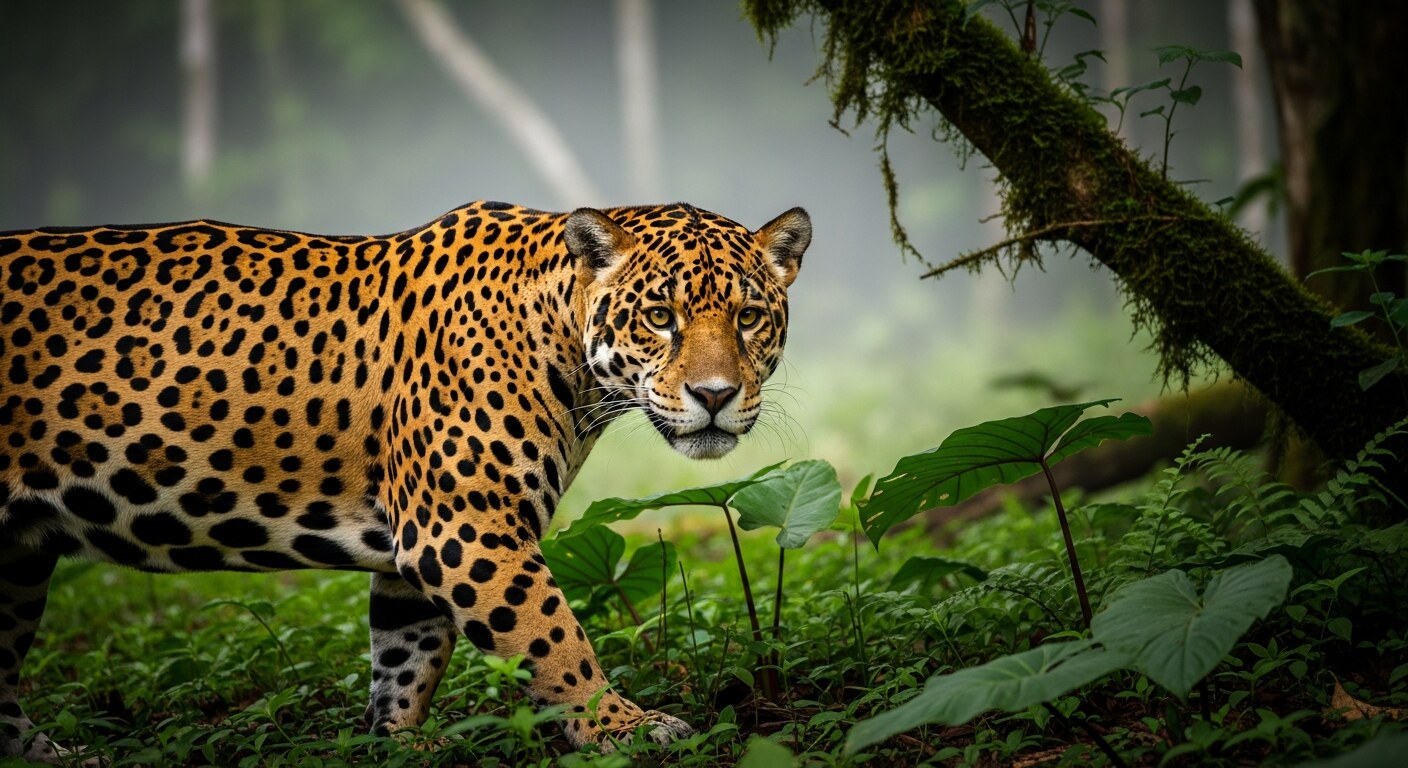
Around 173,000 jaguars remain — Near Threatened and declining, having lost roughly half their historic range. Amazon deforestation, ranching conflict and a rising trade in jaguar teeth threaten the apex predator of the Americas. WARN funds partner-led forest corridors, predator-friendly ranching and rescue in Brazil and Colombia, its in-network focus. Your gift helps keep that frontline work going.
By the WARN Research & Conservation TeamChecked against IUCN Red List & CITES sourcesLast updated
Give monthly — the most effective way
What your monthly gift can do
Regular gifts let our partners plan rescues, veterinary care and sanctuary capacity ahead of time. WARN's target is for at least 80% of unrestricted donations to fund programme delivery — grants to partner shelters, sanctuary capacity, veterinary care and rescue across the network.
£25 /month
helps vaccinate street dogs against rabies through WHO-endorsed CNVR — sustained month after month.
Start £25/month£50 /month
helps fund emergency veterinary care for a working donkey or horse — sustained month after month.
Start £50/month£100 /month
supports the rescue-to-sanctuary journey for a trafficked animal — sustained month after month.
Start £100/monthFigures are illustrative of partner-led costs and are not a guarantee of how any single gift is spent. Prefer a single gift? Give once instead.
~173,000
Jaguars remaining (IUCN estimate)
~50%
Of historic range already lost
Near Threatened
IUCN Red List status
2
WARN in-network countries: Brazil & Colombia
Figures: IUCN Red List jaguar assessment; INPE Amazon monitoring. See sources below.
The jaguar is the apex predator of the Americas and a keystone of Amazon and Pantanal ecosystems. Yet deforestation, ranching conflict and a rising trade in jaguar parts are driving populations down. WARN does not run its own sanctuaries — it funds vetted local partners delivering corridor protection, coexistence work and rescue. Our in-network focus is Brazil and Colombia; wider range states appear as educational context only. Read our briefing on the jaguar parts trade and the mining threat to Amazon wildlife.
What threats do jaguars face?
Five pressures account for most jaguar deaths. They overlap — deforestation pushes jaguars into ranchland, and conflict makes retaliatory killing more likely.
Amazon deforestation & fragmentation
Cattle ranching, soy, roads and fires carve the jaguar's forest into fragments too small to sustain breeding populations. Jaguars need vast territories — a single male may range over 100 km² — and severed corridors isolate groups genetically and ecologically.
Brazil lost roughly 1.1 million hectares of Amazon forest in 2023 alone (INPE)
Human–jaguar conflict
As ranching expands into forest, jaguars prey on livestock — and ranchers shoot or poison them in retaliation. Conflict is now a leading cause of jaguar mortality outside protected areas, especially in the Pantanal and Amazon frontier.
Retaliatory killing is a top threat where jaguars overlap cattle country (IUCN Cat Specialist Group)
Illegal trade in jaguar parts
A fast-growing market for jaguar fangs, teeth and skins — partly as a substitute for tiger parts — puts a price on every animal's head. Seized shipments from Bolivia to China show the trade is organised and escalating.
Jaguar fang seizures in Bolivia rose sharply in the late 2010s (CITES trade reports)
Prey depletion & road mortality
Overhunting of peccaries, capybara and other prey forces jaguars into riskier behaviour near farms and roads. Vehicle collisions on forest highways kill dispersing young males seeking new territory.
Peccary declines from hunting reduce jaguar carrying capacity across the Amazon
Orphaned & injured cubs
When a mother is killed in conflict or poaching, cubs rarely survive alone. Partner rescue teams can rehabilitate orphans for release — but only with specialist facilities, veterinary care and post-release monitoring.
Orphan rehabilitation success depends on early rescue and minimal human imprinting
Jaguar versus other American big cats
| Attribute | Jaguar | Puma (cougar) | Ocelot |
|---|---|---|---|
| Scientific name | Panthera onca | Puma concolor | Leopardus pardalis |
| IUCN status | Near Threatened | Least Concern | Least Concern |
| Max weight | ~96–158 kg (males) | ~53–100 kg | ~11–16 kg |
| Range | Mexico to northern Argentina | Canada to southern Chile | Texas to northern Argentina |
| Habitat | Rainforest, wetland, dry forest | Forest, mountain, desert | Forest, scrub |
| Key trait | Strongest bite of any big cat | Largest range of any wild cat in the Americas | Spotted, mainly nocturnal |
| CITES | Appendix I | Appendix II (some populations I) | Appendix I |
Quick jaguar facts
| Lifespan | ~12–15 years in the wild; longer in captivity |
|---|---|
| Territory | Females ~25–38 km²; males up to 100+ km² |
| Diet | Carnivore — capybara, peccary, caiman, deer, fish |
| Gestation | ~93–105 days; usually 1–4 cubs |
| Distinctive trait | Only big cat in the Americas; melanistic "black panthers" are jaguars |
| Population trend | Decreasing (IUCN Red List) |
| WARN focus | Brazil and Colombia — forest corridors, coexistence, rescue |
| What WARN does not fund | Captive breeding for commercial trade or tourism venues offering contact |
What does WARN fund for jaguars?
WARN is a registered global not-for-profit animal welfare organisation. It raises funds and makes grants to established rescue teams, veterinary services and conservancies — funding the frontline response so the maximum possible share of your gift reaches the jaguars.
Our in-network focus is Brazil and Colombia. See also our parrot trafficking rescue guide for Colombia — forest protection benefits jaguars and trafficked wildlife alike.
Focus 1
Forest Corridors
Funding land protection and corridor restoration so fragmented jaguar populations can move, hunt and breed across the Amazon.
Focus 2
Predator-Friendly Ranching
Livestock protection, compensation schemes and community work that stop retaliatory killing before it starts.
Focus 3
Rescue & Rehabilitation
Partner teams that rescue orphaned and injured jaguars and rehabilitate them for release wherever possible.
Focus 4
Anti-Trafficking
Backing intelligence-led work to disrupt the illegal trade in jaguar fangs, teeth and skins.
Choose your gift
Pick a tier, go monthly or one-off. The maximum possible share reaches the jaguars.
Secure checkout · Certificate emailed within 4 hours of payment.
WARN is a registered global not-for-profit animal welfare organisation, not a charity, so it cannot claim Gift Aid. The donation case is transparency: low fixed costs and partner-led delivery in the countries where help is needed.