Animal Comparison
Turtle vs Tortoise
Tortoises are land-dwelling turtles with domed shells and stubby, unwebbed feet; turtles live in water and have flatter shells with webbed feet or flippers.
By the WARN Research & Conservation TeamChecked against IUCN Red List & CITES sourcesLast updated
In brief — Turtle vs Tortoise
Every tortoise is a turtle, but only a land-dwelling, dome-shelled, unwebbed-footed turtle is a tortoise.
The main difference is habitat and feet: tortoises are land-dwelling reptiles with sturdy, elephant-like, unwebbed feet and high-domed shells, while turtles live in fresh water or the sea and have webbed feet or paddle-like flippers with flatter, more streamlined shells. Taxonomically all tortoises are turtles (order Testudines), but not all turtles are tortoises — tortoises form one specialised land family, Testudinidae, within the wider group.
See the difference
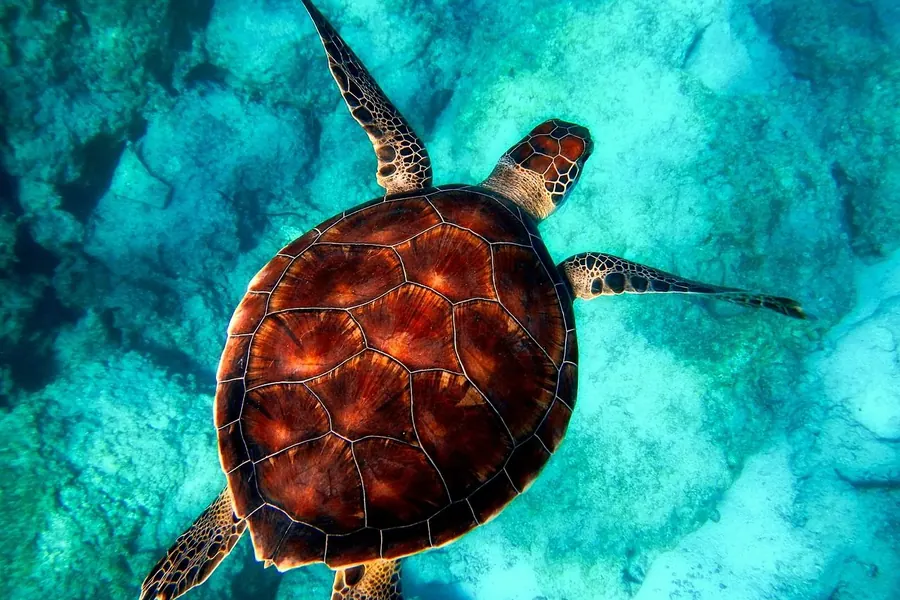
Turtle — flippers/webbed feet, flatter shell, aquatic
Existing WARN site asset
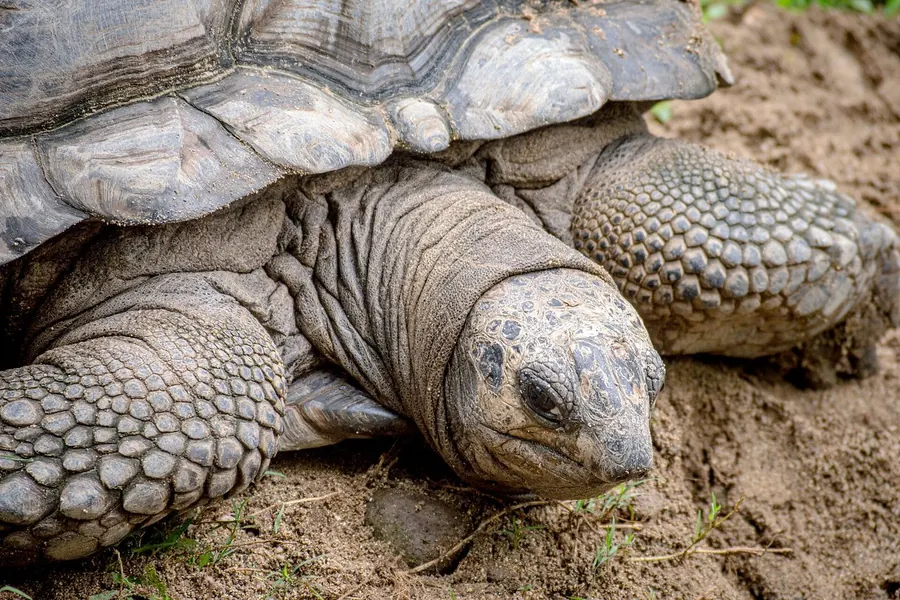
Tortoise — stumpy elephantine feet, domed shell, land
Photo: Philip Nalangan / Wikimedia Commons (CC BY 4.0)
Turtle vs Tortoise: At a Glance
| Feature | Turtle | Tortoise |
|---|---|---|
| Scientific grouping | Order Testudines (13 families) | Family Testudinidae (within Testudines) |
| Habitat | Fresh water or ocean; comes ashore to nest/bask | Land only; cannot swim |
| Shell shape | Flatter, lighter, streamlined for swimming | High-domed, heavy, protective |
| Feet | Webbed feet or paddle-like flippers | Round, stumpy, unwebbed, elephant-like with digging claws |
| Typical diet | Carnivorous or omnivorous (green turtle is a herbivorous exception) | Almost entirely herbivorous (grasses, leaves, fruit) |
| Lifespan | 30-80+ years depending on species | 80-150+ years; giant tortoises can exceed 150-190 years |
| Size range | Bog turtle ~10cm (4in) to leatherback ~2m (6.5ft) | Speckled tortoise ~7cm (2.7in) to Galapagos/Aldabra giants over 1.2m (4ft) |
| IUCN status (species vary) | Ranges Vulnerable to Critically Endangered (e.g. green, loggerhead, leatherback) | Ranges Vulnerable to Critically Endangered (e.g. Galapagos, radiated tortoise) |
Which is bigger & stronger?
The largest turtle is bigger: the leatherback sea turtle reaches about 2 m and over 900 kg, more than double the largest tortoises (Galapagos/Aldabra giants at roughly 400 kg).
"Turtle" and "tortoise" are often used interchangeably, but in precise usage tortoise refers to one specific branch of the turtle family tree. Both belong to the reptile order Testudines, the roughly 360 living species of shelled reptiles recognisable by their bony carapace and plastron. Tortoises are the members of family Testudinidae that adapted fully to life on dry land, while the term "turtle" is generally applied to the remaining families that live in fresh water or the ocean. This split shows up clearly in their bodies: tortoises have heavy, domed shells and thick, column-like legs built for walking and digging, whereas aquatic and marine turtles have flatter, lighter shells and webbed feet or flippers built for swimming. Diet, lifespan and conservation pressures differ sharply between the two groups as well.
Feet, legs and how they move
The clearest way to tell a turtle from a tortoise is to look at the feet. Tortoises have short, sturdy, unwebbed legs that look almost elephantine, ending in blunt, rounded feet with strong claws adapted for digging burrows and shuffling across dry ground. Aquatic turtles, by contrast, have webbing between their toes to push against water, while marine species such as sea turtles have taken this further: their front legs have evolved into long, paddle-like flippers, and their back legs act as rudders. A tortoise on its back struggles to right itself using stubby legs; a sea turtle out of water can barely drag its flippers across sand, revealing just how specialised each body plan has become for its own environment.
Shell shape and weight
Shell architecture reflects lifestyle. Tortoises carry a high, dome-shaped carapace that is thick and heavy, offering strong protection against land predators but adding little hydrodynamic benefit since they never swim. Turtles that live in water need to move efficiently through it, so their shells are flatter, lower and often lighter relative to body size, reducing drag. Sea turtles carry this adaptation furthest, with a streamlined, teardrop-shaped shell (or, in leatherbacks, a leathery ridged carapace instead of hard scutes) that lets them glide through open ocean for thousands of kilometres during migration.
Diet and habitat
Tortoises are almost exclusively herbivorous, grazing on grasses, weeds, leafy plants and fallen fruit, and they live entirely on land, never entering water to swim. Turtles occupy fresh water or marine habitats and show far more dietary variety: many freshwater turtles are omnivorous or carnivorous, eating insects, fish, molluscs and amphibians, while sea turtles range from the shellfish-crushing loggerhead to the jellyfish-specialist leatherback; the green turtle is unusual among sea turtles for becoming almost entirely herbivorous as an adult, grazing on seagrass and algae.
Lifespan and longevity
Tortoises are among the longest-lived land animals on Earth. Galapagos and Aldabra giant tortoises commonly live 100-120 years in the wild, and individuals in human care have been documented living well beyond 150 years; the Aldabra giant tortoise Jonathan is the oldest verified living land animal, estimated at around 190 years old. Turtles live long lives too, but rarely to the same extreme: sea turtles typically reach 50-80 years, and most freshwater turtles live several decades, still impressive but consistently shorter than the giant tortoises' record-breaking lifespans.
Did you know?
The Aldabra giant tortoise named Jonathan is the oldest known living land animal, estimated at around 190 years old, while sea turtles such as the leatherback can dive to depths of over 1,000 metres chasing jellyfish, despite never developing so much as a webbed toe in common with their land-dwelling tortoise relatives.
Turtle vs Tortoise: FAQs
Is a tortoise a type of turtle?
Can a tortoise swim like a turtle?
What is the difference between a turtle, a tortoise and a terrapin?
Which lives longer, a turtle or a tortoise?
Do turtles and tortoises have the same diet?
How can you tell a turtle and a tortoise apart just by looking?
These animals need us
Understanding wildlife is the first step to protecting it. WARN funds partner-led rescue and conservation where the need is greatest — your support keeps that work going.