Conservation · Extinct in the Wild collection
Are northern white rhinos extinct?
Two female northern white rhinos remain — functionally extinct — with IVF research the only slim hope for genetic continuity.
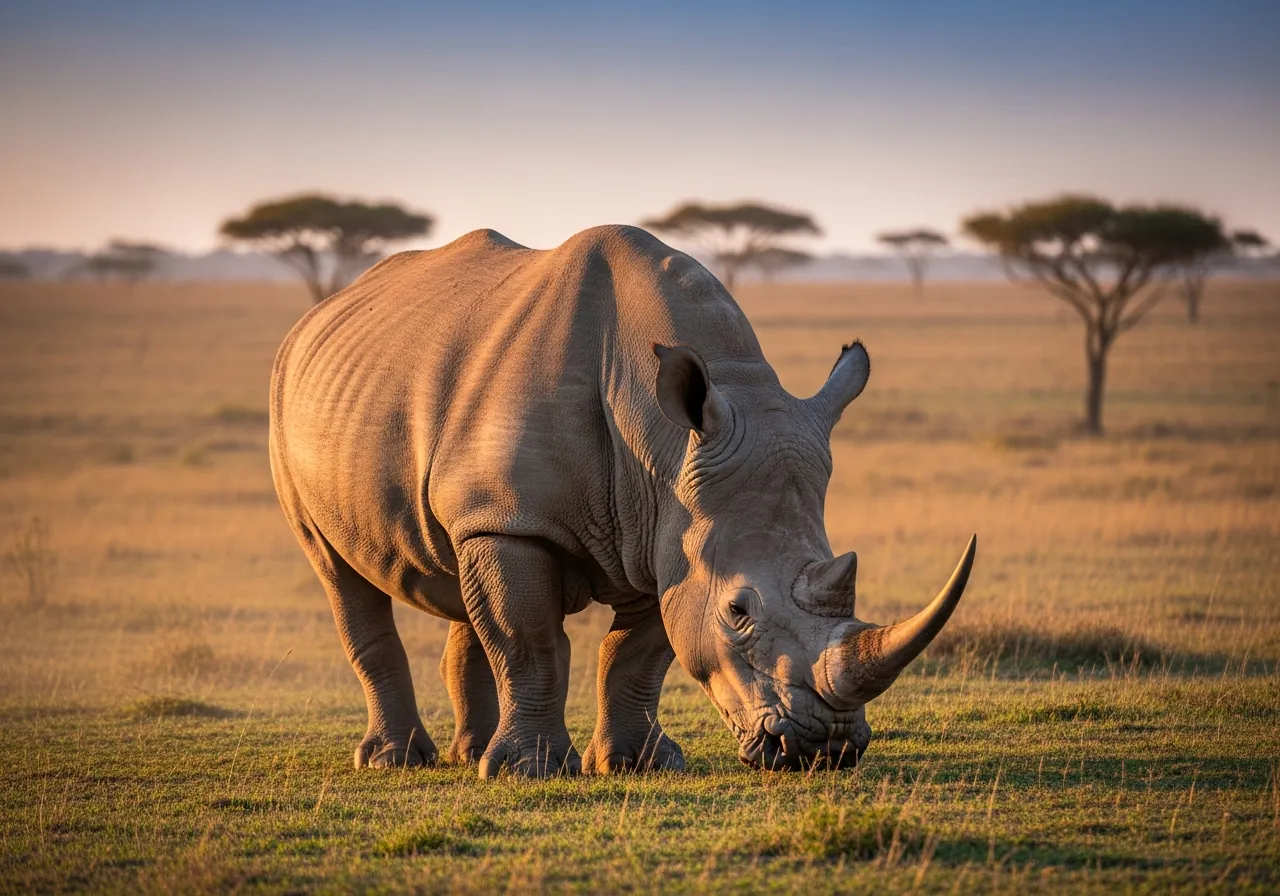
In brief
The northern white rhino is functionally extinct in the wild — only two females (Najin and Fatu) survive in Kenya’s Ol Pejeta Conservancy, both unable to breed naturally. The last male died in 2018.
By the WARN Research & Conservation TeamChecked against IUCN Red List & CITES sourcesLast updated
The northern white rhino is functionally extinct in the wild — only Najin and Fatu survive at Kenya's Ol Pejeta Conservancy, both unable to breed naturally. Last male Sudan died in 2018. Poaching for horn drove collapse across Central Africa. Tissue banking and in vitro embryo projects using southern white surrogates offer slim hope. Southern white rhino recovery from fewer than 100 to 16,000+ shows intensive protection can work when funded.
2
Living northern white rhinos — both female
2018
Last male Sudan died
16,000+
Southern white rhinos after recovery
CR
Northern white rhino — Critically Endangered / functionally extinct
Quick facts
| Survivors | Najin and Fatu at Ol Pejeta, Kenya |
|---|---|
| Cause | Poaching for horn in Central Africa |
| IVF research | Embryos from stored material — southern white surrogates |
| Sudan | Last male — global attention at death 2018 |
| Southern white | Recovery model — intensive anti-poaching |
| Horn trade | Persistent illegal demand despite bans |
Key takeaways
- Two females remain — functionally extinct.
- Last male Sudan died 2018.
- Poaching and war erased wild population.
- IVF research — uncertain genetic rescue path.
- Southern white recovery shows protection works when funded.
- Prevention cheaper than post-extinction technology.
Poaching collapse
Northern white rhinos ranged Sudan, Uganda, Chad and DRC — civil war and horn poaching eliminated wild populations by 2000s. Last wild individuals died or were killed; captivity held scattered animals. Horn demand in illegal markets drives poaching despite no proven medicinal value — keratin like fingernails. Rangers died protecting rhinos; funding collapsed in conflict zones. Functional extinction means population cannot recover without human intervention — natural breeding impossible with two related females remaining.
Ol Pejeta and Sudan
Sudan — last male — died March 2018 at Ol Pejeta, Kenya, aged 45, euthanised after age-related suffering. Daughter Najin and granddaughter Fatu remain — both with health issues preventing natural mating. Global media mourned Sudan as symbol of human failure. Conservancy maintains 24-hour armed protection for two animals costing millions annually — extreme endgame of poaching crisis. Tissue and sperm stored from Sudan and other deceased males feed BioRescue IVF project.
IVF and genetic rescue
Scientists create embryos from stored egg and sperm using southern white rhino surrogate mothers — species closely related. Success uncertain — few embryos, technical barriers, ethical debate on resources for functionally extinct subspecies versus saving extant Critically Endangered species with wild populations. Project proceeds because losing genetic lineage forever closes option value. Even successful calf birth would need decades to build herd — anti-poaching environment must exist where offspring might eventually release.
Southern white rhino contrast
Southern white rhino dropped below 100 individuals early 1900s — intensive protection in South Africa and Namibia rebuilt to 16,000+. Proof poaching control and habitat security work when governance and funding hold. Northern subspecies lacked same sustained investment before war erased range. Donors funding rhino appeals through WARN partners support anti-poaching and community programmes where wild populations still breed — prevention beats genetic rescue after functional extinction.
What WARN does
WARN rhino appeal funds partner anti-poaching and community programmes where wild rhino populations still breed.