Wildlife
Are Komodo dragons endangered?
Komodo dragons are Endangered — limited to a handful of Indonesian islands and squeezed by habitat loss and climate pressure.
In brief
Komodo dragons (Varanus komodoensis) are listed as Endangered on the IUCN Red List. Their range is limited to a handful of Indonesian islands and is shrinking due to habitat loss and climate pressure.
By the WARN Research & Conservation TeamChecked against IUCN Red List & CITES sourcesLast updated
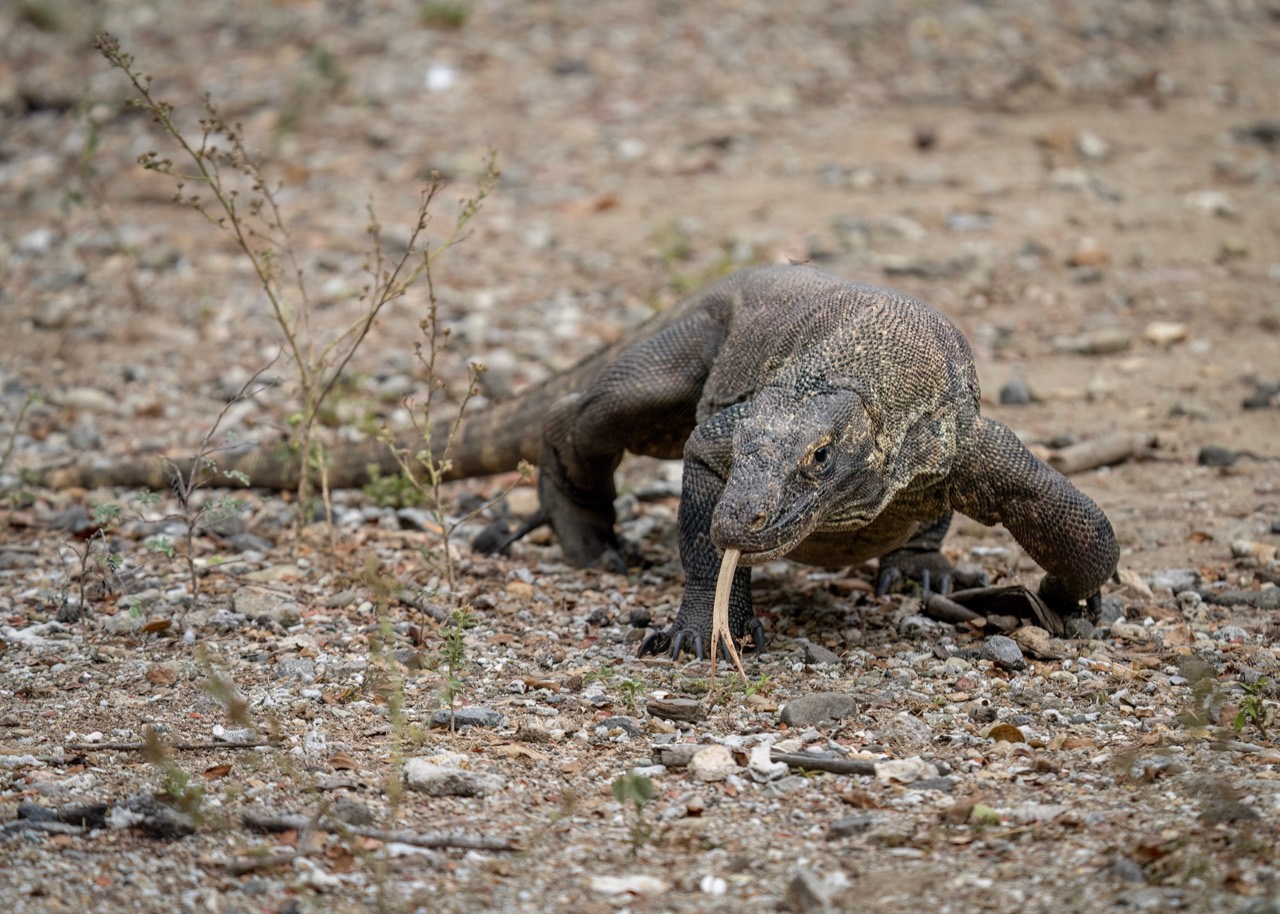
Varanus komodoensis is the world’s largest lizard, reaching about three metres in length on dry savanna and tropical forest of Komodo, Rinca and neighbouring Indonesian islands. The IUCN Red List classifies the species as Endangered — range is small, populations are fragmented and rising sea levels threaten low-lying habitat. Overfishing reduces prey availability; tourism can fund protection when managed responsibly but also disturbs nesting if unregulated.
~3 m
Maximum length — largest living lizard
Endangered
IUCN Red List status
5
Island populations in Indonesia
70 kg
Typical large adult weight
Quick facts
| Scientific name | Varanus komodoensis |
|---|---|
| Range | Komodo, Rinca, Flores and small satellite islands — Indonesia only |
| IUCN status | Endangered — restricted range and declining prey |
| Diet | Carrion and live prey — deer, pigs, water buffalo, smaller reptiles |
| Venom | Delivers anticoagulant venom — combined with bite force and bacteria |
| Threats | Habitat loss, sea-level rise, prey depletion, illegal trade |
Key takeaways
- Komodo dragons are Endangered on the IUCN Red List — restricted to Indonesian islands.
- Roughly 1,400 mature individuals remain in fragmented subpopulations.
- Rising sea levels threaten low-lying coastal habitat on small islands.
- Prey depletion from hunting and overfishing adds pressure beyond habitat loss.
- Komodo National Park is the core protected area — tourism must be managed responsibly.
- CITES Appendix I prohibits international commercial trade in live dragons.
A species with a tiny range
Komodo dragons exist nowhere in the wild outside Indonesia’s Lesser Sunda Islands — chiefly Komodo National Park and surrounding areas. Small range size amplifies extinction risk: a single catastrophic event — volcanic eruption, disease outbreak or severe drought — could devastate a population. The IUCN estimates roughly 1,400 mature individuals in declining subpopulations. Komodo National Park provides legal protection, but dragons also occur on Flores outside the park where habitat conversion for agriculture and village expansion continues. Range restriction is the fundamental vulnerability behind the Endangered listing.
Climate and sea-level rise
Many dragon habitats are coastal lowland — savanna and monsoon forest near the sea. Rising sea levels and stronger storm surges threaten nesting areas and reduce usable land on small islands. Prey species — Timor deer, wild boar — also depend on the same habitat matrix. Climate models project increased drought frequency in eastern Indonesia, which could reduce water sources and prey productivity. Conservation planning must account for habitat shifting inland where topography allows — not all islands offer upland refuge.
Prey depletion and human pressure
Illegal deer hunting and overfishing reduce food available to dragons. Villagers sometimes poison carcasses to kill nuisance dragons that raid livestock — a practice that kills through secondary poisoning. Tourism brings revenue for park rangers and local communities when entrance fees fund enforcement, but unregulated feeding and crowding stress animals and alter natural behaviour. The illegal pet trade in live dragons, though less voluminous than mammal trafficking, persists despite CITES Appendix I protection and Indonesian law.
Protection and monitoring
Komodo National Park — a UNESCO World Heritage Site — is the core stronghold. Rangers conduct population monitoring, anti-poaching patrols and tourist management. Research on reproduction, home range and prey dynamics informs park zoning. Captive breeding in Indonesian zoos provides an insurance population but is not a substitute for wild protection. Extending protected-area coverage on Flores and strengthening fisheries management in surrounding waters support prey recovery. Donor funding for ranger salaries and monitoring equipment helps where government budgets are thin.