Climate change is often discussed in terms of glaciers, sea level and economic damage. It is talked about less often in terms of the animals — wild and domestic — whose survival depends on stable temperatures, predictable rainfall and intact habitats. This briefing summarises what the credible evidence shows about how a warming planet is already affecting animals in the countries WARN is preparing to operate in. The framing is deliberately practical: where the harm is, what species are most exposed, and where rescue, sanctuary and shelter work fits into the response.
The headline finding from IUCN
The International Union for Conservation of Nature (IUCN) — which produces the Red List of Threatened Species, the authoritative global assessment of extinction risk — now identifies climate change as one of the fastest-growing threats to wildlife, sitting alongside habitat loss and illegal trade. IUCN's analyses show climate-related threats appearing in the Red List assessments for thousands of species, including a high proportion of corals, amphibians and marine mammals. The World Organisation for Animal Health (WOAH) has also formally recognised climate change as a driver of shifting animal-disease patterns, with vectors like ticks and mosquitoes moving into new territories as temperatures rise.
Southeast Asia: coral, plastic, heat
Indonesia and Malaysia — the Coral Triangle
Indonesia and Malaysia sit at the heart of the Coral Triangle, the most biodiverse stretch of ocean on the planet. The reefs of this region support more than 600 species of reef-building coral and an estimated 75% of all known coral species globally. They are also among the most heat-exposed reefs in the world. Repeated mass bleaching events — driven by sustained sea surface temperatures above coral thermal tolerances — have been documented across Indonesian and Malaysian waters, with the most severe global events recorded in 1998, 2010 and the 2014-2017 multi-year bleaching episode. IUCN Red List assessments for reef-building corals now show climate-driven bleaching as a primary threat.
Reef collapse is not only a biodiversity story. The fish that depend on reefs are the foundation of food security for hundreds of millions of coastal people across Southeast Asia; reef loss is a chain reaction that runs from coral polyps to fish, to seabirds, to coastal communities and back again.
Sea turtles and the feminisation problem
Sea turtles nest on beaches across Southeast Asia, including Indonesia and Malaysia in WARN's current partner network, plus wider educational search contexts such as Vietnam, Thailand and Cambodia. The sex of sea turtle hatchlings is determined by the temperature of the sand the eggs incubate in: warmer sand produces females, cooler sand produces males. As sand temperatures rise, monitored nesting beaches across the tropics are now producing overwhelmingly female clutches. Some long-term studies report female ratios above 90% in the warmest beaches. The long-term consequences for population genetics are serious, and the issue compounds the existing pressures of plastic ingestion and ghost-gear entanglement covered elsewhere in our Indonesia briefing.
Vietnam, Thailand, Cambodia — heat stress and changing monsoons
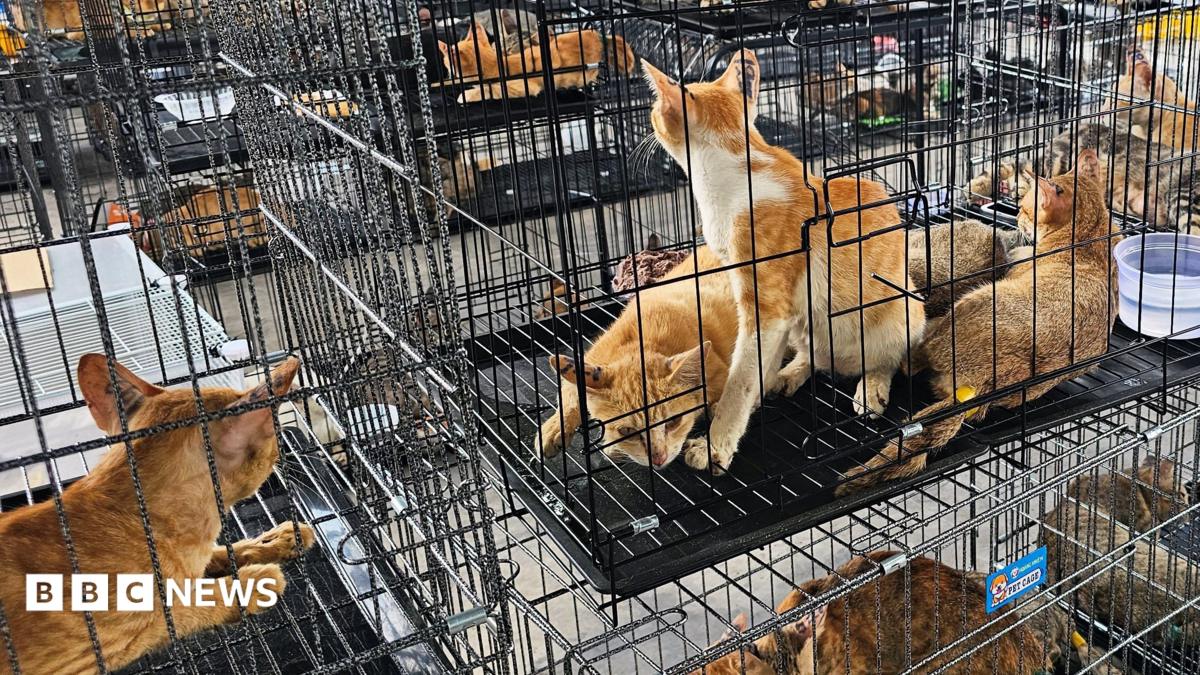
Across mainland Southeast Asia, climate change is showing up as more variable monsoons, more frequent extreme heat events, and shifting flood-and-drought cycles. For free-roaming dogs and cats in cities like Hanoi, Bangkok and Phnom Penh — populations WARN's cat and dog programmes are designed to support — extreme heat days drive measurable spikes in heatstroke and dehydration in unprotected animals. For working animals in rural areas, more erratic rains mean more variable crop calendars and longer periods of overwork.
South Asia: Pakistan's compound emergencies
Pakistan is one of the most climate-exposed countries on Earth despite contributing a comparatively small share of global emissions. The country sits between melting Himalayan glaciers in the north and rising sea levels on the Sindh coast, and is repeatedly identified in independent climate-risk assessments as one of the ten most affected countries by extreme weather over the past two decades.
The catastrophic 2022 floods — which the United Nations estimated displaced 33 million people — also killed or displaced an estimated 1.1 million livestock and working animals according to Pakistan's own national assessments. Working donkeys, mules, horses, cattle and goats were drowned, separated from owners or lost their pasture and clean water. Dogs and cats in the affected areas — many of them already free-roaming — lost the food scraps and informal feeders they depend on, and the resulting concentration of stressed animals fed measurable spikes in disease transmission.
Karachi specifically — the focus of WARN's flagship dog appeal — is highly exposed to compound climate risk: extreme heat events, urban flooding, and sea-level rise on the Arabian Sea coast. The city's enormous free-roaming dog population is at the sharp end of each of these stresses.
South America: the Andes and the Amazon
Colombia and Peru — the high Andes
The tropical Andes are one of the world's most biodiverse mountain systems and one of the most climate-sensitive. The IUCN-listed Andean (spectacled) bear — South America's only bear species and the focus of WARN's Andean Bear appeal — depends on a narrow band of cloud forest and páramo habitat that is being pushed upslope by warming temperatures. As that band thins out at the top of the mountains, the available habitat shrinks. The same pattern affects high-elevation amphibians, hummingbirds and pollinators across Colombia and Peru.
Lower in the system, the Amazon basin is showing repeated severe drought events — including the historic 2023 drought that left rivers at record-low levels and stranded freshwater dolphins and turtles in shallow, overheating pools. Howler monkeys and other primates are documented dying of heat exhaustion during the worst events.
The Amazon as a carbon system
The Amazon stores an enormous amount of carbon. Its capacity to keep doing so depends on the forest staying intact and the rainfall cycle staying stable. Climate-driven changes in rainfall — combined with deforestation pressure — risk pushing parts of the basin into a self-reinforcing drying loop. The animals at the front of that loop are the ones already living at the edge of their thermal range: amphibians, fish in seasonal pools, and the parrots WARN's anti-trafficking appeal is designed to support.
East Africa: the longest drought in living memory
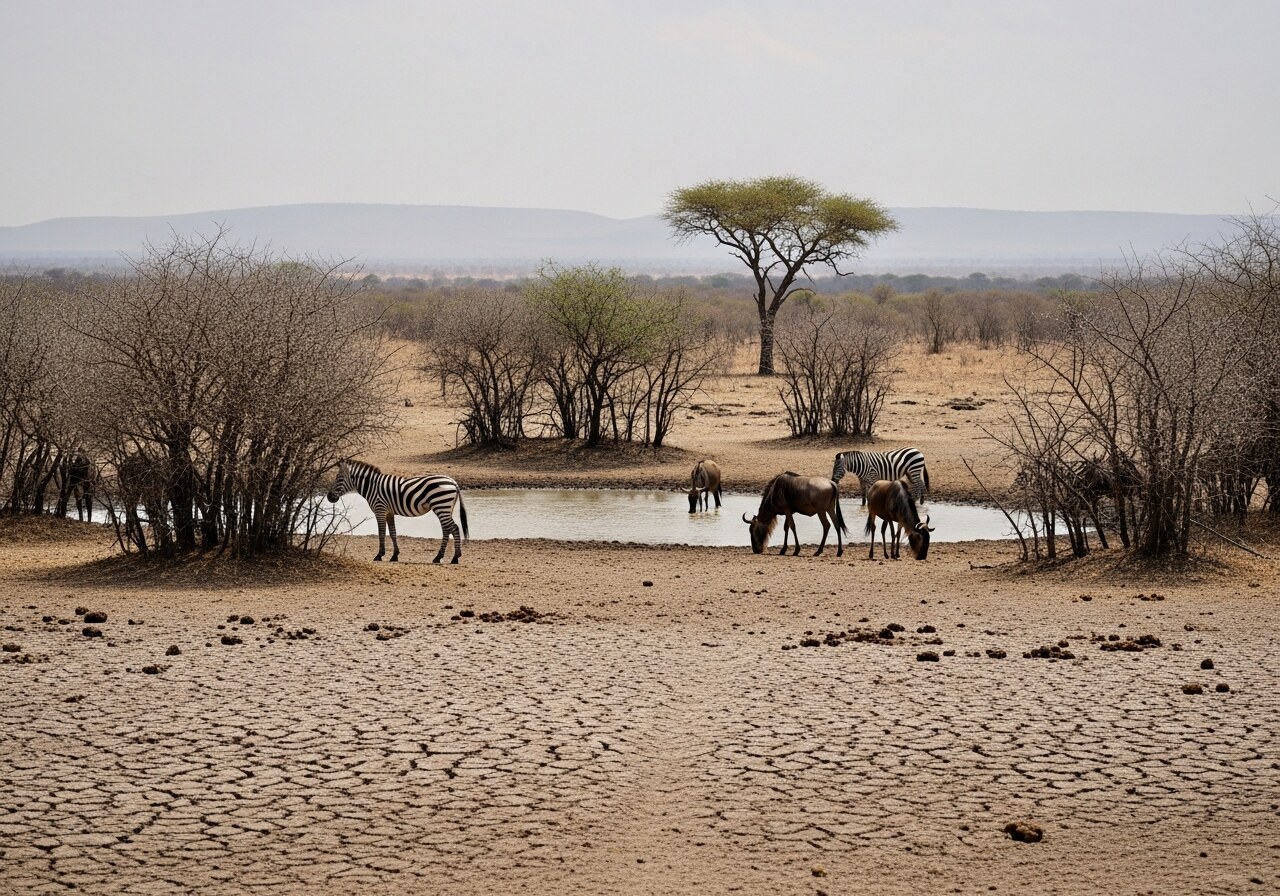
Kenya and Tanzania — the focus of WARN's Elephant Appeal and our planned East African veterinary programmes — have lived through the worst multi-season drought in roughly 40 years. WHO and UN humanitarian agencies have repeatedly described the situation as a compound emergency: failed rainy seasons, mass livestock deaths, falling wildlife populations and rising human-wildlife conflict as animals concentrate around the remaining water sources.
The animal welfare impacts have been severe and well documented:
- Elephants. Kenya Wildlife Service has reported significant drought-related elephant deaths during recent drought cycles, with calves the most exposed.
- Wildebeest, zebra, giraffe. Major drought-linked mortality has been reported in multiple national parks and conservancies.
- Livestock. Pastoralist communities in northern Kenya and central Tanzania have lost a substantial share of their cattle, sheep, goats and camels. WHO has reported on the cascading nutrition and zoonotic-disease consequences.
- Free-roaming dogs and cats. Drought-stressed animals concentrate around towns, increasing competition for food and the risk of rabies and other disease spillover.
Climate change does not act alone here — it intersects with poaching, snaring and habitat loss to produce far greater harm than any one threat would on its own. Snare removal patrols, mobile veterinary care and protected animal sanctuary capacity all become more important, not less, in a drier and more unstable savanna.
Diseases on the move
The World Organisation for Animal Health (WOAH) tracks the movement of animal diseases globally. Its assessments note that climate change is already shifting the geography of tick-borne diseases, mosquito-borne diseases (including those affecting livestock and wildlife) and fungal diseases of amphibians. For working donkeys in Pakistan, that means new heat-and-vector pressure. For Andean and Amazonian amphibians, climate-driven shifts in chytrid fungus exposure remain one of the most serious extinction drivers ever documented. For free-roaming dogs across the WARN region, warmer winters mean longer flea, tick and parasite seasons.
What animal rescue and animal sanctuary work looks like in a warming world
None of this means rescue work is futile. The opposite: climate-stressed animal populations need more rescue capacity, not less. In practical terms, the animal welfare response to climate change looks like:
- Disaster-ready field teams. Mobile veterinary units that can deploy fast into flood or drought zones — to treat injured wildlife, evacuate livestock and feed displaced free-roaming animals.
- Stronger animal shelters. Partner shelters in cities like Karachi and Nairobi need climate-resilient buildings, shade, reliable water, and the capacity to absorb surge intake during heatwaves and floods.
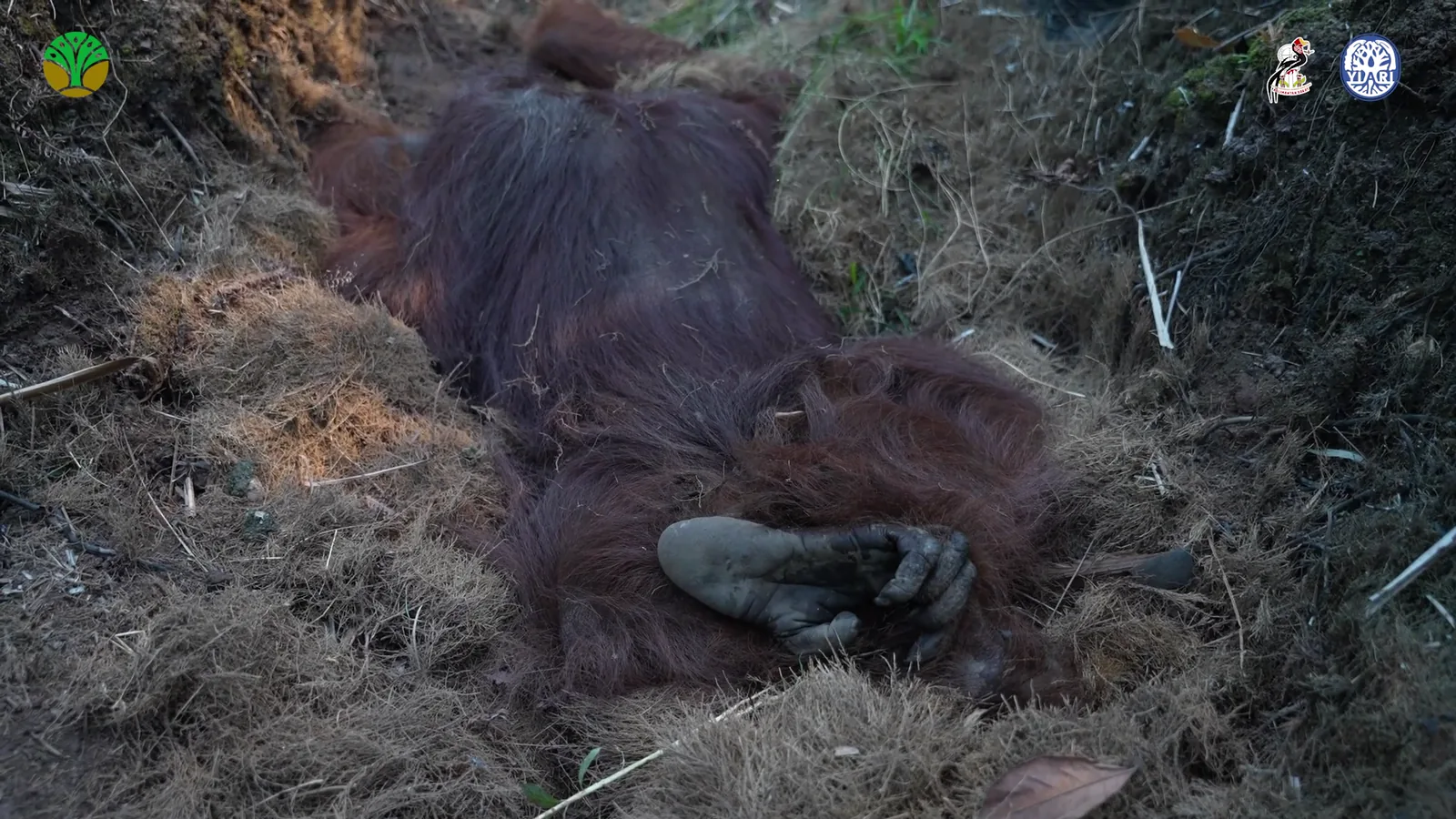
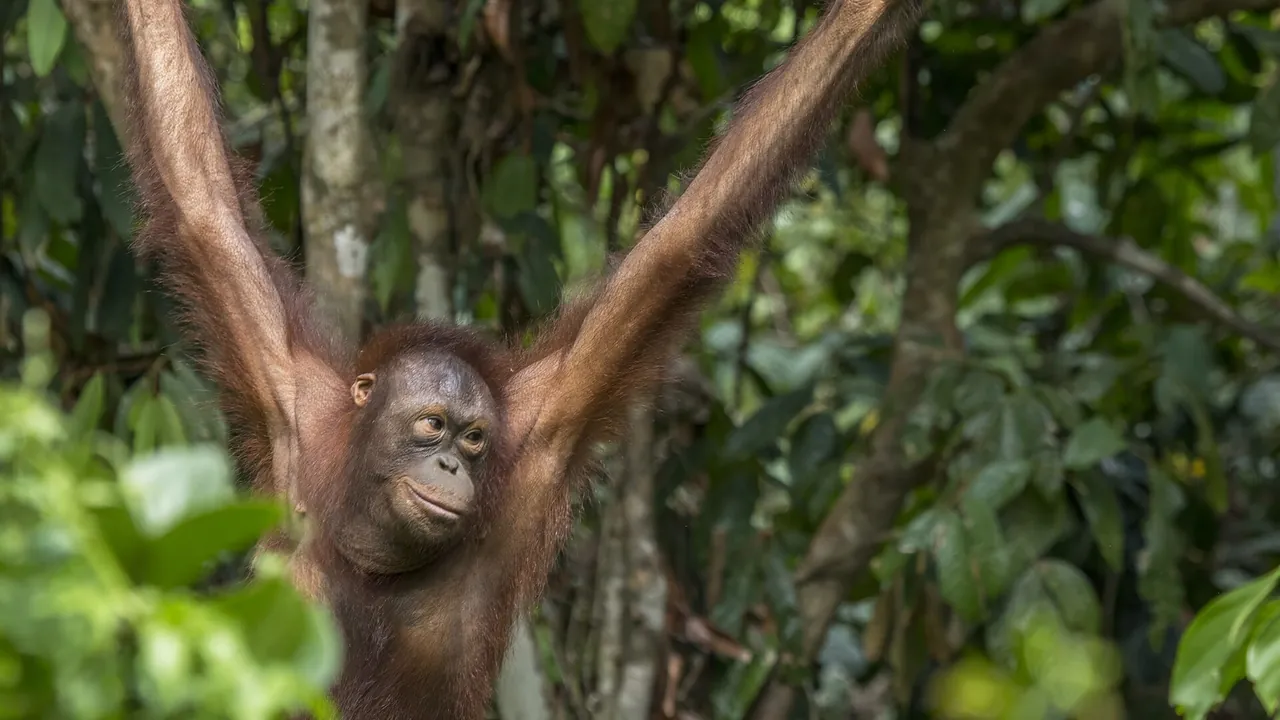
- Animal sanctuary capacity for the unreleasable. Climate displacement means more animals — orphaned orangutans, snared lions, injured raptors — who cannot be returned to a habitat that is itself in retreat. Sanctuaries for lifetime care are part of the climate response.
- Marine response. Ghost-gear cutting, sea turtle triage, stranded cetacean response — work that gets more, not less, urgent as fishing pressure compounds with thermal stress on the reefs.
- Data work. Every necropsy, every rescue record, every drought-mortality count contributes to the global picture that IUCN and others use to drive policy.
Where WARN fits in
World Animal Rescue Network is a launch-stage global not-for-profit animal welfare organisation. We are not a climate organisation, and we will not pretend we can solve climate change. What we can do — and what we are being built to do — is fund the animal-side of the response in the countries where the consequences are landing hardest. Coral Triangle marine response. East African veterinary outreach during drought. Pakistan flood and heat response for working animals and street dogs. South American partner sanctuaries for animals displaced from forests that are themselves in retreat.
Every WARN programme depends on supporter funding to begin. If this briefing has changed how you think about the animal cost of climate change, the most useful thing you can do is back the appeals that get animal rescue and animal sanctuary capacity on the ground in the countries that need it most.
Sources
- IUCN — Red List of Threatened Species and climate-change threat assessments for corals, sea turtles, Andean (spectacled) bear, and other species discussed.
- World Organisation for Animal Health (WOAH) — assessments of climate-driven shifts in animal disease distribution.
- World Health Organization (WHO) — humanitarian reporting on the East African drought and the 2022 Pakistan floods, including livestock and zoonotic-disease impacts.
- UN Environment Programme — assessments of coral bleaching in the Coral Triangle and freshwater stress in the Amazon basin.
- National wildlife authorities in Kenya and Pakistan — published drought- and flood-mortality figures for elephants and livestock respectively.
We need your support to make this happen
World Animal Rescue Network is at the launch stage of this work. We do not yet have rescue numbers to share — and that is exactly why your support matters now. Every donation helps us put trained teams on the ground, secure veterinary supplies and equipment, and reach the first animals before they are lost.
Donate today to fund our first deployments, or sponsor an animal to back a specific species through rehabilitation. You can also join the network as a volunteer, fundraiser, or monthly supporter.