Kenya · Tanzania · South Africa
Protect Africa's lions
Africa has lost around half its lions in a single generation. Learn what's driving the decline — and how an unrestricted gift supports WARN's partner-led rescue where it operates.
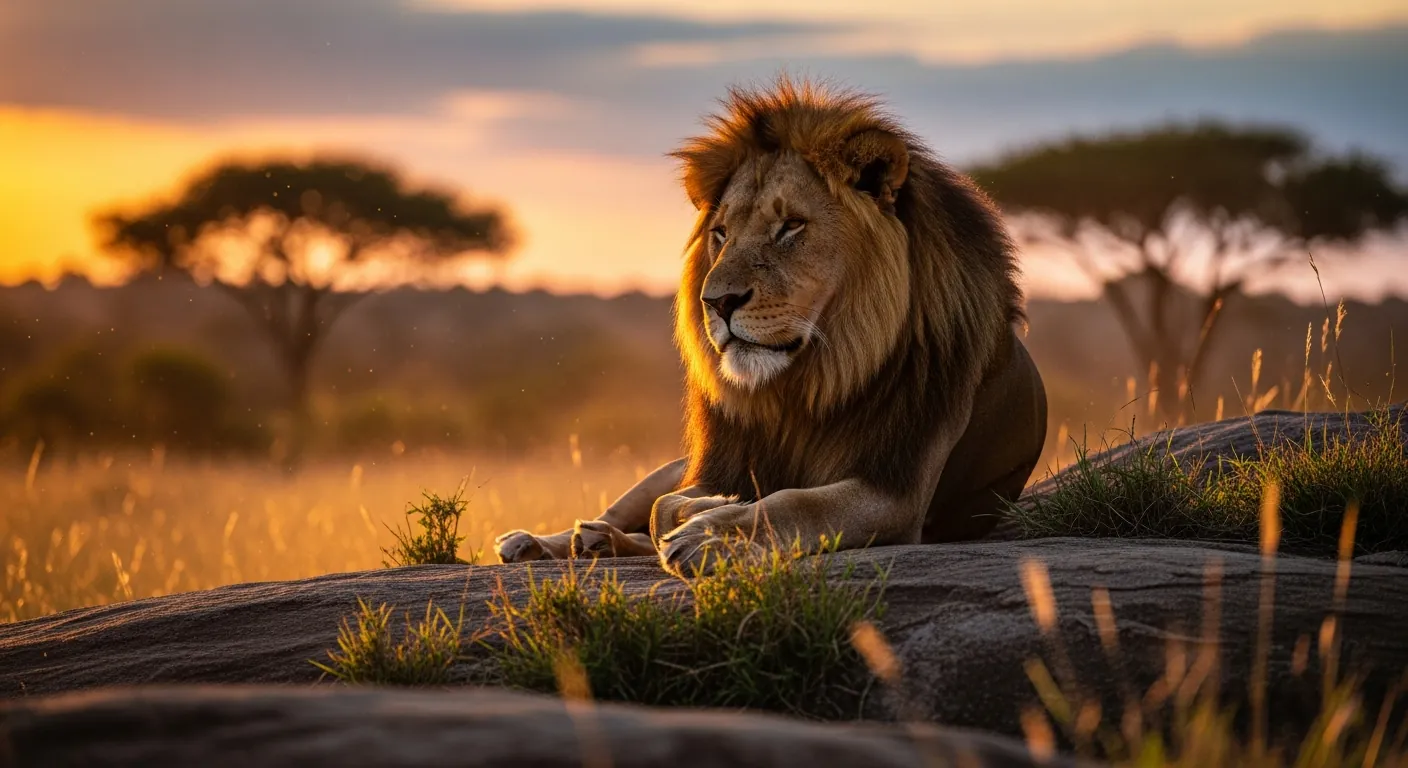
In brief
Around 20,000–25,000 wild African lions remain — roughly half the population Africa had 25 years ago. The lion is Vulnerable on the IUCN Red List. WARN funds partner-led snare response, conflict mitigation and sanctuary placement in Kenya, Tanzania and South Africa through grants — not WARN-run facilities.
By the WARN Research & Conservation TeamChecked against IUCN Red List & CITES sourcesLast updated
Give monthly — the most effective way
What your monthly gift can do
Regular gifts let our partners plan rescues, veterinary care and sanctuary capacity ahead of time. WARN's target is for at least 80% of unrestricted donations to fund programme delivery — grants to partner shelters, sanctuary capacity, veterinary care and rescue across the network.
£25 /month
helps vaccinate street dogs against rabies through WHO-endorsed CNVR — sustained month after month.
Start £25/month£50 /month
helps fund emergency veterinary care for a working donkey or horse — sustained month after month.
Start £50/month£100 /month
supports the rescue-to-sanctuary journey for a trafficked animal — sustained month after month.
Start £100/monthFigures are illustrative of partner-led costs and are not a guarantee of how any single gift is spent. Prefer a single gift? Give once instead.
20,000–25,000
Wild African lions left (IUCN estimate)
~50%
Population lost in ~25 years
Vulnerable
IUCN Red List status
3
WARN in-network countries
Figures: IUCN Red List; Bauer et al. 2015 (PNAS). See sources below.
Why are lions declining?
The lion is the emblem of wild Africa — and it is quietly disappearing. In a single generation the continent has lost around half its lions. They now hold a fraction of their former range, surviving in ever more isolated populations.
Conflict with livestock herders, bushmeat snaring, habitat fragmentation, poaching for body parts and — in southern Africa — a controversial captive-breeding industry all add pressure. West and Central African populations are especially fragile.
Effective lion conservation depends on well-funded ranger patrols, conflict mitigation, anti-snare work and community benefit — but WARN's current partner network does not include African programmes. We keep this page live so people searching for lion rescue find accurate information.
What threatens wild lions?
Human–wildlife conflict
As pastoralists and lions share shrinking rangeland, lions that take livestock are poisoned, speared or shot in retaliation. Conflict kills more lions in some landscapes than poaching, and it erodes community tolerance for coexistence.
Retaliatory killing is a leading cause of lion mortality outside protected areas
Snaring & bushmeat bycatch
Wire snares set for antelope and other bushmeat maim and kill lions indiscriminately. Because snares are cheap and easy to reset, patrols must remove them continuously — yet removal alone cannot keep pace where bushmeat demand is high.
Snares are a major threat across East and Southern Africa
Habitat loss & fragmentation
Grassland conversion for agriculture, settlement and fences isolates lion populations. Small, isolated prides lose genetic diversity and face higher extinction risk — West and Central African populations are especially imperilled.
Lions now occupy a fraction of their historic African range
Poaching & bone trafficking
Lions are killed for body parts trafficked to demand markets, sometimes as a substitute for tiger bone. Trophy hunting and illegal killing both remove adult males disproportionately, disrupting pride structure.
Lion bone trade has grown alongside tiger-bone restrictions
Captive-lion industry
In parts of southern Africa, lions are bred in captivity for cub-petting, walking tourism and, in some cases, captive hunting. Welfare groups widely condemn the industry; surplus animals often need lifetime sanctuary care.
Thousands of captive lions exist outside wild conservation value
African vs Asiatic lion: how do they compare?
| Attribute | African lion | Asiatic lion |
|---|---|---|
| Scientific name | Panthera leo leo | Panthera leo persica |
| IUCN status | Vulnerable (population decreasing) | Endangered (~650 in Gir Forest, India) |
| Population estimate | ~20,000–25,000 wild | ~650 (single population) |
| Range | Sub-Saharan Africa (fragmented) | Gir Forest, Gujarat, India only |
| Mane | Prominent in males | Smaller, sparser mane |
| Social structure | Prides with related females | Smaller prides, less social |
| CITES | Appendix II (with annotation) | Appendix I |
Quick lion facts
| Lifespan | ~10–14 years in the wild; longer in captivity |
|---|---|
| Weight | Males ~150–250 kg; females ~120–180 kg |
| Shoulder height | Up to ~1.2 m at shoulder |
| Diet | Carnivore — mainly large ungulates |
| Gestation | ~110 days; 2–4 cubs typical |
| Hunt success | Roughly 15–25% of attempts |
| Range | African lions: savanna, grassland, bush; Asiatic: dry deciduous forest |
| Names | Group: pride · male: lion · female: lioness · young: cub |
Key facts about the lion crisis
- Africa has lost roughly half its wild lions in a single generation — the species is Vulnerable and still declining across most of its range.
- Retaliatory killing after livestock losses and snaring for bushmeat are among the deadliest threats outside well-protected reserves.
- West and Central African lion populations are far more imperilled than the better-known East and Southern African strongholds.
- The captive-lion industry in southern Africa produces welfare and conservation concerns distinct from wild-population protection.
- WARN makes partner grants in Kenya, Tanzania and South Africa for snare response, conflict mitigation and sanctuary placement.
- An unrestricted gift still supports the most urgent partner-led rescue need across all 17 network countries.
Give Where It's Needed Most
Fund partner-led snare response, conflict mitigation and sanctuary placement for lions in Kenya, Tanzania and South Africa.