Wildlife · Species comparisons
What is the difference between a mouse and a rat?
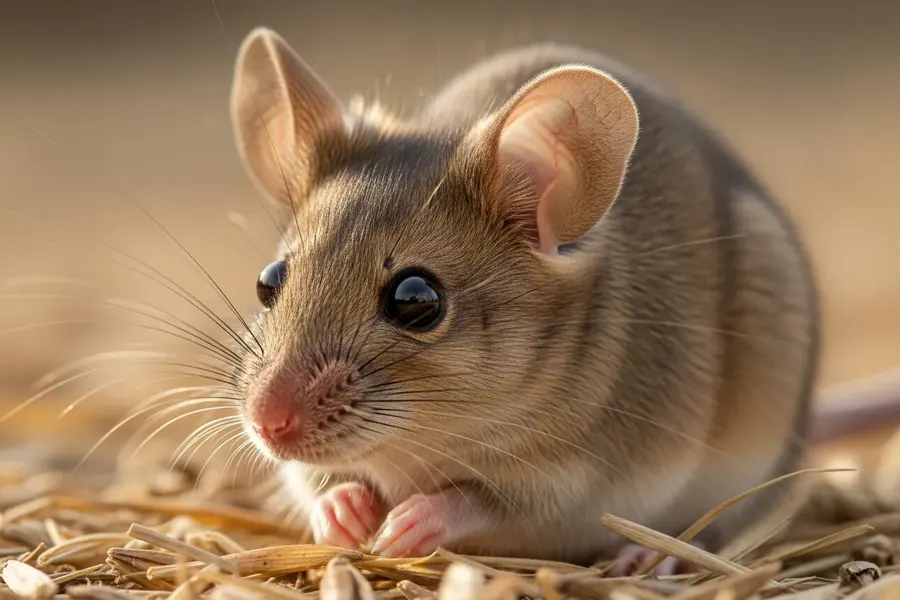
Rats are larger with thicker tails; mice smaller with big ears — both rodents, different welfare and public-health contexts.
In brief
Rats are generally larger with thicker tails and blunter snouts. Mice are smaller — house mice weigh roughly 20 g versus 300 g or more for brown rats. Both are rodents; both can carry disease and suffer in pest-control campaigns that ignore humane alternatives.
By the WARN Research & Conservation TeamChecked against IUCN Red List & CITES sourcesLast updated
House mouse (Mus musculus) and brown rat (Rattus norvegicus) followed human settlement globally — grain stores, sewers and ships. Size is the public distinction: mouse 20 g, rat 300 g or more. Both breed explosively under food surplus. Integrated pest management beats poison-only campaigns that kill owls and pets. Fancy rats and mice are companion animals with distinct welfare standards.
20 g
Typical house mouse weight
300+ g
Brown rat weight — tenfold larger
10+
Pups per litter — both species under ideal conditions
Global
Commensal range — every continent except Antarctica
Quick facts
| Mouse ears | Large relative to head |
|---|---|
| Rat tail | Thick, scaly — shorter than body proportionally vs mouse |
| Droppings | Mouse: rice grain; rat: olive pit size |
| Species | Mus musculus vs Rattus norvegicus most common |
| Black rat | Rattus rattus — agile climber, historical plague vector |
| Control | Exclusion and sanitation before poison |
Key takeaways
- Mouse small, big ears; rat large, thick tail.
- Mus musculus and Rattus norvegicus — global commensals.
- Integrated pest management — exclude before poison.
- Rodenticide harms predators secondarily.
- Pet rats and mice need social enrichment.
- See WARN comparison identification table.
Morphology and tracks
Mouse pointed snout and oversized ears distinguish from juvenile rats — rat pups grow quickly past mouse size. Rat tail thicker and less hairy. Gnaw marks: rat teeth wider gap. Footprints in dust show rat toes splayed larger. Correct ID guides bait station size and trap selection — mouse traps ineffective on rats.
Disease and ecology
Both carry pathogens — leptospirosis, hantavirus context-dependent by region. Plague fleas historically on black rats — ecology complex. Rodents feed owls, snakes and urban foxes — indiscriminate rodenticide causes secondary poisoning. Birth control baits exist but contested for welfare and efficacy.
Humane control principles
UK CRRU guidelines emphasise prevention — proofing entry, securing waste, limiting harbourage. Snap traps instantaneous when checked daily; glue traps banned in growing jurisdictions for cruelty. Live trap release illegal for non-native rats in many countries — consult local law. WARN does not operate pest control — educates on welfare-compatible principles.
Pet versus pest context
Fancy rats socialise strongly — need companions and enrichment. Mice shorter-lived, also social. Laboratory standards differ from wild commensal contexts — comparison table clarifies species names for searchers asking “mouse vs rat” in biology class versus kitchen panic.