Wildlife · Species comparisons
What is the difference between a caiman and an alligator?
Alligators and caimans share Alligatoridae — broad snouts and hidden lower teeth — but differ in geography, size and species diversity.
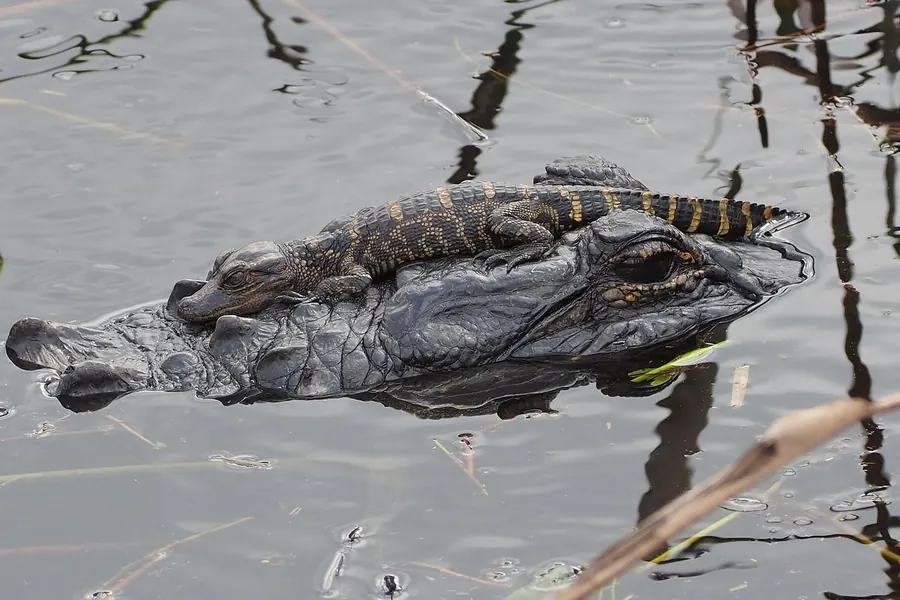
In brief
Alligators have broad U-shaped snouts and only the upper teeth show when the mouth is closed. Caimans — smaller relatives in Central and South America — often have narrower snouts and a bony ridge between the eyes in many species. Both belong to Alligatoridae, separate from true crocodiles.
By the WARN Research & Conservation TeamChecked against IUCN Red List & CITES sourcesLast updated
Alligators and caimans are close relatives in family Alligatoridae — separate from true crocodiles (Crocodylidae). American and Chinese alligators have broad U-shaped snouts evolved for crushing turtle shells and hard prey. Caimans — spectacled, yacare, black — inhabit Central and South America with varied sizes; black caiman rivals alligator length. All alligatorids hide the lower fourth tooth when the mouth closes — unlike crocodiles. Wetland loss, skin trade and conflict with fisheries threaten several caiman populations despite recovery of American alligator.
2
Living alligator species — American and Chinese
6+
Caiman species in the Americas
4 m
Maximum length — large male American alligator
CITES
Appendix I/II by species — trade regulated
Quick facts
| Snout | Broad U-shape in alligators; caimans vary — spectacled moderate |
|---|---|
| Geography | Alligators: US southeast and China; caimans: Latin America |
| Teeth rule | Lower fourth tooth hidden when mouth closed — unlike crocodiles |
| Black caiman | Largest Neotropical predator — rivals alligator size |
| Chinese alligator | Critically Endangered — fewer than 200 wild |
| Recovery | American alligator success after ESA protection |
Key takeaways
- Alligatoridae — alligators and caimans — separate from true crocodiles.
- Lower fourth tooth hidden — key ID rule versus crocodiles.
- American alligator recovered; Chinese alligator Critically Endangered.
- Black caiman largest Neotropical caiman.
- Geography separates groups — Americas only.
- See WARN comparison for snout and range table.
Snout shape and feeding
Broad alligator snouts generate high bite force for hard prey — turtles, molluscs, nutria. Caimans include fish specialists with narrower jaws and black caiman — apex predator taking capybara and deer at waterholes. Jaw shape correlates with diet more than taxonomy alone — but geography separates groups cleanly: no wild alligators in South America, no caimans native to North America except rare escapes. Spectacled caiman tolerates saltier water than American alligator in some estuaries.
The crocodile dental test
True crocodiles show the lower fourth tooth fitting into a notch in the upper jaw — visible when mouth closed. Alligators and caimans lack this — all lower teeth hide inside the upper jaw closure. The rule works worldwide for adult animals — hatchlings harder. Gharials and tomistomas are separate families again. Tourists mislabel all wetland reptiles “crocodile” — precise ID matters for conservation statistics and bite incident reporting.
Conservation trajectories
American alligator recovered from Endangered to Least Concern — among the clearest ESA successes — now managed through regulated hunting and farming. Chinese alligator Critically Endangered — reintroduction ponds in Anhui province supplement tiny wild count. Yacare caiman recovered in Brazil after skin trade bans; black caiman still depleted in parts of Amazonia. Caiman farming supplies legal leather — laundering wild skins remains an enforcement challenge.
Welfare and human conflict
Suburban Florida expansion increases alligator removals — nuisance programmes kill thousands annually. Education on not feeding wildlife reduces habituation. Caimans threaten aquaculture pens in Latin America — retaliatory killing where fencing fails. Both groups play wetland engineering roles — holes hold water in drought. WARN comparison links to alligator and caiman guides for regional detail.