Wildlife · Species comparisons
What is the difference between Bornean and Sumatran orangutans?
Bornean orangutans broader-faced and darker; Sumatran longer-haired and paler — all Pongo species Critically Endangered.
In brief
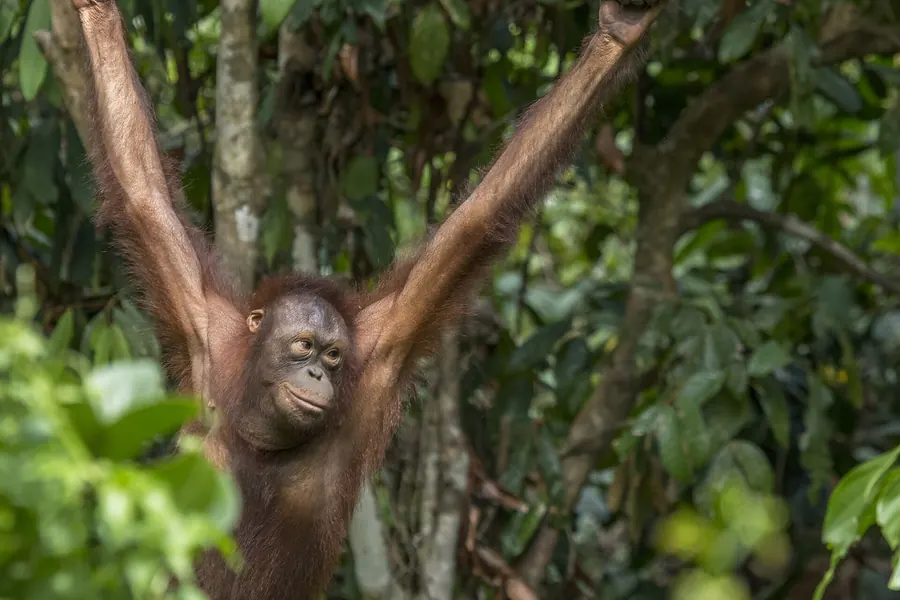
Bornean orangutans (Pongo pygmaeus) have broader faces and darker, coarser hair. Sumatran orangutans (Pongo abelii) have longer facial hair and paler, longer coats. Both are Critically Endangered — Sumatran numbers below 14,000; Bornean populations fragmented across three subspecies. Orangutans are Asia’s only great apes — arboreal, largely solitary, with male cheek flanges and long calls echoing over kilometres.
By the WARN Research & Conservation TeamChecked against IUCN Red List & CITES sourcesLast updated
Orangutans are Asia’s only great apes — arboreal, largely solitary, with male cheek flanges and long calls echoing over kilometres. Bornean (Pongo pygmaeus) and Sumatran (Pongo abelii) species split genetically; Tapanuli (Pongo tapanuliensis) discovered 2017 — fewer than 800 individuals. Palm oil, logging and pet trade devastate all three. Morphology and behaviour differ subtly — conservation urgency identical.
CR
All three Pongo species Critically Endangered
<14,000
Sumatran orangutans estimated
<800
Tapanuli orangutans — third species
97%
DNA shared with humans — great ape
Quick facts
| Bornean | Pongo pygmaeus — broader face, darker coat |
|---|---|
| Sumatran | Pongo abelii — longer hair, paler, longer beard |
| Tapanuli | Pongo tapanuliensis — South Sumatra, most threatened |
| Ecology | Arboreal fruit specialists — keystone seed dispersers |
| Interbirth | Roughly 7–8 years — slow reproduction |
| Pet trade | Mothers killed — infants need sanctuary years |
Key takeaways
- Three Critically Endangered Pongo species.
- Sumatran paler, longer hair; Bornean broader face.
- Tapanuli fewer than 800 individuals.
- Palm oil and pet trade primary threats.
- Slow reproduction — recovery takes decades.
- See comparison and rainforest hub.
Morphology and field marks
Sumatran males show longer cheek hair and paler, longer body hair; Bornean faces broader with darker red coats. Tapanuli differs in skull and call frequency — field ID difficult — genetics confirm. Size overlap — Bornean slightly larger on average. Both sexes orange-red; infants pink-faced.
Behaviour contrasts
Sumatran orangutans occasionally feed together on fig trees — rare tolerance. Bornean more strictly solitary outside mating. Tool use documented in both — leaf gloves, stick probes. Cognitive tests show planning ability comparable to chimpanzees on some tasks.
Habitat loss drivers
Palm oil plantation expansion primary — also logging, mining and fire. Indonesian and Malaysian policy shifts slow but insufficient — forest continues clearing. WARN documents palm oil wildlife links and habitat appeals in partner countries overlapping orangutan range indirectly through tropical forest funding.
Three-species comparison table
WARN comparison adds Tapanuli row — population, range island, discovery date. Routes to orangutan guide and rainforest animals hub.