Rwanda · Uganda · Partner grants
Save the mountain gorillas
Just over a thousand mountain gorillas remain — the one great ape whose numbers are rising. Fund partner-led protection in Rwanda and Uganda.
In brief
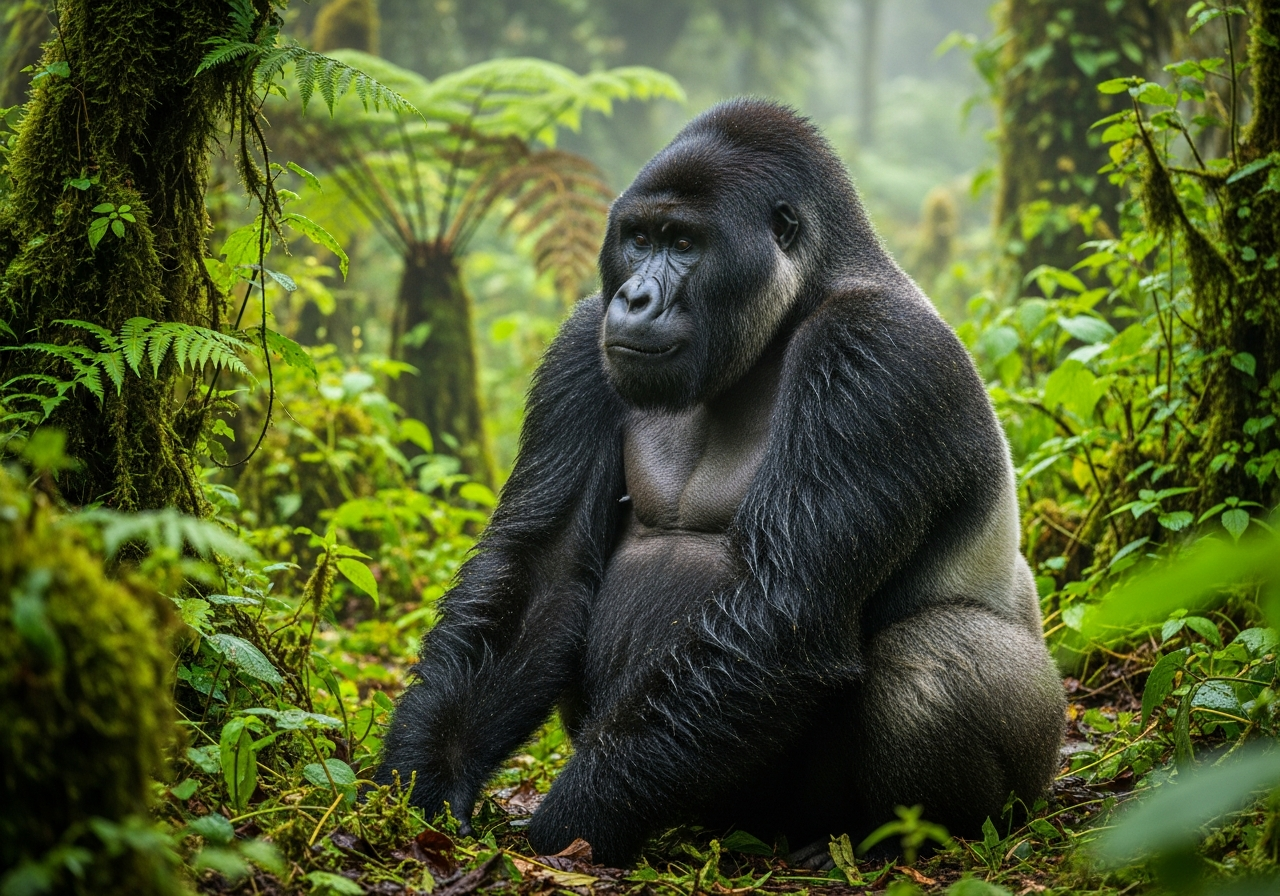
Just over 1,000 mountain gorillas remain in Rwanda and Uganda — the only great ape whose wild numbers are increasing. They are still Endangered. WARN funds partner-led veterinary response, snare removal and conflict mitigation in Rwanda and Uganda through grants — not WARN-run facilities or tourism.
~1,063
Mountain gorillas (2024 census)
Only
Great ape with rising numbers
Endangered
IUCN Red List status
2
WARN in-network countries (Rwanda, Uganda)
Figures: IUCN Red List; Virunga census reporting. See sources below.
The gorilla story
Mountain gorillas are one of conservation's rare good-news stories. Once feared doomed, their numbers have climbed back above a thousand through decades of intensive protection in the Virunga volcanoes of Rwanda, Uganda and the DRC.
But that recovery is fragile. Gorillas are caught in snares, acutely vulnerable to human diseases, and live in one of the most densely populated regions of Africa. WARN makes partner grants in Rwanda and Uganda for veterinary response, snare removal and conflict mitigation — not WARN-run facilities or tourism.
What threatens gorillas?
Snares & bycatch
Wire snares set for antelope and other forest animals maim and kill gorillas. A single snare injury can prove fatal for an animal that depends on hands and feet for travel and feeding.
Snares remain a constant threat in Virunga forests
Disease from humans
Gorillas share much of our DNA and are acutely vulnerable to human respiratory and gastrointestinal diseases. Strict viewing distances and health protocols exist because a common cold can kill a gorilla.
Tourism and proximity increase disease risk
Habitat pressure
Rwanda and Uganda have among Africa's densest human populations. Parks sit hard against farmland, so gorillas and people live in very close proximity — increasing conflict, crop raiding and disease transmission.
Small range, high human density
Poaching & insecurity
Historically gorillas were killed for bushmeat and trophies. In the DRC, armed conflict and insecurity in Virunga National Park continue to threaten rangers and gorillas alike.
DRC populations face highest insecurity
Small population risk
With just over a thousand individuals, mountain gorillas remain genetically vulnerable. The loss of even a few breeding females can affect a subpopulation for decades.
Every individual matters at this population size
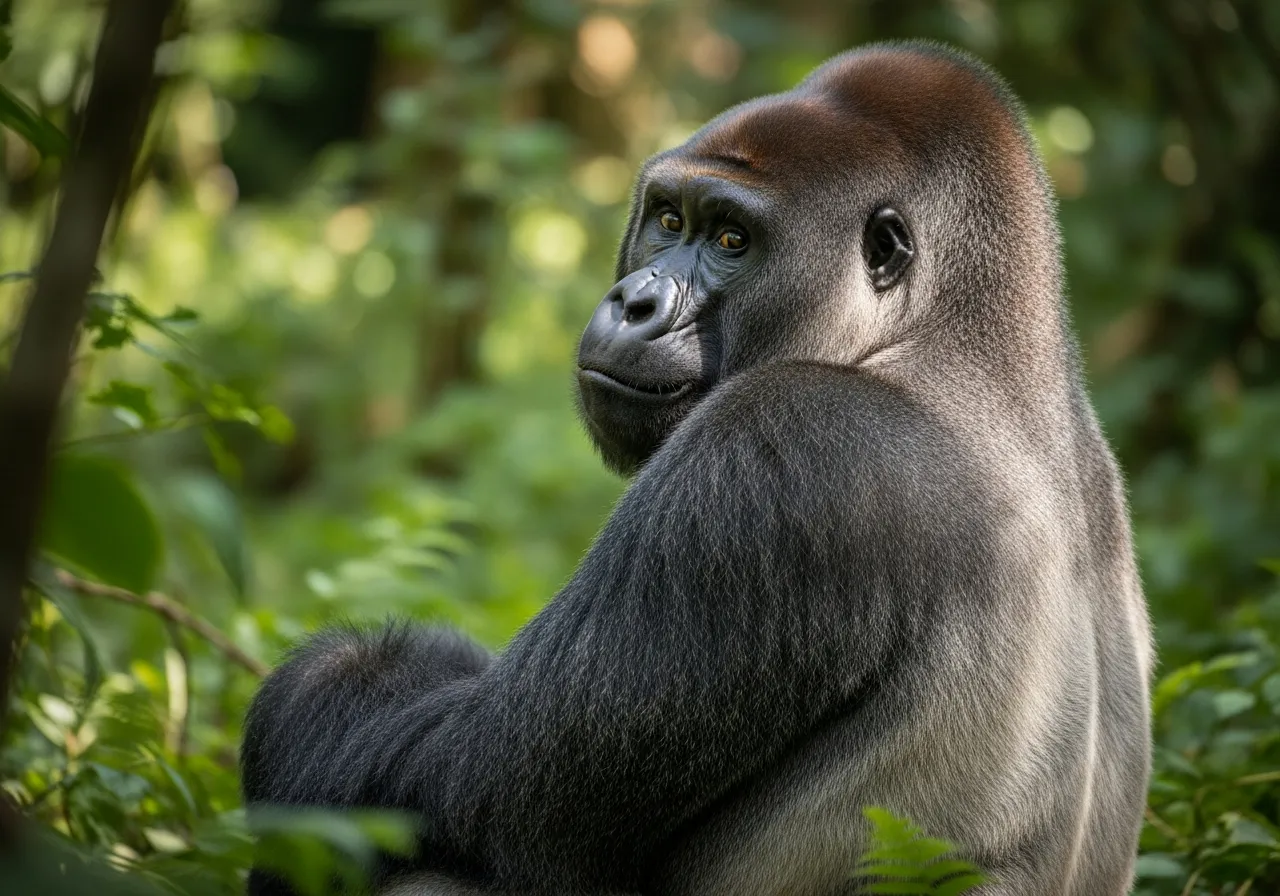
Gorilla species compared
| Attribute | Mountain | Eastern lowland | Western lowland |
|---|---|---|---|
| Scientific name | Gorilla beringei beringei | Gorilla beringei graueri | Gorilla gorilla gorilla |
| IUCN status | Endangered (increasing) | Critically Endangered | Critically Endangered |
| Population estimate | ~1,063 | ~3,800 | ~316,000 (declining) |
| Range | Virunga volcanoes (RW, UG, DRC) | Eastern DRC | Central & West Africa |
| Habitat | Montane forest | Lowland & montane forest | Lowland rainforest |
| Adult male weight | Up to ~220 kg | Up to ~250 kg | Up to ~180 kg |
Quick gorilla facts
| Lifespan | ~35–40 years in the wild |
|---|---|
| Weight | Males up to ~220 kg; females ~70–100 kg |
| Height | Males up to ~1.7 m standing |
| Diet | Herbivore — leaves, shoots, fruit, bark |
| Gestation | ~8.5 months; usually one infant |
| Interbirth interval | ~4 years |
| Social unit | Stable groups led by a silverback male |
| CITES | Appendix I (all gorilla taxa) |
Key facts
- Mountain gorillas are one of conservation's rare success stories — intensive protection has lifted numbers above 1,000.
- They remain Endangered and entirely dependent on continued ranger patrols, veterinary care and strict disease protocols.
- Eastern lowland and western lowland gorillas face far larger range losses and are Critically Endangered.
- Snares, disease from humans and habitat pressure at park edges are the most persistent threats to mountain gorillas.
- WARN makes partner grants in Rwanda and Uganda for veterinary response, snare removal and conflict mitigation — not WARN-run facilities.
- The DRC also holds mountain gorillas; WARN's in-network gorilla funding focuses on Rwanda and Uganda country pages.
- An unrestricted gift still supports the most urgent partner-led rescue need across all 17 network countries.
Donate to Gorilla Protection
Partner grants in Rwanda and Uganda fund veterinary response, snare removal and conflict mitigation for mountain gorillas.