Habitat
How does palm oil affect orangutans?
Palm oil plantations replace lowland rainforest — orangutans’ primary habitat — leaving starving animals in conflict with farmers.
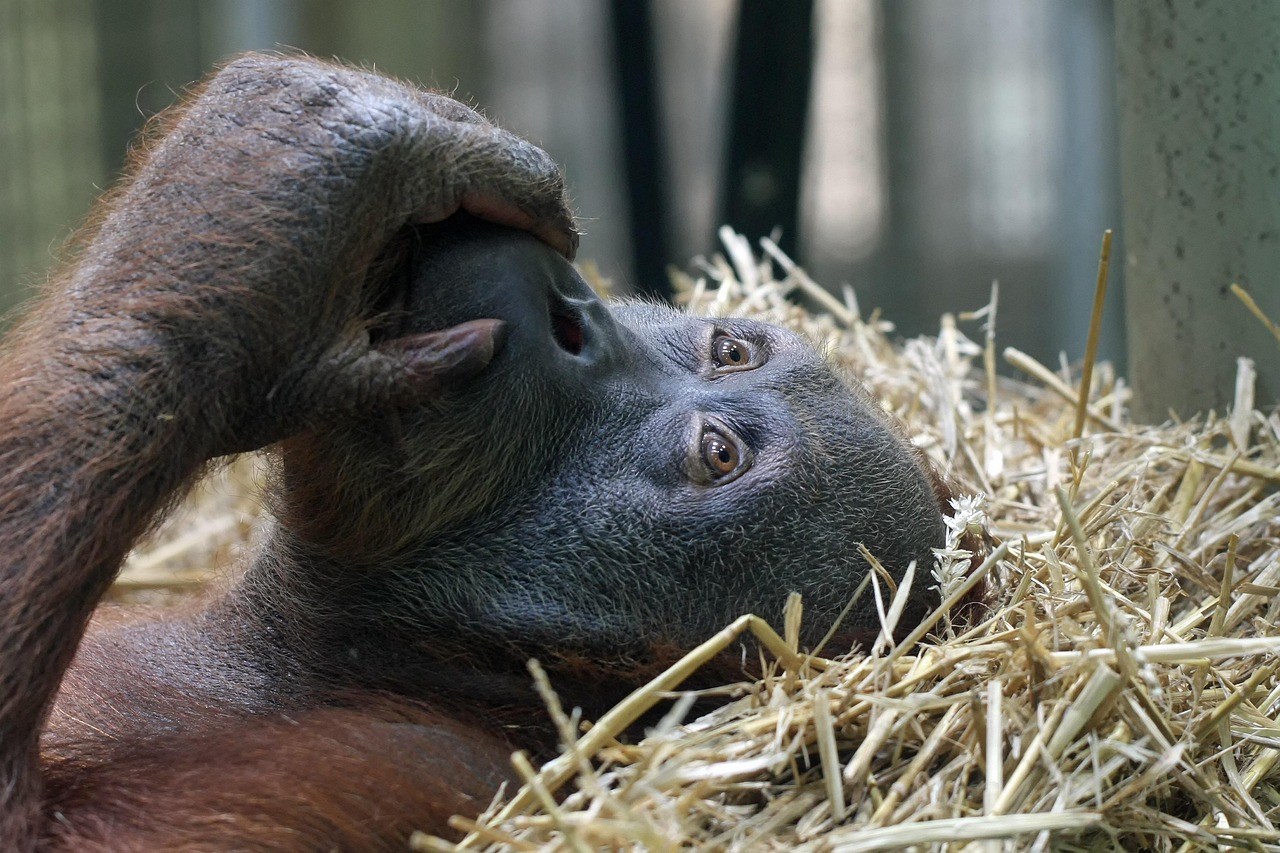
In brief
Large-scale palm oil plantations replace lowland rainforest — orangutans’ primary habitat. Fragmentation isolates populations and increases conflict when starving animals enter farms.
By the WARN Research & Conservation TeamChecked against IUCN Red List & CITES sourcesLast updated
Large-scale oil-palm expansion drives Bornean and Sumatran orangutan decline alongside illegal logging and the pet trade. Roughly half of Bornean orangutan habitat disappeared in recent decades; plantation landscapes offer little usable forest. Sustainable certification improved practices in some supply chains but deforestation and fire continue in critical peat areas. Habitat protection, corridor restoration and rescue of displaced orangutans require long-term partner funding.
~50%
Bornean orangutan habitat lost since 1999
CR
All three orangutan species Critically Endangered
85%
Global palm oil from Indonesia and Malaysia
6–8
Years between orangutan births
Quick facts
| Habitat lost | Lowland rainforest converted to oil-palm monoculture |
|---|---|
| Species affected | Bornean, Sumatran and Tapanuli orangutans — all Critically Endangered |
| Mechanism | Clearing, drainage, fires — fragmentation isolates populations |
| Conflict | Starving orangutans enter plantations — shot or captured |
| RSPO | Certification improves some practices — deforestation continues in gap areas |
| Recovery | Corridors, protected areas, rescue rehabilitation — slow due to reproduction |
Key takeaways
- Palm oil plantations replace lowland rainforest — orangutans’ primary habitat.
- Roughly half of Bornean orangutan habitat lost in recent decades.
- All three orangutan species Critically Endangered — IUCN.
- Fragmentation and plantation conflict kill and orphan individuals.
- RSPO certification helps in some supply chains — illegal clearing continues.
- Corridors, protected forest and rescue need long-term donor funding.
Plantation expansion and forest loss
Oil palm produces more vegetable oil per hectare than most alternatives — economic incentive drives conversion of tropical lowland forest, orangutans’ core habitat. Indonesia and Malaysia supply most global palm oil. Industrial clearing removes nesting trees and food sources; drainage of peat swamp forest releases carbon and dries fire-prone landscapes. Annual haze fires — often linked to plantation preparation — kill and displace wildlife across Borneo and Sumatra. IUCN assessments attribute roughly half of Bornean orangutan habitat loss between 1999 and 2015 to plantation expansion, logging and fire combined.
Fragmentation and population isolation
Remaining forest exists in patches too small for viable orangutan populations. Males need large ranges; females are sedentary but require connected canopy. Genetic isolation follows — reducing long-term survival even when immediate killing stops. Plantation roads increase access for hunters and pet traders. Corridors — replanted forest bridges between blocks — are essential but expensive and slow-growing. Orangutans cannot survive in oil-palm monoculture; they may traverse plantations but cannot feed or nest there long-term.
Human–orangutan conflict
Displaced orangutans enter plantations searching for food — eating palm hearts and young shoots. Plantation workers and farmers may shoot, beat or capture animals perceived as pests. Rescued individuals may be translocated without adequate destination forest — a welfare failure if release sites lack food and safety. Professional rescue teams run forest schools for orphaned infants — years of rehabilitation before release attempt. Each conflict death removes breeding-age individuals from slow-recovering populations. Females birth once every six to eight years — every mortality matters disproportionately.
Certification, supply chains and donor action
Roundtable on Sustainable Palm Oil certification excludes primary forest clearing by member standards — but leakage to non-certified producers and illegal clearing continues. Consumer pressure and corporate no-deforestation commitments shift some supply chains; enforcement gaps remain. Donors fund habitat protection, corridor planting and rescue-centre rehabilitation through WARN orangutan and habitats appeals — practical responses beyond boycotts alone. Boycotting palm oil entirely may shift demand to less efficient oils with larger land footprints — conservation organisations often advocate responsible sourcing rather than blanket rejection.
What WARN does
WARN’s orangutan and habitats appeals fund partner corridor planting, forest-school rehabilitation for orphaned infants and community patrols in remaining lowland forest across Borneo and Sumatra.