Animal Comparison
Leopard vs Jaguar
Leopards and jaguars look alike, but jaguar rosettes have a central dot and leopards' don't. Jaguars are also stockier, bite harder, and swim readily.
By the WARN Research & Conservation TeamChecked against IUCN Red List & CITES sourcesLast updated
In brief — Leopard vs Jaguar
Look inside the rosette: a dot in the centre means jaguar, an empty ring means leopard.
The fastest way to tell them apart is the rosette: a jaguar's spots are larger, more widely spaced rosettes with one or more small black dots inside the ring, while a leopard's rosettes are smaller, tightly packed, and hollow with no central spot. Jaguars (native to the Americas) are also stockier and more heavily built than leopards (native to Africa and Asia), with proportionally shorter legs, a broader jaw, and the strongest bite of any big cat relative to body size.
See the difference
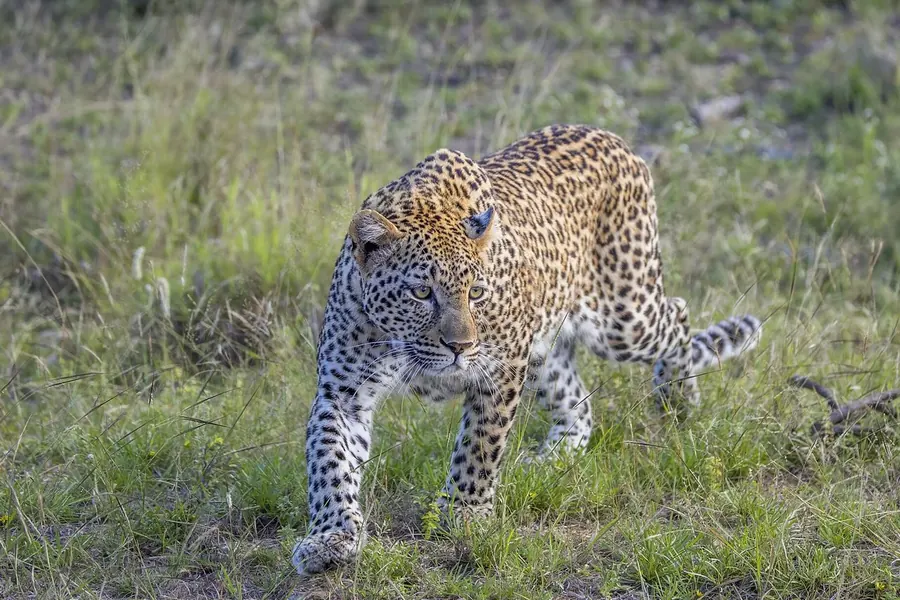
Leopard — smaller rosettes with no central spots
Source: Wikimedia Commons
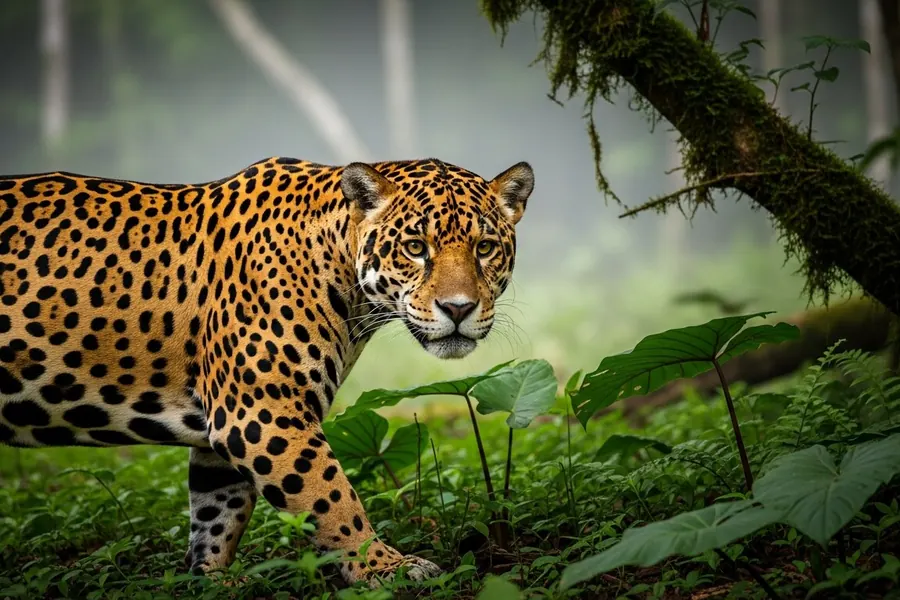
Jaguar — larger rosettes with inner spots, stockier
Existing WARN site asset
Leopard vs Jaguar: At a Glance
| Feature | Leopard | Jaguar |
|---|---|---|
| Scientific name | Panthera pardus | Panthera onca |
| Rosette pattern | Small, tightly packed, hollow centre | Larger, widely spaced, small dot(s) inside |
| Native range | Sub-Saharan Africa, Middle East, South & Southeast Asia | Mexico to northern Argentina (Americas) |
| Male body weight | 31–72 kg (68–159 lb) | 90–120 kg (200–265 lb), up to ~158 kg |
| Build | Slender, long-limbed, long tail for climbing | Stocky, broad-headed, shorter and sturdier limbs |
| Bite style | Suffocating throat bite | Skull-piercing bite; strongest of any big cat for its size |
| Relationship with water | Can swim but usually avoids it | Strong swimmer; hunts caiman and fish in rivers |
| IUCN status | Vulnerable | Near Threatened |
| Typical wild lifespan | 10–12 years (up to ~17) | 11–15 years |
Which is bigger & stronger?
The jaguar is bigger and stronger, with males averaging about 56-96 kg and a stocky, powerfully-jawed build, against roughly 37-90 kg for a more slender male leopard.
Leopards (Panthera pardus) and jaguars (Panthera onca) are close relatives in the genus Panthera and are so alike in coat pattern that people routinely confuse photographs of one for the other. Both are solitary, spotted big cats that hunt by stealth and ambush rather than by chasing prey over distance. But they evolved on different continents, occupy different ecological niches, and differ clearly once you know what to look for — starting with the shape of their rosettes and extending to build, range, and hunting style.
Spot it in the rosette
Both cats are covered in rose-shaped clusters of spots called rosettes, but the pattern differs on close inspection. A jaguar's rosettes are larger, more irregular, and more widely spaced, and most contain one or more small black dots in the middle of the rosette. A leopard's rosettes are smaller, more numerous, packed more tightly together, and are hollow — just a ring of dark markings with plain tawny fur inside. This is the single most reliable field mark, since coat colour and overall size can vary within each species.
Build and body proportions
Jaguars are noticeably stockier than leopards: a broad, powerful, almost square head sits on a heavily muscled body with comparatively short, thick legs, an adaptation for grappling and biting through tough hides and shells. Leopards have a leaner, more elongated build with proportionally longer legs and a long tail, suited to balance and to hauling kills up into trees. Male jaguars typically weigh 90–120 kg (200–265 lb), sometimes exceeding 150 kg, while male leopards usually weigh 31–72 kg (68–159 lb) — jaguars average close to double a leopard's weight.
Range and habitat
Leopards have the widest distribution of any wild cat, found across more than 60 countries in sub-Saharan Africa, the Middle East, and South and Southeast Asia, in habitats ranging from rainforest to desert and mountain scrub. Jaguars are found only in the Americas, from northern Mexico to northern Argentina, with roughly 89% of the global population concentrated in the Amazon basin; they favour dense forest, swamp and wetland close to water, such as Brazil's Pantanal.
Hunting style and bite
Leopards kill the way most big cats do: a sustained bite to the throat that suffocates prey, and they are formidable climbers, capable of hauling a kill weighing more than their own body up into a tree to keep it from lions and hyenas. Jaguars hunt differently — they are confident swimmers that readily take to rivers and swamps to catch caiman, fish and turtles, and their signature kill is a bite straight through the skull rather than the throat, powered by the strongest bite force of any big cat relative to body size.
Did you know?
A jaguar's killing bite is so strong it can crack open a turtle's shell or pierce the bony armour of a caiman — something no leopard, and almost no other predator, can manage.
Leopard vs Jaguar: FAQs
What is the easiest way to tell a jaguar from a leopard?
Is a jaguar bigger than a leopard?
Do leopards and jaguars live in the same place?
Which has the stronger bite, a jaguar or a leopard?
Are jaguars and leopards the same species?
Which is more endangered, the leopard or the jaguar?
These animals need us
Understanding wildlife is the first step to protecting it. WARN funds partner-led rescue and conservation where the need is greatest — your support keeps that work going.