Animal Comparison
Leopard vs Cheetah
Leopards have rosette-shaped spots and climb trees; cheetahs have solid black spots, tear-mark stripes, and are the fastest land animal. Full comparison.
By the WARN Research & Conservation TeamChecked against IUCN Red List & CITES sourcesLast updated
In brief — Leopard vs Cheetah
Rosettes and raw power say leopard; solid spots, tear stripes, and blistering speed say cheetah.
The clearest way to tell them apart is the markings and build: a leopard (Panthera pardus) has rose-shaped rosette markings and a stocky, muscular body built for climbing and ambush, while a cheetah (Acinonyx jubatus) has solid round black spots, black "tear-mark" stripes running from eye to mouth, and a slender, long-legged frame built for speed — cheetahs are the fastest land animal, reaching 93–104 km/h (58–65 mph), while leopards top out around 58 km/h (36 mph).
See the difference
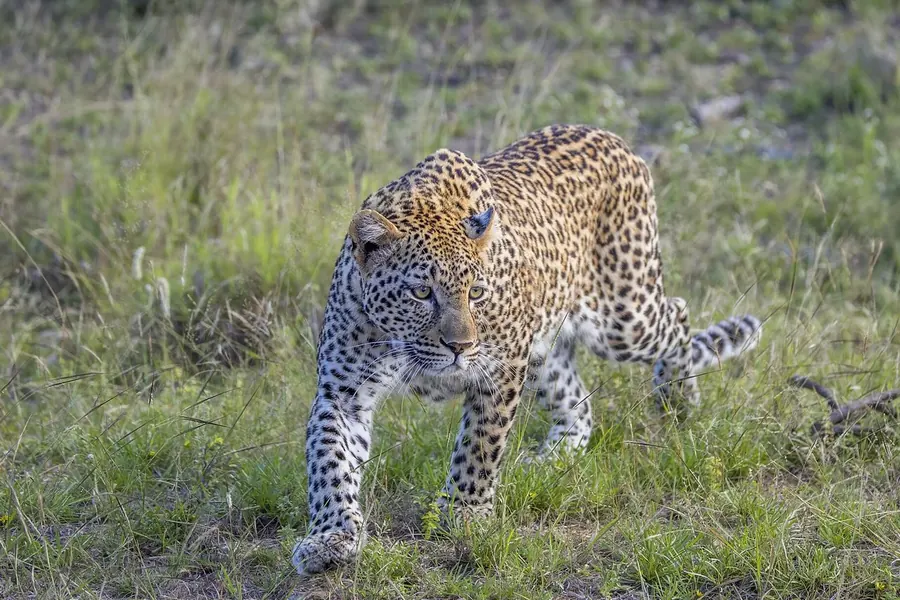
Leopard — rosettes, muscular, climbs trees
Source: Wikimedia Commons
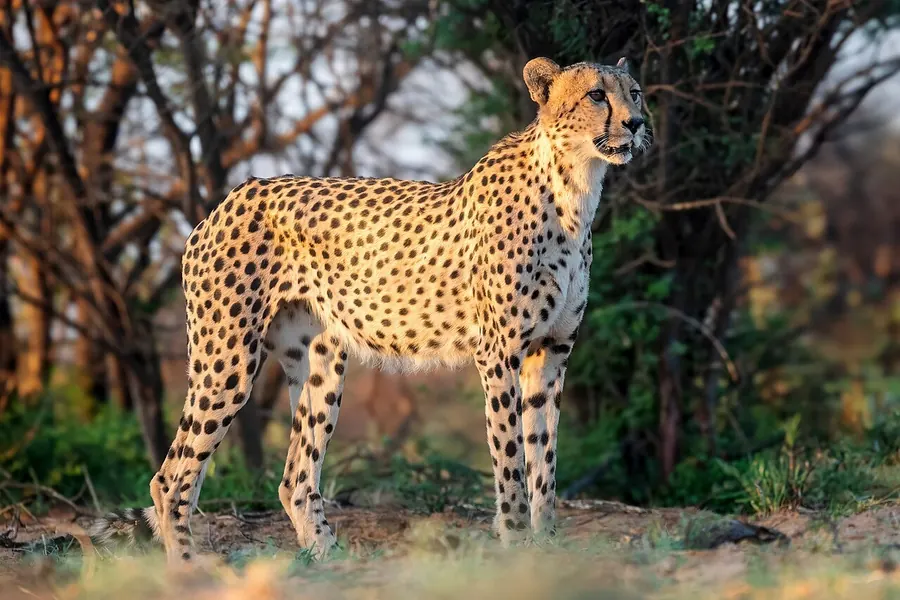
Cheetah — solid round spots, slender, tear-mark stripes
Source: Wikimedia Commons
Leopard vs Cheetah: At a Glance
| Feature | Leopard | Cheetah |
|---|---|---|
| Scientific name | Panthera pardus | Acinonyx jubatus |
| Genus | Panthera (big cats) | Acinonyx (only member) |
| Markings | Rosettes (rose-shaped clusters) | Solid round black spots |
| Face markings | None distinctive | Black "tear-mark" stripes |
| Shoulder height | 60–70 cm (24–28 in) | 67–94 cm (26–37 in) |
| Weight | 30–72 kg (66–159 lb) | 21–65 kg (46–143 lb) |
| Top speed | ~58 km/h (36 mph) | 93–104 km/h (58–65 mph) |
| Claws | Fully retractable | Semi-retractable (always visible) |
| Hunting style | Stealth, ambush, tree-caching | Daytime chase, short high-speed sprint |
| Lifespan (wild) | 10–12 years | 10–12 years |
| IUCN status | Vulnerable | Vulnerable |
Which is bigger & stronger?
The leopard is heavier and stronger, with males averaging about 60-70 kg and a muscular build, against the more slender cheetah's roughly 34-54 kg (though the cheetah stands taller and is far faster).
Leopards and cheetahs are both spotted, tawny-coated cats found across parts of Africa and Asia, which makes them easy to confuse at a glance. But they belong to entirely different genera and have evolved for opposite hunting strategies. The leopard (Panthera pardus) is a member of the "big cat" genus Panthera, alongside lions, tigers and jaguars, and relies on strength, stealth and tree-climbing to ambush prey. The cheetah (Acinonyx jubatus) is the sole living species in its genus and is built almost entirely around one trait: raw acceleration. Comparing their markings, body shape, claws and behaviour is the fastest way to separate the two species correctly.
Markings: rosettes vs solid spots
The single fastest way to tell these cats apart is their coat pattern. A leopard's coat is covered in rosettes — irregular, rose-shaped clusters of small black marks with a dark outline and a tawny-brown centre, giving a textured, layered look. A cheetah's coat carries small, solid, evenly spaced black spots on a pale golden to creamy background, with no hollow centre. Cheetahs also have a unique black "tear-mark" stripe running from the inner corner of each eye down to the mouth, thought to reduce glare and aid daytime hunting; leopards have no equivalent facial marking.
Build: power versus aerodynamics
Leopards are the stockier of the two, with a broad chest, short powerful legs and a heavily muscled neck and shoulders built for hauling prey — sometimes twice their own body weight — up into trees. Cheetahs have the opposite build: a small, rounded head, deep but narrow chest, very long slender legs, a flexible spine and a long counterbalancing tail, all adapted purely for acceleration. This is why a leopard, despite often being lighter on paper in some regions, reads as far bulkier and more compact than the leaner, taller-shouldered cheetah.
Claws and locomotion
Leopards have fully retractable claws, like most cats, which stay sharp and hidden until needed for climbing or gripping prey. Cheetahs are unusual among cats in having semi-retractable claws that stay permanently or near-permanently exposed, acting more like the studs on running shoes to grip the ground during a sprint. This trade-off leaves cheetah claws blunter over time but gives them far better traction when accelerating from a standstill to near-100 km/h in a few seconds.
Hunting strategy and speed
Leopards are largely nocturnal ambush predators: they stalk to close range in cover, then explode into a short pounce, relying on strength to subdue prey and often dragging the carcass into a tree to avoid scavengers. Cheetahs hunt mainly by day, using exceptional eyesight to spot prey at a distance before launching a fast, sustained chase. As the fastest land animal, a cheetah can reach roughly 93–104 km/h in short bursts, but can only sustain this for about 20–30 seconds before overheating, whereas a leopard's far slower top speed of around 58 km/h reflects a strategy based on surprise rather than pursuit.
Did you know?
A cheetah's claws are semi-retractable and stay permanently exposed, working like sprinter's spikes for grip during a chase, while a leopard's fully retractable claws stay sheathed and needle-sharp until the moment it strikes.
Leopard vs Cheetah: FAQs
What is the main difference between a leopard and a cheetah?
Which is faster, a leopard or a cheetah?
Is a cheetah just a fast leopard?
Can you tell a cheetah and leopard apart by their spots?
Which is bigger, a leopard or a cheetah?
Do leopards and cheetahs live in the same places?
These animals need us
Understanding wildlife is the first step to protecting it. WARN funds partner-led rescue and conservation where the need is greatest — your support keeps that work going.