Animal Comparison
Jaguar vs Panther
A panther isn't a species — it's a black-coated jaguar or leopard. Jaguars are a true species (Panthera onca) found only in the Americas.
By the WARN Research & Conservation TeamChecked against IUCN Red List & CITES sourcesLast updated
In brief — Jaguar vs Panther
Every panther is a jaguar, a leopard, or (confusingly, in North American slang) a cougar in a black coat — a jaguar is the only one of those that is an actual species.
"Panther" is not a species — it is a common name for any big cat with a solid black coat, most often a melanistic jaguar (Panthera onca) or melanistic leopard (Panthera pardus), so a "black panther" seen in the Americas is almost always a jaguar with excess dark pigment, not a separate animal. The jaguar, by contrast, is a true, scientifically defined species found only in the Americas.
See the difference
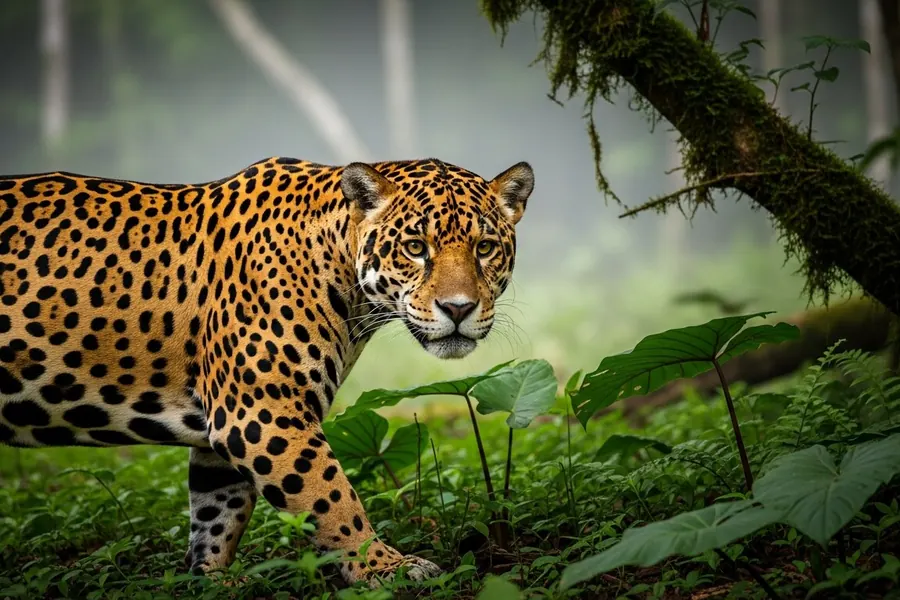
Jaguar — spotted big cat of the Americas
Existing WARN site asset
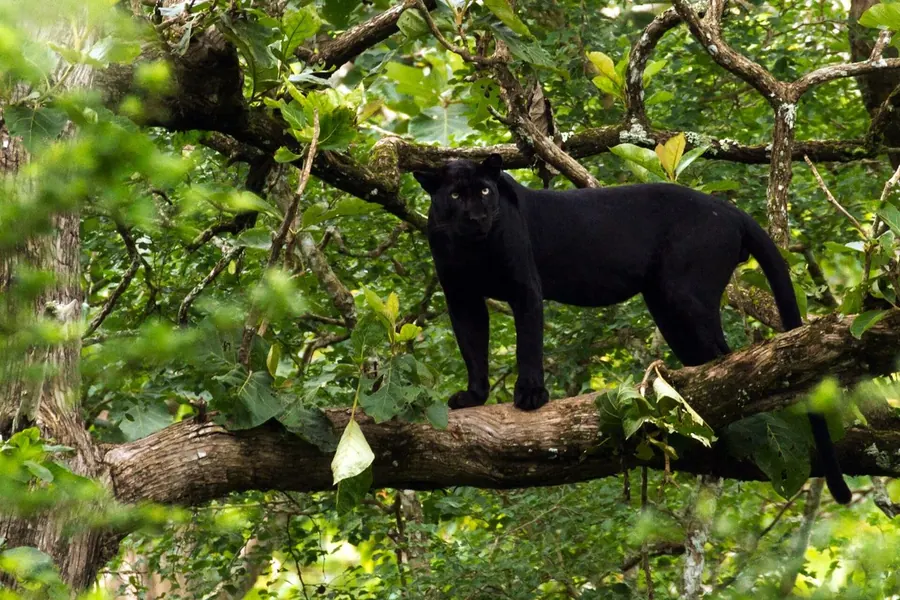
'Panther' — a melanistic (all-black) leopard or jaguar
Photo: Davidvraju / Wikimedia Commons (CC BY-SA 4.0)
Jaguar vs Panther: At a Glance
| Feature | Jaguar | Panther |
|---|---|---|
| Taxonomic status | True species, Panthera onca | Not a species; a colour form or common name |
| Usual identity | Spotted big cat, Americas | Melanistic jaguar or leopard (sometimes cougar) |
| Coat pattern | Rosettes with a central dot | Solid black; faint rosettes visible in bright light |
| Weight | 45-158 kg (99-348 lb) | Same as underlying species (jaguar or leopard) |
| Native range | Mexico, Central & South America | Depends on species: Americas (jaguar) or Africa/Asia (leopard) |
| Genetic cause of black coat | Not applicable (normal colour is golden) | Dominant MC1R mutation (jaguar) or recessive ASIP mutation (leopard) |
| IUCN Red List status | Near Threatened | Same as underlying species |
| Typical lifespan (wild) | 10-15 years | Same as underlying species |
Which is bigger & stronger?
A "panther" is usually a melanistic leopard or jaguar rather than a separate animal, so a jaguar (males about 56-96 kg) is bigger and stronger than a black-panther leopard (about 37-90 kg) but identical to a black-panther jaguar.
"Jaguar vs panther" is one of the most searched big-cat comparisons, yet it compares a species to a nickname. The jaguar (Panthera onca) is the largest cat native to the Americas, instantly recognisable by its rosette-patterned golden coat. "Panther" has no fixed taxonomic meaning: it is applied to melanistic (all-black) jaguars and leopards, and, in parts of North America, colloquially to the puma or cougar (as in the Florida panther, which is not a member of the genus Panthera at all). Because melanism is caused by excess dark pigment rather than a change in body shape, a black panther that turns out to be a jaguar has the same size, skeleton, hunting style, range and lifespan as any spotted jaguar — only the coat colour differs, and faint rosettes are usually still visible in strong light.
A panther is a colour, not a species
"Panther" describes any big cat with a solid, unpatterned black coat — it has never been a recognised taxonomic category. Zoologists use it as an informal umbrella term. In the Americas, a reported black panther is almost always a melanistic jaguar (Panthera onca); in Africa and Asia it is almost always a melanistic leopard (Panthera pardus). In parts of the southeastern United States, "panther" is also used colloquially for the tan-coated Florida cougar (Puma concolor coryi), which belongs to an entirely different genus and is never black. So identifying a "panther" always requires first identifying which real species produced it.
Different genes cause the same black coat
Melanism arises through different mutations in jaguars and leopards, an example of convergent evolution producing an identical look from separate genetic routes. In jaguars, a dominant mutation in the MC1R gene causes overproduction of dark eumelanin pigment, so a single copy of the gene is enough to produce a black jaguar. In leopards, melanism instead comes from a recessive mutation in the ASIP gene, requiring two copies (one from each parent) to show. Because the jaguar's version is dominant, black jaguars are proportionally more common in dense, low-light rainforest populations than black leopards are in their range.
Size, range and behaviour never change with coat colour
A melanistic jaguar is identical in every respect except colour to a spotted jaguar of the same population: same weight range (45-158 kg / 99-348 lb), same stocky, muscular build with a proportionally shorter, more powerful bite than other big cats, same preference for dense tropical forest and riverine habitat, and the same solitary, ambush-hunting behaviour. True jaguars are also unusually strong swimmers and will take prey such as capybara, deer and even caimans in water. None of this changes if the individual happens to carry the melanism gene — the label "panther" simply masks which real species is underneath the black coat.
Telling them apart in the field
Because the underlying rosette pattern is still faintly present under black fur, close or well-lit photographs can reveal a jaguar's rosettes (which enclose one or more small dark spots) versus a leopard's simpler, hollow rosettes. Geography is the fastest clue: a black cat photographed in Central or South America is a melanistic jaguar; one photographed in Africa or Asia is a melanistic leopard. Reports of "black panthers" roaming wild in Europe, the UK or North America outside cougar range are not supported by verified physical evidence and most likely involve escaped or released exotic pets, misidentified dark-coated domestic cats, or hoaxes.
Did you know?
Because the jaguar's melanism gene is dominant while the leopard's is recessive, the same black "panther" look evolved twice through completely different genetic routes on two different continents.
Jaguar vs Panther: FAQs
Is a panther a jaguar or a leopard?
Is a black panther bigger than a jaguar?
Can a jaguar and a panther breed?
Why are some jaguars black?
How can you tell a jaguar from a panther if both are black?
Is the Florida panther a type of jaguar?
These animals need us
Understanding wildlife is the first step to protecting it. WARN funds partner-led rescue and conservation where the need is greatest — your support keeps that work going.
Sources