Animal Comparison
Hippopotamus vs Rhinoceros
Hippo vs rhino compared: size, weight, speed, horns vs tusks, habitat, diet and conservation. The hippo is heavier and semi-aquatic; the rhino is horned and drier-living.
By the WARN Research & Conservation TeamChecked against IUCN Red List & CITES sourcesLast updated
In brief — Hippopotamus vs Rhinoceros
A hippo has no horn but large tusk-like teeth and lives half in water; a rhino has keratin horns on its snout and lives on land. They look bulky and grey but are unrelated.
The clearest distinction is the head: a hippopotamus has a huge barrel body, no horn and enormous tusk-like canine teeth, while a rhinoceros has one or two keratin horns on its snout and no visible tusks. Hippos are semi-aquatic even-toed relatives of whales that spend their days in water and graze grass at night; rhinos are odd-toed relatives of horses that live on drier grassland and browse or graze on land. The biggest hippos outweigh most rhinos, but they are not closely related animals.
See the difference
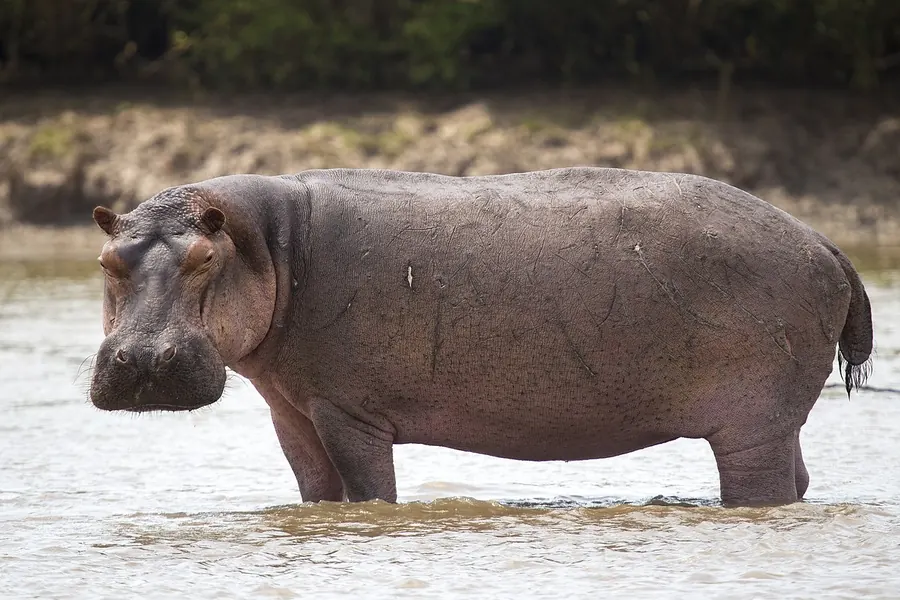
Hippo — no horn, tusk-like teeth, semi-aquatic
Source: Wikimedia Commons
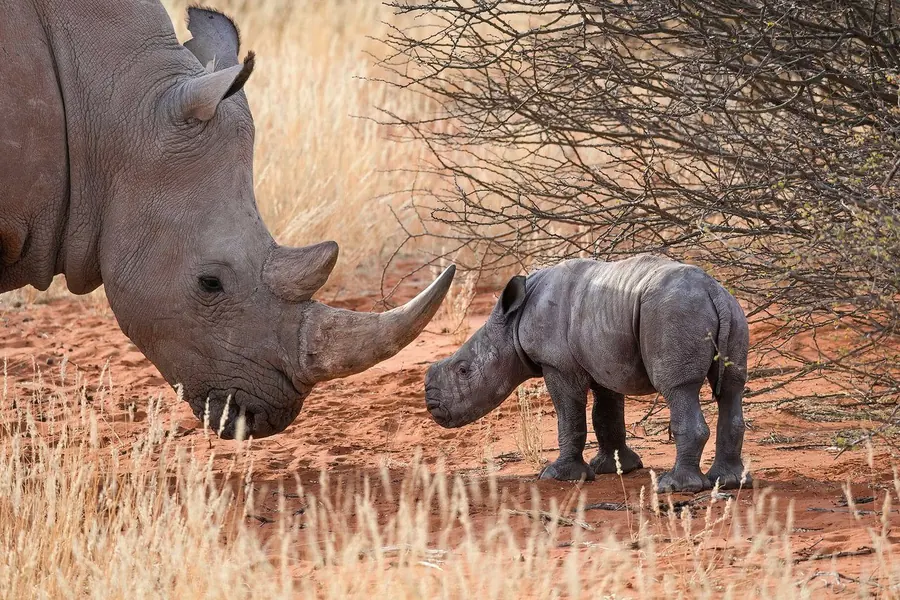
Rhino — keratin horn(s) on the snout, land-dwelling
Source: Wikimedia Commons
Hippopotamus vs Rhinoceros: At a Glance
| Feature | Hippopotamus | Rhinoceros |
|---|---|---|
| Scientific group | Even-toed ungulate (Artiodactyla); relatives of whales | Odd-toed ungulate (Perissodactyla); relatives of horses |
| Number of species | 1 common hippo (plus the smaller pygmy hippo) | 5 living species (white, black, Indian, Javan, Sumatran) |
| Weight | ~1,500–3,200 kg; big males the heaviest | White rhino ~2,000–2,300 kg (up to ~3,600 kg); smaller in Asian species |
| Body length | ~3.5 m | White rhino ~3.7–4 m head-and-body |
| Shoulder height | ~1.5 m | White rhino ~1.7–1.86 m |
| Horn | None | 1 or 2 horns of keratin on the snout |
| Teeth | Huge tusk-like canines up to ~50 cm | No tusks; grinding cheek teeth |
| Habitat | Rivers, lakes and wetlands; semi-aquatic | Grassland, savanna, scrub and tropical forest; land-based |
| Range | Sub-Saharan Africa | Africa (2 species) and Asia (3 species) |
| Diet | Herbivore; grazes grass, mostly at night | Herbivore; grazers (white) or browsers (black) of grass and leaves |
| Top speed on land | ~30 km/h (19 mph) | ~40–50 km/h (25–34 mph) |
| Lifespan (wild) | ~40–50 years | ~35–50 years |
Which is bigger & stronger?
The hippopotamus is usually heavier, with big males reaching about 3,200 kg versus around 2,000–2,300 kg (up to ~3,600 kg) for the largest rhino, the white rhino, though the white rhino stands slightly taller at the shoulder.
People often confuse hippos and rhinos because both are massive, grey, thick-skinned African heavyweights. In fact they belong to entirely different branches of the mammal family tree. The hippopotamus (Hippopotamus amphibius) is an even-toed ungulate whose closest living relatives are whales and dolphins; the rhinoceros is an odd-toed ungulate related to horses and tapirs, with five living species across Africa and Asia. According to Britannica and the IUCN, the two differ in body shape, teeth and horns, habitat, diet and behaviour. The quick tell is simple: horns on the snout mean rhino; tusk-like teeth and a water-loving lifestyle mean hippo. Both are under pressure from habitat loss and, for rhinos especially, poaching.
Horn vs tusks: the fastest way to tell them apart
The single clearest difference is on the face. A rhinoceros has one or two horns rising from its snout, made of keratin (the same protein as hair and nails) rather than bone. A hippopotamus has no horn at all; instead it has a huge gaping mouth with tusk-like lower canine teeth that can reach around 50 cm and keep growing through life. If you see a horn on the nose, it is a rhino.
They are not closely related
Despite the shared bulk, these are distant cousins. Hippos are even-toed ungulates (order Artiodactyla), and genetic and fossil evidence shows their closest living relatives are actually cetaceans, the whales and dolphins. Rhinos are odd-toed ungulates (order Perissodactyla), grouped with horses and tapirs. So a hippo is more closely related to a dolphin than to a rhino.
Water animal vs land animal
A hippopotamus is semi-aquatic. It spends most of the day submerged in rivers and lakes to keep cool and protect its skin, emerging at night to graze. A rhinoceros is a land animal of grassland, savanna, scrub or tropical forest; it will wallow in mud to cool down and deter insects, but it does not live in water. Habitat alone is often enough to identify which is which.
Size and strength
Both are enormous, but the hippo is typically the heavier of the two. Large hippo males reach about 3,200 kg, while the white rhino, the largest of the five rhino species, averages roughly 2,000–2,300 kg with reliably recorded individuals up to around 3,600 kg. The white rhino stands a little taller at the shoulder. The other four rhino species are considerably smaller than the white rhino.
Diet and feeding style
Both are herbivores, but they feed differently. Hippos are grazers that leave the water at night and crop short grass with their broad lips, eating a large volume of grass in a session. Among rhinos, the white rhino is a wide-lipped grazer of grass, while the black rhino is a hook-lipped browser that plucks leaves and twigs from shrubs and trees. Neither hunts, despite their fearsome reputation.
Conservation status
The common hippopotamus is listed as Vulnerable by the IUCN, with an estimated 115,000–130,000 left, threatened by habitat loss and hunting. Rhino status varies sharply by species: the white rhino is Near Threatened, the Indian rhino Vulnerable, and the black, Javan and Sumatran rhinos are all Critically Endangered, with the Javan and Sumatran numbering only tens of animals. Rhinos remain heavily targeted by poaching for their horn.
Did you know?
A hippopotamus's closest living relatives are whales and dolphins, not any land giant; the two lineages split from a common ancestor tens of millions of years ago, which is why a hippo is more closely related to a porpoise than to a rhino.
Hippopotamus vs Rhinoceros: FAQs
Which is bigger, a hippo or a rhino?
Can a hippopotamus beat a rhinoceros in a fight?
Are hippos and rhinos the same animal or related?
How do you tell a hippo and a rhino apart?
Does a hippo or a rhino have a horn?
Which is more dangerous to humans, a hippo or a rhino?
Which is faster, a hippo or a rhino?
These animals need us
Understanding wildlife is the first step to protecting it. WARN funds partner-led rescue and conservation where the need is greatest — your support keeps that work going.