Animal Comparison
Donkey vs Mule
A donkey is a pure species (Equus asinus); a mule is a sterile hybrid of a male donkey and female horse. Compare size, ears, lifespan and behaviour.
By the WARN Research & Conservation TeamChecked against IUCN Red List & CITES sourcesLast updated
In brief — Donkey vs Mule
A donkey is a species that can reproduce itself; a mule is a one-generation hybrid that (almost) never can.
The core difference is genetic: a donkey is a distinct species, Equus africanus asinus, with 62 chromosomes, while a mule is a hybrid, the offspring of a male donkey (jack) and female horse (mare), inheriting 63 chromosomes (31 from its donkey father, 32 from its horse mother). That odd chromosome number leaves almost all mules infertile, whereas donkeys breed freely and are true-breeding animals in their own right.
See the difference
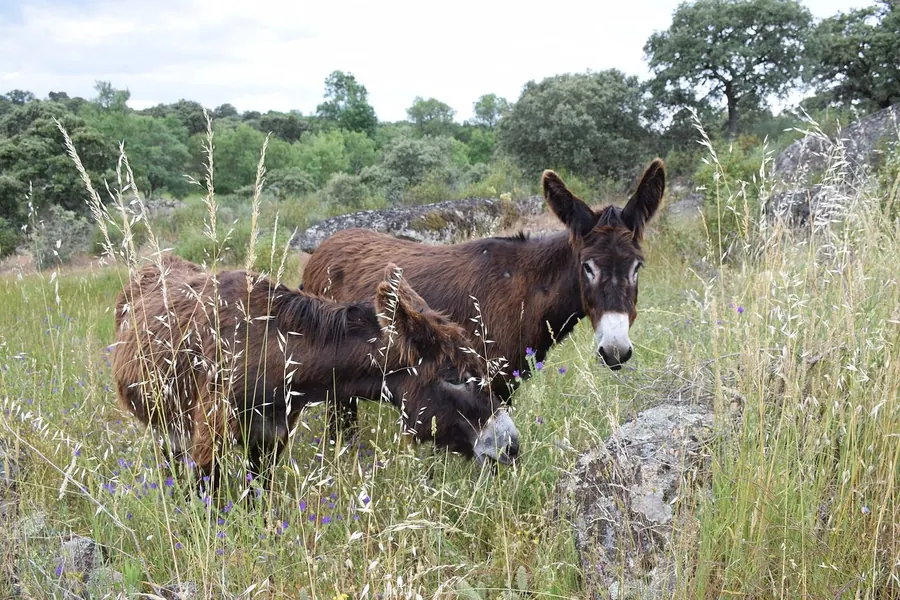
Donkey — a true species (Equus asinus)
Photo: Juan Lagunilla / Wikimedia Commons (CC BY-SA 4.0)
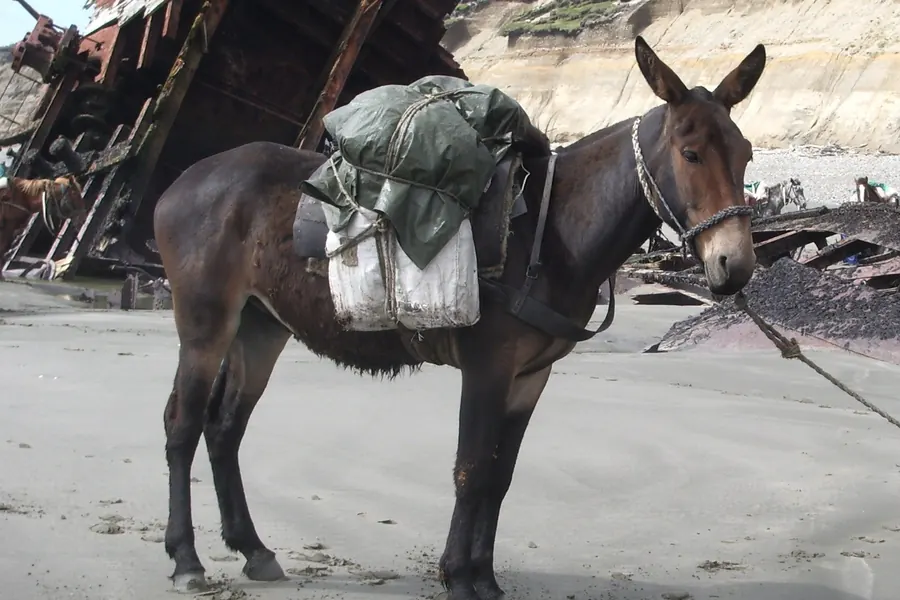
Mule — sterile donkey × horse hybrid: horse body, long ears
Photo: Dario Urruty / Wikimedia Commons (public domain)
Donkey vs Mule: At a Glance
| Feature | Donkey | Mule |
|---|---|---|
| Scientific classification | Equus africanus asinus (species) | Equus asinus x Equus caballus (hybrid) |
| Chromosomes | 62 | 63 (sterile in almost all cases) |
| Parentage | Bred from other donkeys | Male donkey (jack) x female horse (mare) |
| Height at withers | About 0.9-1.5 m (3-5 ft) | About 1.2-1.7 m (4-5.5 ft) |
| Weight | 80-480 kg (175-1,060 lb) | 270-700 kg (600-1,500 lb) |
| Voice | Loud, raspy bray | Braying call, often deeper/longer than a donkey's |
| Lifespan | 25-40+ years | 30-50 years |
| Build | Slighter frame, straight back, tufted tail | Horse-like body and tail, donkey-like head/ears/legs |
Which is bigger & stronger?
A mule is usually bigger and stronger, typically about 370-450 kg thanks to hybrid vigour from its horse dam, against roughly 180-230 kg for an average donkey (though this varies with the parent breeds).
Donkeys and mules are often confused because both are long-eared, sure-footed working equids, and a mule is in fact half donkey. But they sit on different branches of the family tree: the donkey (Equus africanus asinus) is a domesticated species descended from the African wild ass, while the mule is an artificial hybrid that cannot occur without human breeding, produced by crossing a jack (male donkey) with a mare (female horse). This single fact drives almost every other difference: chromosome count, fertility, size, build and even the sound each animal makes. Donkeys have been worked by humans for 5,000-7,000 years and remain common worldwide, whereas mules exist only because breeders keep pairing donkeys with horses, generation after generation, to combine the best traits of both parent species.
Species versus hybrid
The donkey is a true species, Equus africanus asinus, domesticated in Africa around 5,000-7,000 years ago from the wild ass. Donkeys breed with other donkeys and pass on fertile offspring indefinitely. The mule exists only as a first-generation cross between a male donkey (jack) and a female horse (mare); it does not occur naturally and cannot be bred "mule to mule" because mules are almost always infertile. A cross in the opposite direction, stallion x jenny, produces a hinny, not a mule, and hinnies tend to be smaller and more horse-like in voice.
Chromosomes and fertility
Horses carry 64 chromosomes and donkeys carry 62; a mule inherits 31 from its donkey father and 32 from its horse mother, giving it 63 in total. This odd, mismatched number prevents the chromosome pairing needed to form viable sperm or egg cells in almost all cases, which is why mules are effectively sterile (extremely rare fertile mares have been documented, but fertile male mules are essentially unknown). Donkeys have no such barrier and reproduce normally.
Size, build and hybrid vigour
Mules are typically larger and more heavily muscled than donkeys, since they inherit the horse mare's greater body size along with the donkey's dense bone, small hard hooves and stamina. This combination, known as hybrid vigour, gives mules more strength and endurance relative to their feed intake than either parent species, which is why they were historically prized as pack and draught animals. Donkeys are generally smaller, ranging from miniature breeds under 90 cm to large mammoth donkeys near 1.5 m at the withers.
Ears, voice and temperament
Both animals have long ears relative to a horse, but a mule's ears, tail carriage and gait sit between the two parents: a horse-like tail and body shape combined with a donkey-like head, ears and legs. Vocally, donkeys produce a distinctive two-part bray; mules often bray in a similar but sometimes deeper or longer register, reflecting their mixed ancestry. Both are frequently labelled 'stubborn', but this reputation reflects a strong instinct for self-preservation and caution rather than lower intelligence; donkeys and mules are considered highly intelligent and quick learners.
Donkey vs Mule: FAQs
Is a mule a type of donkey?
Can a mule have babies?
What is the difference between a mule and a hinny?
Are mules bigger than donkeys?
Do donkeys and mules make the same sound?
Which lives longer, a donkey or a mule?
These animals need us
Understanding wildlife is the first step to protecting it. WARN funds partner-led rescue and conservation where the need is greatest — your support keeps that work going.