Borneo · Rehabilitation method

Orangutan Forest School

What orangutan forest school is, why orphaned orangutans need years of training, and how supporters can fund rehabilitation through trusted partners.

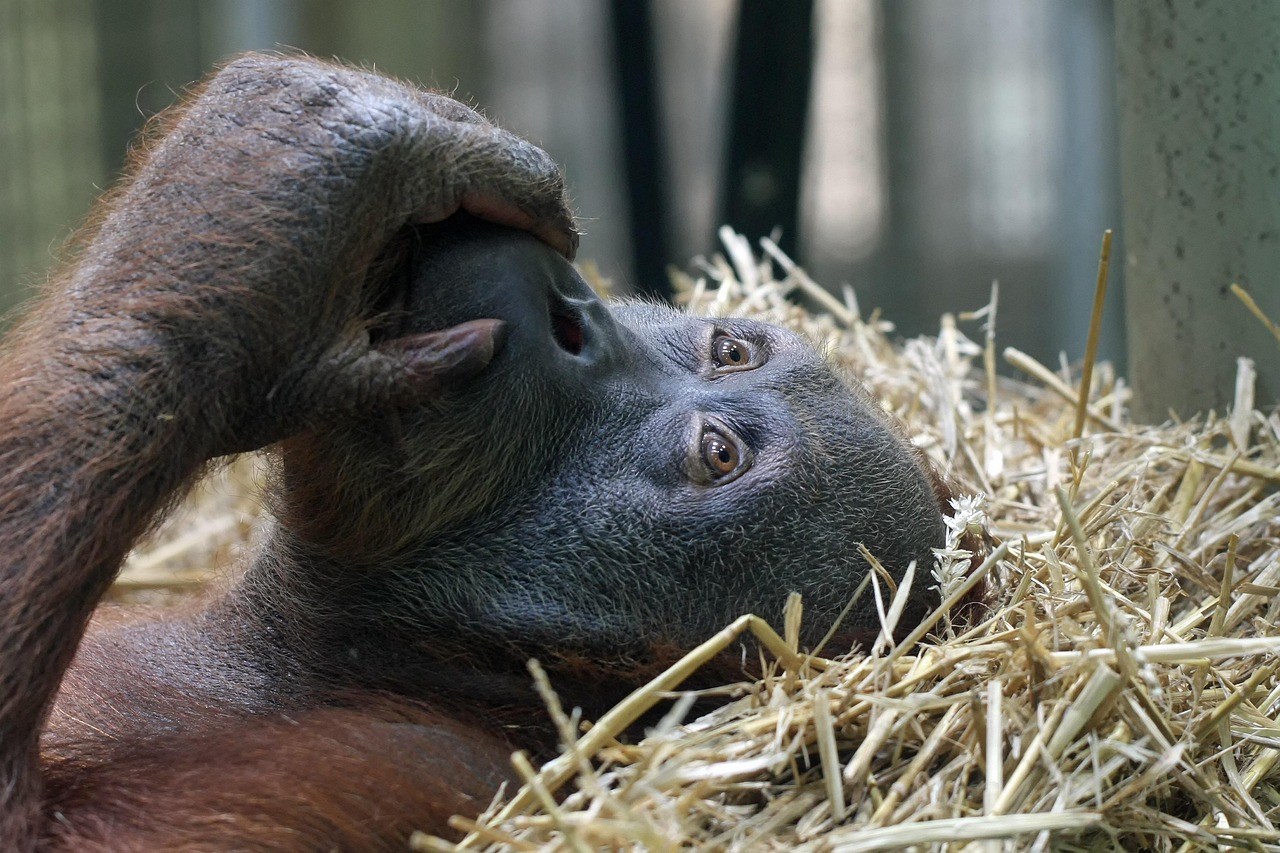
Young orangutan learning climbing skills in a forest rehabilitation setting

In brief

Orangutan forest school is the long rehabilitation process where orphaned orangutans learn climbing, nest-building, foraging and social skills before any possible return to protected forest.

5-10 yrs

Typical orphan rehabilitation

8 yrs

Natural gap between births

Daily

Forest skill practice

CR

All orangutan species

Guide 1

Why Orangutans Need Forest School

Wild orangutan infants normally spend years learning from their mothers. When a baby is orphaned by forest clearance, hunting or the pet trade, it loses the teacher it depends on. Forest school recreates part of that learning pathway through daily supervised climbing, foraging, nest-building and confidence work in forested enclosures.

Guide 2

What Forest School Teaches

Rehabilitation teams teach young orangutans to move safely through trees, identify wild foods, avoid ground-level danger, build sleeping nests and reduce dependence on humans. The work is slow because shortcuts can produce animals that look healthy but cannot survive once released.

Guide 3

When Release Is Possible

Release depends on age, health, behaviour, forest skills and the security of the release site. Some orangutans progress to pre-release islands and then soft release with monitoring. Others need lifetime sanctuary care because of injury, disease or long-term captivity.

Guide 4

Forest Skills Orphans Must Learn

Orphan orangutans must learn to climb, build nests, identify edible fruits and avoid predators — skills mothers teach over years. Forest schools use graduated enclosures from nursery to semi-wild forest islands before any release candidate enters protected habitat with post-release monitoring.

Guide 5

Why Forest School Takes Five to Eight Years

Releasing too early means starvation or human conflict. Partners track weight, foraging success and social behaviour before approving release. Monthly donor income helps sanctuaries commit to multi-year rehabilitation without cutting corners.

Guide 6

Why UK Donors Choose WARN — Transparent Partner Grants

WARN is a registered UK Community Interest Company (Company no. 17298990) and is not a charity, so it cannot claim Gift Aid. The donation case is transparent partner-led welfare where support reaches practical field needs. WARN states upfront that gifts fund WARN's 17-country partner network across South Asia, Southeast Asia, East Africa, Southern Africa and South America programmes through vetted local partners — not WARN-run sanctuaries. Every gift is receipted; give one-off at donate or monthly at monthly giving.

Source Notes

WARN uses named intergovernmental, conservation and animal-welfare sources for numeric claims. These notes summarise the source basis for this page.

IUCN Red List

All three orangutan species are listed as Critically Endangered.

Orangutan rehabilitation practice

Forest school and soft-release models are used by established rehabilitation centres in Borneo and Sumatra.

CITES

Orangutans are protected from commercial international trade.

Orangutan Forest School: Frequently Asked Questions

How long does orangutan forest school take?
For orphaned orangutans it can take five to ten years, because young orangutans naturally learn survival skills from their mothers over a long childhood.
Do all rescued orangutans go to forest school?
No. Infants and juveniles usually need forest school. Adults may instead need medical treatment, translocation or sanctuary care depending on their condition.
Can forest school orangutans be released?
Some can be released after years of training and pre-release testing, but release is only safe when the animal has strong forest skills and a secure habitat is available.
What is an orangutan forest school?
A graduated rehabilitation pathway where orphans learn wild skills in increasing forest complexity before soft release into protected habitat.
Can forest-school orangutans meet tourists?
Ethical programmes minimise human contact to prevent habituation. Habituated orangutans cannot safely return to the wild.
How can I fund forest school from the UK?
Donate to orangutan appeal or adopt symbolically at adopt an orangutan from £5/month.
Where are forest schools located?
Indonesian Kalimantan and Malaysian Sabah and Sarawak — WARN funds partner-led programmes, not WARN-run schools.
Is WARN a registered charity?
World Animal Rescue Network (WARN) is World Animal Rescue Network CIC (Company number 17298990), a registered UK Community Interest Company — not a registered charity. See registration status for full legal identity.

Help Fund Frontline Rescue

World Animal Rescue Network CIC (Company no. 17298990) raises funds for established local partners. Your support helps build the rescue capacity these animals need.