Guide 1
Why Horses Suffer in Pakistan
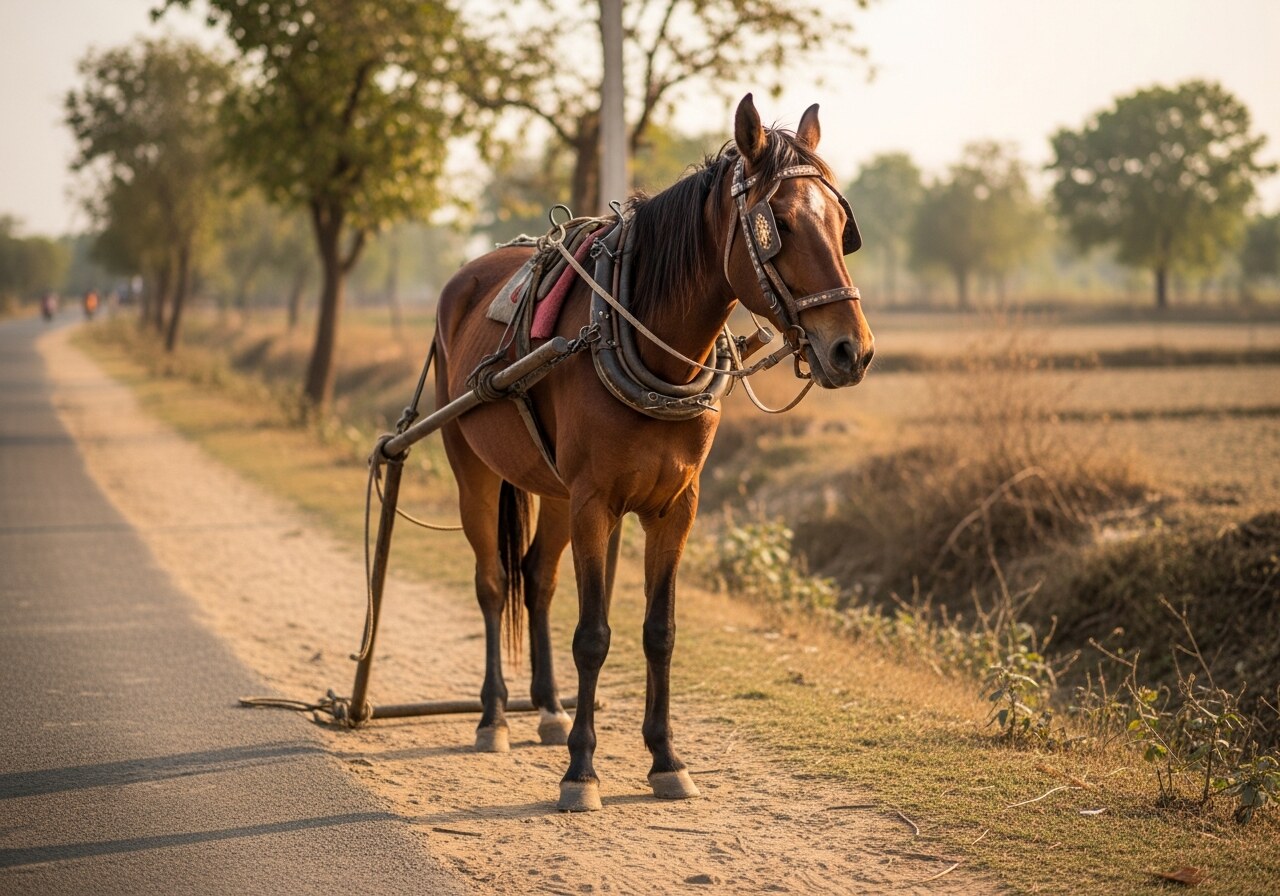
Working horses are used in transport, markets, construction and industrial areas. Many work long hours on poor surfaces with badly fitting harnesses. When veterinary care is unavailable or unaffordable, small injuries become chronic pain.
Guide 2
What Rescue Looks Like for Working Horses
Rescue is usually field care, not removal. Teams treat wounds, lameness, dehydration, parasites and dental pain, then work with owners on harness fit, rest, water and early warning signs.
Guide 3
Why Donor Support Matters
A mobile clinic can reach working horses that would never reach a formal hospital. Funding medicines, farriery tools and veterinary time creates immediate welfare impact.
Guide 4
Common Working Horse Abuse Patterns
Overloading carts, inadequate hoof care, tight nosebands, beatings to maintain pace and working in extreme heat without water cause lameness, colic, exhaustion and early death. Mobile clinics address immediate suffering while owner education prevents recurrence.
Guide 5
Lameness and Harness Wounds
Ill-fitting harnesses create shoulder and wither wounds that become infected under continued work. Farriery prevents hoof cracks and laminitis. Both are core services WARN funds through working horses appeal.
Guide 6
Why UK Donors Choose WARN — Transparent Partner Grants
WARN is a registered UK Community Interest Company (Company no. 17298990) and is not a charity, so it cannot claim Gift Aid. The donation case is transparent partner-led welfare where support reaches practical field needs. WARN states upfront that gifts fund WARN's 17-country partner network across South Asia, Southeast Asia, East Africa, Southern Africa and South America programmes through vetted local partners — not WARN-run sanctuaries. Every gift is receipted; give one-off at donate or monthly at monthly giving.