Animal Comparison
Stoat vs Weasel
The stoat has a longer tail with a bushy black tip; the weasel's short tail is brown all over. Stoats are also larger and can turn white in winter.
By the WARN Research & Conservation TeamChecked against IUCN Red List & CITES sourcesLast updated
In brief — Stoat vs Weasel
If you see a black-tipped tail, it's a stoat; an all-brown stubby tail means weasel.
The single reliable difference is the tail: a stoat (Mustela erminea) has a longer tail, roughly a third to a half of its body length, ending in a bushy black tip, while a weasel (Mustela nivalis) has a short, stubby tail under a quarter of its body length that is brown all over with no black tip. Stoats are also noticeably larger (22-31cm body versus 11.4-26cm) and, in cold regions, moult to white "ermine" fur in winter, which weasels do not do to the same degree.
See the difference
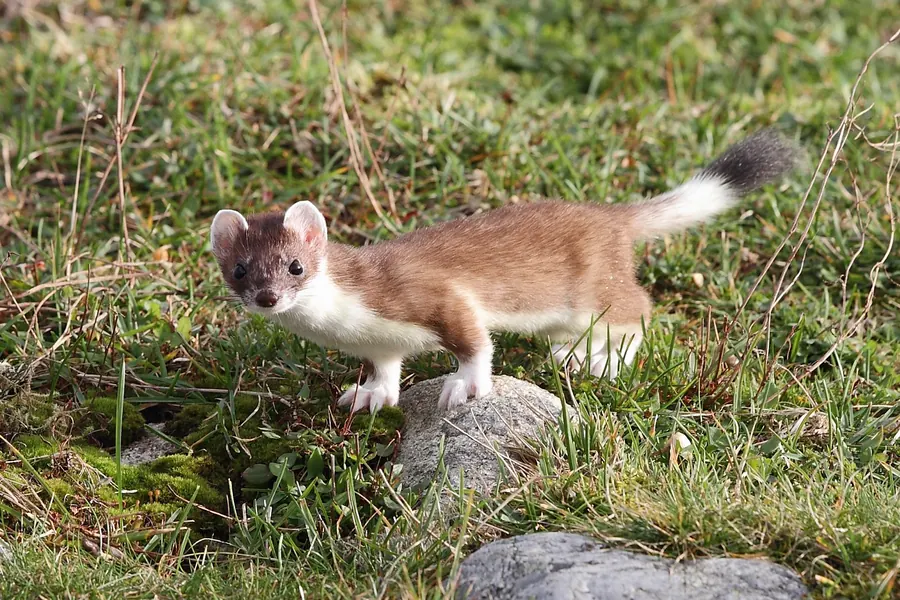
Stoat — larger, with a black-tipped tail
Photo: Marton Berntsen / Wikimedia Commons (CC BY-SA 4.0)
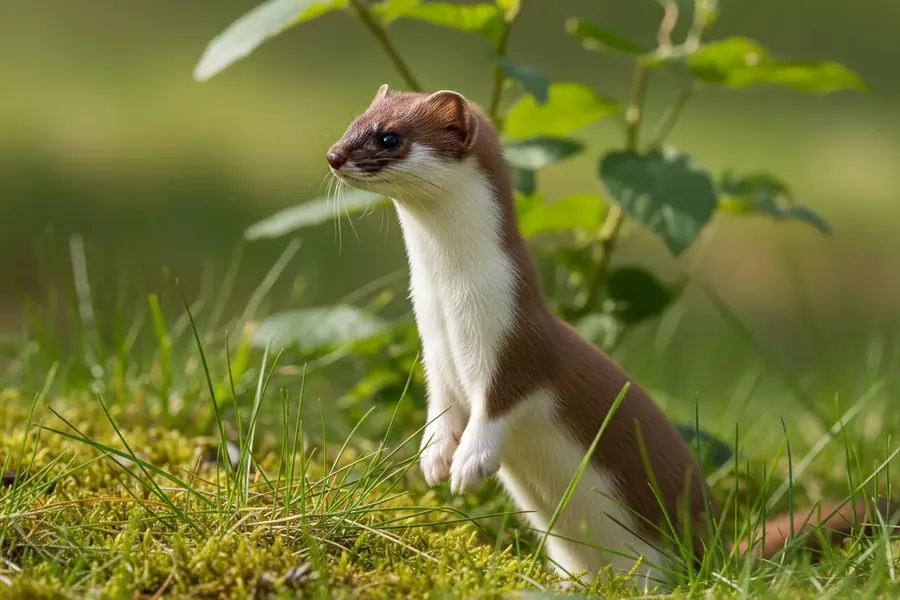
Weasel — smaller, short tail with no black tip
Source: Wikimedia Commons
Stoat vs Weasel: At a Glance
| Feature | Stoat | Weasel |
|---|---|---|
| Scientific name | Mustela erminea | Mustela nivalis |
| Body length | 22-31 cm (8.7-12.2 in) | 11.4-26 cm (4.5-10.2 in) |
| Tail | 9.5-14 cm; bushy black tip | Under 9 cm; brown, no black tip |
| Weight | 140-445 g (5-15.7 oz) | 30-250 g (1-8.8 oz), avg ~55 g |
| Winter coat | Turns white (ermine) in cold climates | Stays brown in most populations |
| Range | Eurasia, N. America, circumpolar | Eurasia, N. America, N. Africa; introduced elsewhere |
| Typical prey | Rabbits, water voles, small rodents | Mice, voles; smaller prey overall |
| Lifespan (wild) | Usually under 2 years | Usually under 1-2 years |
| IUCN status | Least Concern | Least Concern |
Which is bigger & stronger?
The stoat is the bigger and stronger, at about 25-32 cm and 140-450 g, whereas the (least) weasel is Britain's smallest carnivore at roughly 17-22 cm and only 50-130 g.
Stoats and weasels are so alike in shape and colouring that they are the classic case of mistaken mammal identity across Europe, North America and northern Asia. Both belong to the genus Mustela within the weasel family (Mustelidae), both have the same tubular, low-slung body built for chasing rodents down burrows, and both are fierce, solitary hunters far bigger in appetite than in size. Yet they are distinct species with a genuinely reliable field mark: the tail. This guide sets out exactly how a stoat (Mustela erminea) differs from a least weasel (Mustela nivalis) in size, tail shape, coat, range, behaviour and conservation status, so a fleeting sighting in a hedgerow or field margin can be identified with confidence.
Tail length and the black tip
The single most dependable way to separate the two species in the field is the tail. A stoat's tail makes up roughly a third to a half of its total body length and always ends in a distinctive tuft of black fur, even in individuals that have turned white for winter. A weasel's tail is short and stubby, less than a quarter of its head-body length, and is brown all over with no black tip at all. Because coat colour and size can vary with age, season and geography, the tail tip remains the one feature that does not overlap between the species, which is why field guides and naturalist groups treat it as the definitive identification test.
Size
Stoats are consistently the larger animal. Adult stoats measure roughly 22-31 cm in body length and weigh 140-445 g, with males noticeably heavier than females. Weasels are smaller across their whole range, with a head-body length of about 11.4-26 cm and a weight that averages only around 55 g, though it can range from 30 g up to 250 g in the largest northern populations. At the small end of its range, the least weasel is recognised as the world's smallest living carnivoran, small enough to follow a mouse directly down its own burrow, something a stoat's slightly larger frame cannot always manage.
Winter coat change
In northern parts of their range, stoats undergo a seasonal moult, exchanging their brown summer coat for a pure white winter coat known as ermine, keeping only the black tail tip as a year-round marker. This colour change is triggered by day length and is most pronounced in populations from colder, more northerly latitudes; stoats in milder climates may stay brown or moult only partially. Weasels can occasionally show a partial white winter coat in the coldest parts of their range, but this is far less consistent and far less complete than in stoats, and most weasel populations remain brown throughout the year.
Prey size and hunting style
Both species are efficient predators that track prey by scent and dispatch it with a bite to the back of the neck or skull, but their preferred prey scales with their own size. Stoats regularly tackle animals much larger than themselves, including adult rabbits and water voles, sometimes several times their own body weight, using a rapid, twisting attack. Weasels specialise in smaller prey such as mice and voles, and their slender, miniaturised body lets them pursue rodents directly into narrow tunnels that a stoat is too large to enter, so the two species partition the same rodent-rich habitats by hunting prey of different sizes.
Did you know?
Pound for pound, the tiny least weasel has a stronger bite force than a lion, tiger or polar bear, letting it kill prey many times its own size.
Stoat vs Weasel: FAQs
Is a stoat a type of weasel?
Which is bigger, a stoat or a weasel?
How can you tell a stoat and a weasel apart quickly?
Do weasels turn white in winter like stoats do?
Are stoats or weasels endangered?
Can stoats and weasels interbreed?
These animals need us
Understanding wildlife is the first step to protecting it. WARN funds partner-led rescue and conservation where the need is greatest — your support keeps that work going.