Animal Comparison
Rabbit vs Hare
Hares are born furred and sighted (precocial); rabbits are born naked and blind (altricial). Compare size, ears, habitat, and lifespan differences.
By the WARN Research & Conservation TeamChecked against IUCN Red List & CITES sourcesLast updated
In brief — Rabbit vs Hare
If the young are born furred with eyes open in a grass nest, it is a hare; if born naked and blind in a burrow, it is a rabbit.
The defining difference is how the young are born: hares (genus Lepus) produce precocial leverets that are fully furred, eyes open, and mobile within hours, born in an above-ground nest called a "form", while rabbits produce altricial kits that are naked, blind, and helpless, raised underground in burrow systems called warrens. Hares are also larger, with longer, black-tipped ears and hind legs built for speed of up to 70 km/h (43 mph).
See the difference
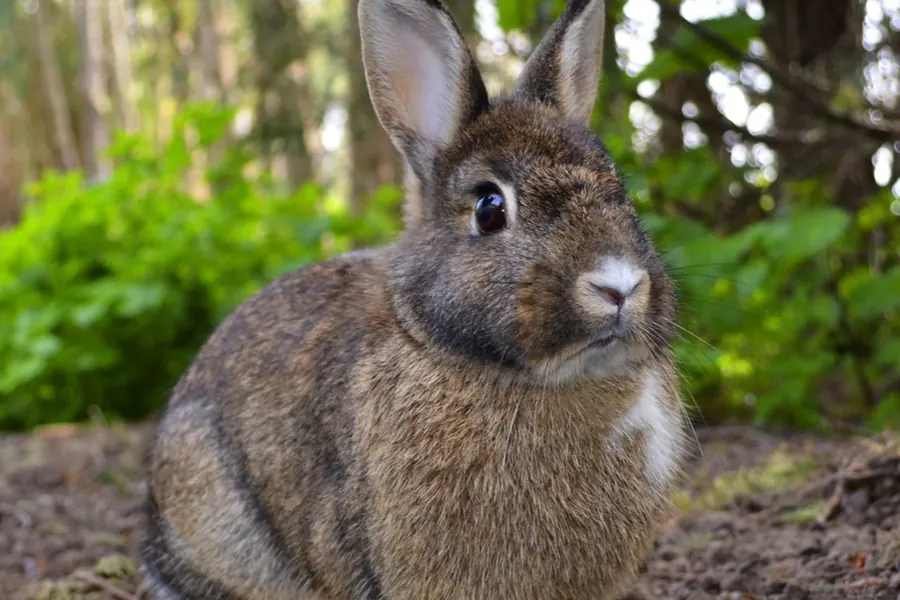
Rabbit — smaller, shorter ears, born helpless in burrows
Source: Wikimedia Commons
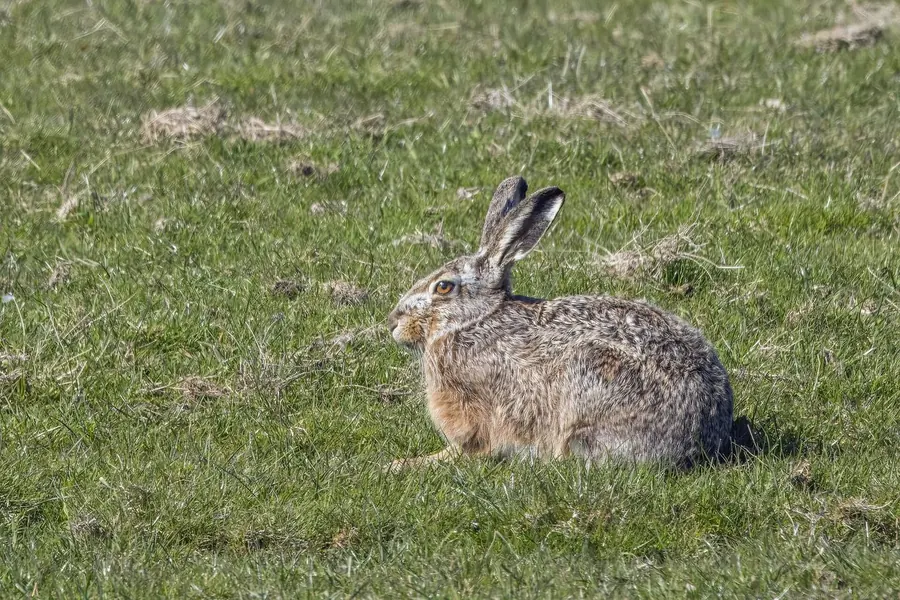
Hare — larger, long black-tipped ears, born furred above ground
Photo: Charles J. Sharp / Wikimedia Commons (CC BY-SA 4.0)
Rabbit vs Hare: At a Glance
| Feature | Rabbit | Hare |
|---|---|---|
| Scientific classification | Various genera (e.g. Oryctolagus, Sylvilagus), family Leporidae | Genus Lepus, family Leporidae |
| Body length | 25-50 cm (10-20 in) | 40-75 cm (16-30 in) |
| Weight | 0.4-3 kg (14 oz-6.6 lb) | 1.35-6 kg (3-13 lb) |
| Ears and hind legs | Shorter, rounded ear tips, no black marking | Longer, black-tipped ears; longer hind legs |
| Newborn state | Altricial: naked, blind, helpless | Precocial: furred, eyes open, mobile |
| Home | Underground burrow system (warren) | Above-ground nest depression (form) |
| Social behaviour | Colonial, lives in groups | Largely solitary outside breeding season |
| Typical wild lifespan | 1-3 years (record 9.5 years) | 3-4 years (record 12-13 years) |
| IUCN status (example species) | Near Threatened (European rabbit) | Least Concern (European hare) |
Which is bigger & stronger?
The hare is bigger, with the European (brown) hare reaching about 50-70 cm and 3-5 kg, against roughly 34-50 cm and 1.2-2 kg for a wild European rabbit.
Rabbits and hares are close relatives, both belonging to the family Leporidae within the order Lagomorpha, and both are often mistaken for one another because of their long ears, twitching noses, and powerful hind legs. Despite this shared ancestry, they diverge in genus, biology, and lifestyle. "Rabbit" is the common name applied to most Leporidae genera, such as Oryctolagus (the European rabbit) and Sylvilagus (the cottontails), while "hare" almost always refers to the genus Lepus, which also includes jackrabbits despite their misleading name. The clearest way to tell them apart is by looking at how the young develop, since this single trait explains most of their other physical and behavioural differences, from ear length to whether they live in a burrow or in the open.
Birth and early development
The single most reliable way to distinguish a rabbit from a hare is the state of the newborn. Hares give birth to precocial leverets: born fully furred with eyes and ears open, able to hop within hours. Because leverets can move and thermoregulate almost immediately, a doe hare has no need to dig a den; she simply gives birth in a shallow, grass-lined scrape called a form, often on open ground. Rabbits, by contrast, give birth to altricial kits (or kittens): hairless, blind, and completely dependent on the mother. This vulnerability is why rabbits must raise litters in the relative safety of an underground burrow, usually within a larger network called a warren, lined with fur plucked from the mother's belly.
Size, ears, and legs
Hares are consistently the larger animal: body length 40-75 cm (16-30 in) against a rabbit's 25-50 cm (10-20 in), and weight up to 6 kg (13 lb) versus a rabbit's typical maximum of about 3 kg (6.6 lb). The European hare, one of the largest hare species, measures 55-65 cm and weighs 3.5-5 kg. Hares also have proportionally longer ears, often 9-11 cm and tipped with black, plus longer hind legs that give them a longer stride. These adaptations suit a hare's main defence: outrunning predators in the open at speeds up to 70 km/h (43 mph), rather than diving underground.
Social structure and habitat
Rabbits are gregarious animals that live in colonies within warrens, sharing tunnels, communicating through scent and body language, and cooperating loosely in vigilance against predators. Hares are largely solitary for most of the year, coming together chiefly to breed. During the spring breeding season, hares display the well-known "boxing" behaviour, most often an unreceptive female fending off a male's advances, giving rise to the phrase "mad as a March hare". Because hares rely on camouflage and speed rather than shelter, they favour open fields, grassland and farmland, while rabbits need diggable soil for their burrow systems and are also common in scrub, hedgerows and gardens.
Lifespan and conservation status
In the wild, rabbits typically live only 1-3 years, with the great majority of kits dying within their first three months to predation and disease, though exceptional individuals have reached almost 10 years. Hares tend to live somewhat longer in typical conditions, around 3-4 years on average, with a documented potential lifespan of up to 12-13 years. Conservation status varies markedly between species: the European hare (Lepus europaeus) is assessed as Least Concern by the IUCN, whereas the European rabbit (Oryctolagus cuniculus), despite being abundant and often invasive where introduced, is classified Near Threatened globally because of steep declines from disease and habitat loss within its native Iberian range.
Did you know?
A newborn leveret can be up and hopping within hours of birth, while a newborn rabbit kit cannot even open its eyes for about ten days, a stark contrast rooted in millions of years of separate evolution within the same family.
Rabbit vs Hare: FAQs
Is a hare just a big rabbit?
Can rabbits and hares interbreed?
Why do hares box in spring?
Is a jackrabbit a rabbit or a hare?
Which is faster, a rabbit or a hare?
Do rabbits and hares live in the same kind of home?
These animals need us
Understanding wildlife is the first step to protecting it. WARN funds partner-led rescue and conservation where the need is greatest — your support keeps that work going.