Animal Comparison
Newt vs Salamander
Every newt is a salamander, but not every salamander is a newt. Newts are semi-aquatic with rough skin and flattened tails; most other salamanders live on land.
By the WARN Research & Conservation TeamChecked against IUCN Red List & CITES sourcesLast updated
In brief — Newt vs Salamander
A newt is simply a specialised, water-loving type of salamander — the "newt" label is a subset, not a separate group.
Every newt is a salamander, but not every salamander is a newt: newts are a subfamily (Pleurodelinae) within the salamander family Salamandridae, distinguished by a semi-aquatic lifestyle, rougher, more granular skin, and a flattened, paddle-like tail used for swimming, whereas most other salamanders are more fully terrestrial, with smoother skin and a rounder, tapered tail built for walking rather than swimming.
See the difference
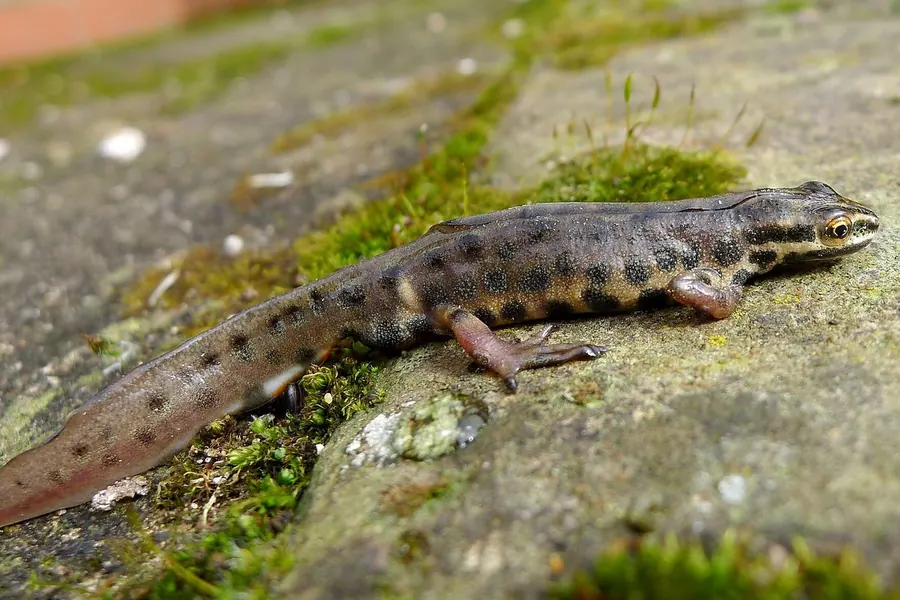
Newt — a semi-aquatic salamander with rougher skin
Photo: gailhampshire / Wikimedia Commons (CC BY 2.0)
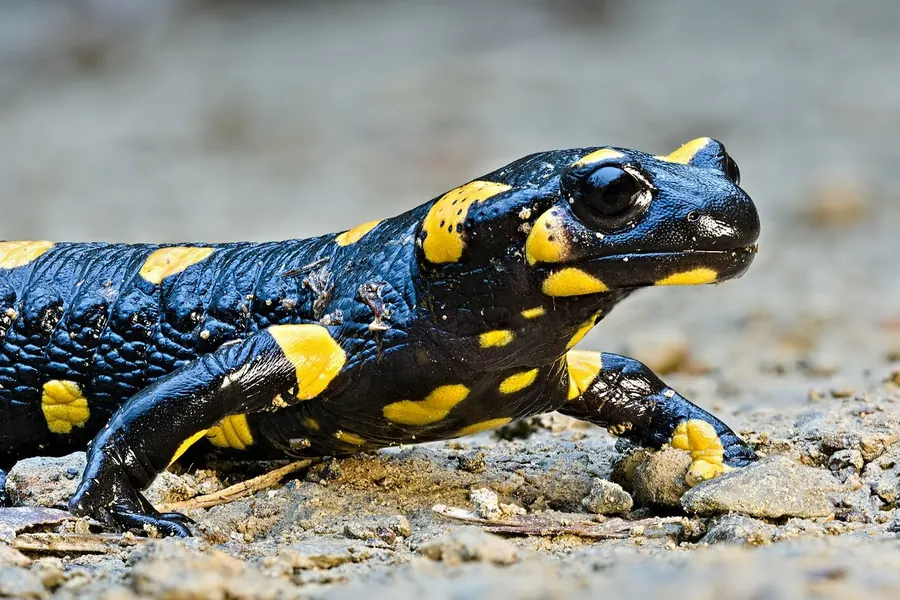
Salamander — the broader group, often smooth glossy skin
Source: Wikimedia Commons
Newt vs Salamander: At a Glance
| Feature | Newt | Salamander |
|---|---|---|
| Taxonomic rank | Subfamily Pleurodelinae | Order Caudata (Urodela) |
| Relationship | A type of salamander | Umbrella group containing newts |
| Number of species | About 100+ | About 740 (10 families) |
| Typical skin | Rough, granular or warty | Usually smooth and moist |
| Tail shape | Flattened, paddle-like | Rounder, tapered |
| Lifestyle | Semi-aquatic; returns to water to breed | Mostly terrestrial (varies widely) |
| Adult size | Roughly 7-16 cm (up to 30 cm, ribbed newt) | 27 mm to 1.8 m (Chinese giant salamander) |
| Typical lifespan | 2-15 years wild; to 20 captive | Varies; fire salamander 20+ years, olm 100+ years |
| IUCN status | Varies by species; most Least Concern | Varies widely; some Critically Endangered |
Which is bigger & stronger?
A newt is itself a type of salamander and one of the smaller ones (usually under 20 cm), so the broader salamander group is far larger, topping out with the Chinese giant salamander at up to 1.8 m.
"Salamander" is the umbrella term for every tailed amphibian in the order Caudata (Urodela) — around 740 species in ten families worldwide, from tiny leaf-litter species barely 3 cm long to the 1.8 m Chinese giant salamander. "Newt" refers only to the roughly 100-plus species in the subfamily Pleurodelinae, nested inside the family Salamandridae. Because of this nesting, every newt is technically a salamander, though the reverse is not true. The practical differences people notice are lifestyle and appearance: newts habitually return to ponds each year to breed and are adapted for life partly in water, while most other salamanders spend more of their adult lives on land, in burrows, or under logs and bark. This split shows up clearly in their skin texture, tail shape and breeding behaviour.
Newts are a subfamily, salamanders are the whole order
Salamander is the umbrella name for every tailed amphibian in the order Caudata (also called Urodela), which comprises roughly 740 species across ten families, including giant salamanders, mole salamanders, lungless salamanders and the family Salamandridae. Newts make up just one subfamily within Salamandridae, called Pleurodelinae, with around 100 or more species in about sixteen genera such as Triturus, Lissotriton, Taricha and Notophthalmus. This nested relationship is the single most important fact: every newt is a salamander by definition, but the reverse does not hold, since most salamander species are not newts at all.
Skin texture and tail shape differ with lifestyle
Newts typically have rougher, more granular or warty skin than other salamanders, whose skin is usually smoother and glossier. This textural difference tracks how much time each spends out of water. Newts also tend to have a flattened, muscular, paddle- or fin-like tail suited to swimming, while most other salamanders have a rounder, longer, tapered tail better suited to walking, climbing or burrowing on land. Newt feet are often more webbed for propulsion, whereas terrestrial salamanders usually have well-defined toes for gripping surfaces.
Newts are semi-aquatic; most other salamanders are more terrestrial
Adult newts are strongly semi-aquatic: in temperate regions they migrate to ponds each spring to breed, then spend much of the rest of the year on damp land nearby, sheltering under logs or leaf litter. By contrast, many non-newt salamanders — such as the fire salamander or mole salamanders — live mainly on land as adults and visit water only briefly, or not at all, to reproduce. There are exceptions on both sides of the family tree: some salamanders, like the axolotl, remain fully aquatic for life, while some newts spend long periods away from water as juveniles.
Reproduction and defences vary even within Salamandridae
Most newts lay eggs individually in water, often wrapping each one in a folded pondweed leaf, and the larvae hatch with external gills before passing through a terrestrial juvenile stage called an eft. Many non-newt salamandrids reproduce differently: the fire salamander, for example, gives birth to live, fully formed larvae or juveniles rather than laying eggs. Both groups defend themselves with skin toxins, but the compounds differ — some Pacific newts (Taricha) carry tetrodotoxin, the same potent neurotoxin found in pufferfish, while fire salamanders secrete alkaloids called samandarins.
Did you know?
Newts are among the very few vertebrates that can fully regenerate lost limbs, tails and even parts of the heart, eye and spinal cord — producing a working replacement rather than scar tissue.
Newt vs Salamander: FAQs
Is a newt a type of salamander?
Can newts and salamanders interbreed?
How can you tell a newt from a salamander by looking at it?
Which is bigger, a newt or a salamander?
Do newts live in water or on land?
Are newts or salamanders more endangered?
These animals need us
Understanding wildlife is the first step to protecting it. WARN funds partner-led rescue and conservation where the need is greatest — your support keeps that work going.