Animal Comparison
Monkey vs Ape
The clearest difference: almost all monkeys have tails, while no ape does. Apes are also larger-brained, tailless, broad-chested primates built to swing.
By the WARN Research & Conservation TeamChecked against IUCN Red List & CITES sourcesLast updated
In brief — Monkey vs Ape
If it has a tail, it is a monkey; if it doesn't, it is an ape (or a human).
The single clearest difference is the tail: almost all of the roughly 260+ monkey species have one, while none of the apes (gibbons, orangutans, gorillas, chimpanzees, bonobos or humans) do. Apes are also larger-brained, broader-chested and have shoulder joints built for brachiation (arm-swinging), while monkeys are generally smaller-bodied and move on all fours along branch tops.
See the difference
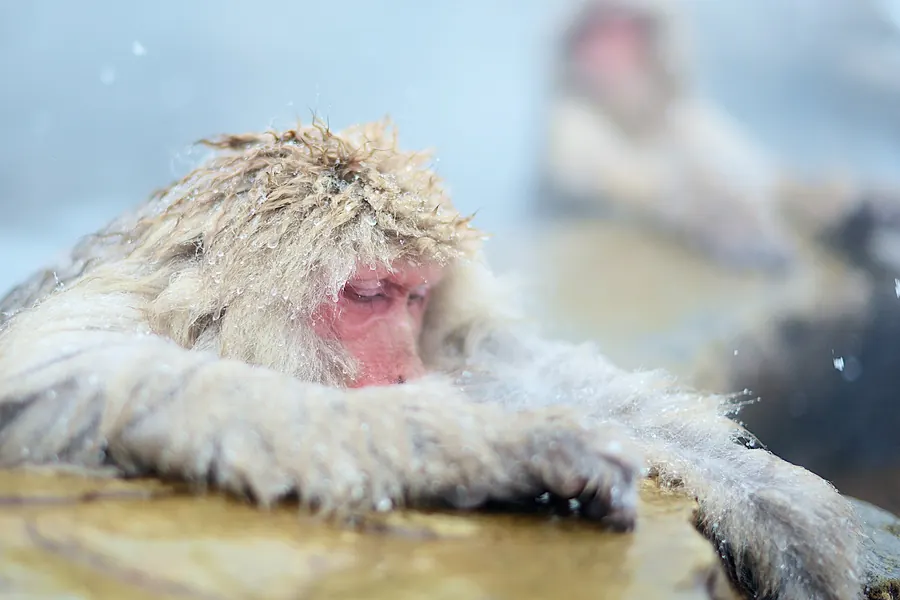
Monkey — usually has a tail, smaller-bodied
Photo: nomao saeki / Wikimedia Commons (CC0)
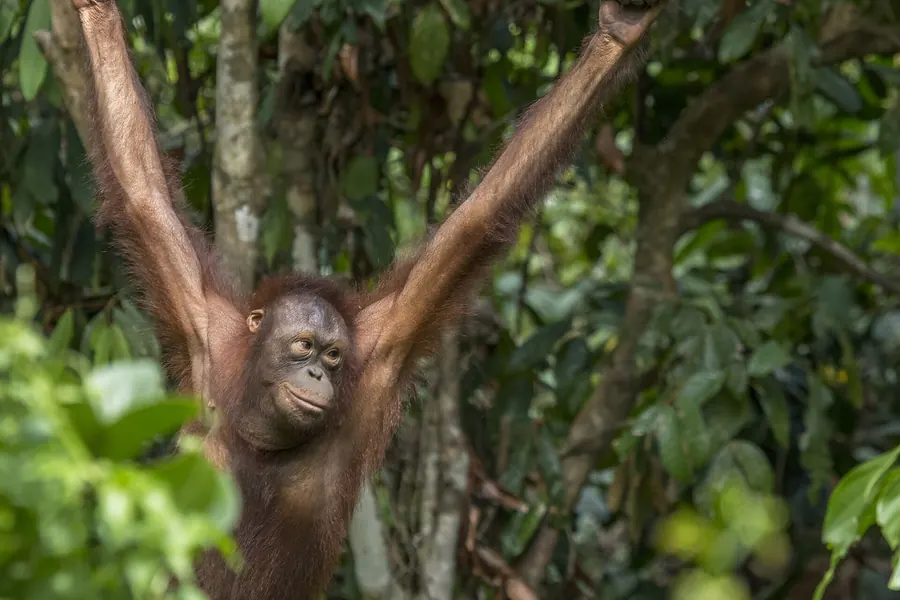
Ape — no tail, larger, long arms (e.g. orangutan)
Photo: Charles J. Sharp / Wikimedia Commons (CC BY-SA 4.0)
Monkey vs Ape: At a Glance
| Feature | Monkey | Ape |
|---|---|---|
| Taxonomic group | Infraorder Simiiformes (excl. apes) | Superfamily Hominoidea |
| Tail | Present in almost all species | Absent in every species |
| Number of species | 260+ species | Around 20-25 species (20 gibbons + 8 great apes) |
| Body shape | Narrower chest, smaller body | Broad, flat chest and wide shoulders |
| Typical movement | Runs and leaps along branch tops on all fours | Swings arm-to-arm (brachiation); great apes also walk semi-upright |
| Relative brain size | Smaller relative to body size | Larger and more complex, especially in great apes |
| Range | Africa, Asia, Central & South America | Equatorial Africa and Southeast Asia only |
| Typical lifespan | 15-30 years depending on species | 35-60 years depending on species |
| IUCN status | Varies by species, from Least Concern to Critically Endangered | All great ape species Endangered or Critically Endangered |
Which is bigger & stronger?
Apes are much larger, with the biggest ape (the gorilla, males to about 200 kg) roughly four times the weight of the biggest monkey (the mandrill, males to about 54 kg).
"Monkey" and "ape" are often used interchangeably, but they describe two distinct branches of the primate family tree. Monkeys are the larger, more diverse group, split into Old World monkeys (Africa and Asia) and New World monkeys (Central and South America), totalling well over 260 species. Apes form a much smaller group, the superfamily Hominoidea, containing just the gibbons ("lesser apes") and the great apes: orangutans, gorillas, chimpanzees, bonobos and humans. The two groups share a common ancestor but diverged tens of millions of years ago, and evolved noticeably different bodies, brains and ways of moving through — or beneath — the trees.
Tails and taxonomy
The most reliable way to tell the two apart is the tail. With only a couple of minor exceptions, every one of the 260-plus monkey species has one, often a long, balancing or even prehensile tail in New World species such as spider monkeys. No ape, from the smallest gibbon to the largest gorilla, has a tail at all; researchers have traced this loss to a mutation in the TBXT gene shared by the whole ape lineage. Taxonomically, monkeys and apes both sit within the primate order, but apes form their own superfamily, Hominoidea, while monkeys are split across Old World (Cercopithecidae) and New World (five families including Cebidae and Atelidae) lineages that are not each other's closest relatives.
Body build and how they move
Apes have a broader, flatter chest and shoulder joints rotated to sit higher and more to the side of the body, an adaptation that lets the arm swing through a huge range of motion. This is what makes brachiation, swinging hand-over-hand beneath branches, possible for gibbons and, to a lesser degree, orangutans and chimpanzees. Great apes also knuckle-walk or stand semi-upright on the ground. Monkeys have a narrower ribcage and shoulders built for quadrupedal movement, running and leaping along the tops of branches rather than hanging beneath them, though some, like spider monkeys, are also skilled at swinging.
Brain size, cognition and tool use
Apes have consistently larger brains relative to body size than monkeys, and this shows in behaviour. Chimpanzees and orangutans use and even manufacture tools, recognise themselves in mirrors, and show forms of planning and social learning rarely documented in monkeys. Monkeys are far from unintelligent, capuchins in particular use stone tools, but as a group apes show more consistent, complex tool use and problem-solving across species.
Diversity, range and status
Monkeys are the far more numerous and widespread group: Old World monkeys such as macaques and baboons range across Africa and Asia, while New World monkeys such as marmosets and howlers are confined to Central and South America, together making up hundreds of species with statuses ranging from Least Concern to Critically Endangered. Apes are a small, geographically narrow group, gibbons and orangutans in Southeast Asia, gorillas, chimpanzees and bonobos in equatorial Africa, and every great ape species is currently classified as Endangered or Critically Endangered on the IUCN Red List, chiefly due to habitat loss and poaching.
Did you know?
Apes lost their tails because of a single shared mutation in the TBXT gene in the common ancestor of all living apes, a change that also appears linked to spinal birth defects still seen occasionally in humans today.
Monkey vs Ape: FAQs
Is a monkey a type of ape?
Do all monkeys have tails?
Is a gorilla a monkey or an ape?
Are humans apes or monkeys?
Which is more intelligent, a monkey or an ape?
How can you tell a monkey from an ape at a glance?
These animals need us
Understanding wildlife is the first step to protecting it. WARN funds partner-led rescue and conservation where the need is greatest — your support keeps that work going.