Animal Comparison
Markhor vs Ibex
The markhor's horns spiral outward in a tight corkscrew; the ibex's sweep back in a single ridged curve. Compare size, range, status and behaviour.
By the WARN Research & Conservation TeamChecked against IUCN Red List & CITES sourcesLast updated
In brief — Markhor vs Ibex
Spiral horns and one species means markhor; a straighter, ridged backward curve and it's an ibex — and "ibex" itself covers several different species.
The clearest difference is horn shape: a markhor's horns twist into a dramatic outward-flaring corkscrew spiral, while an ibex's horns sweep backwards in one long, ridged curve with no spiralling. Markhor (Capra falconeri) is a single species native to Pakistan, Afghanistan and neighbouring Central Asian mountains, listed Near Threatened by the IUCN. "Ibex" is a group of several Capra species — the widespread Siberian ibex (Capra sibirica), which shares much of the markhor's range, is Least Concern.
See the difference
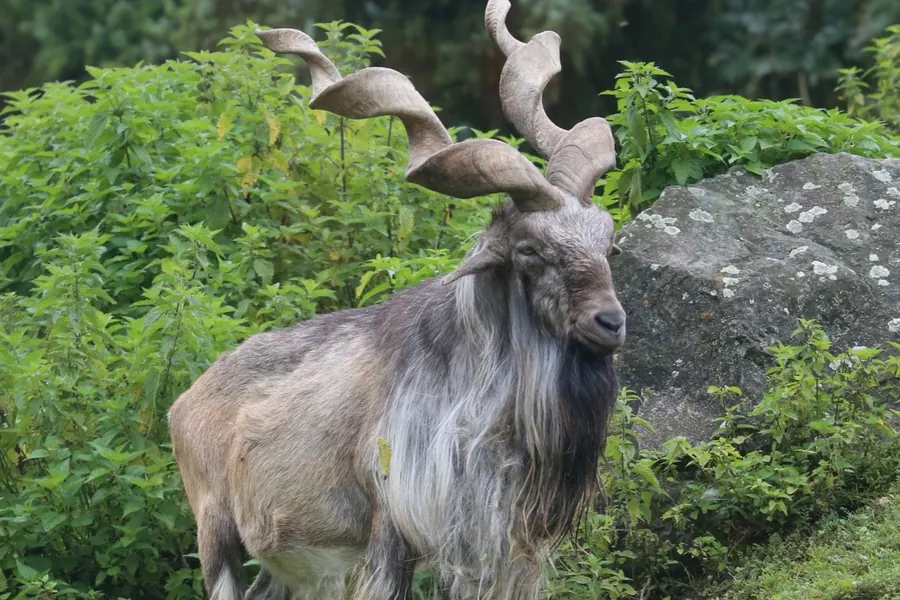
Markhor — dramatic corkscrew spiral horns
Source: Wikimedia Commons
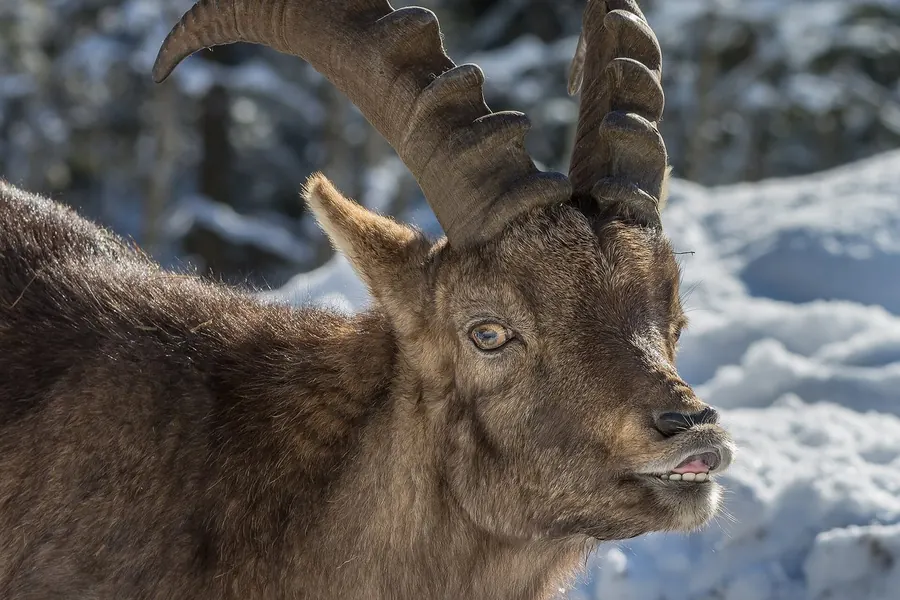
Ibex — long backward-sweeping ridged horns
Source: Wikimedia Commons
Markhor vs Ibex: At a Glance
| Feature | Markhor | Ibex |
|---|---|---|
| Scientific name | Capra falconeri | Capra sibirica (Siberian ibex) |
| Horn shape | Corkscrew spiral, flares outward | Backward curve, ridged, no spiral |
| Male horn length | Up to ~160 cm (63 in) | Up to ~148 cm (58 in) |
| Shoulder height | 65–115 cm (26–45 in) | 88–110 cm (35–43 in) |
| Male weight | 80–110 kg (176–243 lb) | 60–130 kg (132–287 lb) |
| Range | Pakistan, Afghanistan, N. India, Tajikistan, Uzbekistan, Turkmenistan | Central Asia, Himalaya, Mongolia, Russia, China |
| Typical elevation | 700–4,000 m, scrubbier slopes | 500–6,000 m, higher and snowier |
| IUCN status | Near Threatened (downlisted 2015) | Least Concern |
| Lifespan (wild) | 10–13 years | Up to 15–17 years |
Which is bigger & stronger?
They are closely matched wild goats, but the Siberian ibex is generally the heavier and stronger (males to about 80-130 kg) while the markhor has the greater shoulder height (males about 80-110 kg).
Markhor and ibex are both large wild goats (genus Capra) that share the same rugged mountain ranges across Central and South Asia, and both sexes carry horns, making them easy to mix up at a distance. But "markhor" refers to one species, Capra falconeri, while "ibex" is a common name applied to several distinct Capra species — most relevantly, in the markhor's own range, the Siberian (or Himalayan) ibex, Capra sibirica. The two are readily told apart once you know what to look for: horn shape is the giveaway, and their conservation stories are very different, with the markhor's recovery a rare high-altitude success.
Horns: spiral versus scimitar
The single most reliable way to tell them apart is horn shape. A markhor's horns grow as a tight, flaring corkscrew that twists around its own axis as it lengthens — no other wild goat has horns quite like it. An ibex's horns are far simpler: they sweep backwards and slightly outward in one continuous curve, without any spiralling, and carry pronounced transverse ridges across the front surface that are used to estimate age, rather like growth rings. Both sexes of each species grow horns, but males' are dramatically longer and thicker than females'.
One species versus several
"Markhor" names a single species, Capra falconeri, with a handful of regional subspecies (such as the Astor and Kashmir markhor) that differ mainly in horn form. "Ibex" is not a single species at all — it is a common name shared by several Capra species, including the Alpine ibex of the European Alps, the Nubian and Spanish ibex, and the Siberian (or Himalayan) ibex that actually overlaps the markhor's range in Pakistan and Central Asia. Comparing "markhor vs ibex" really means comparing one species against a group of close relatives.
Conservation trajectories
The two also tell very different conservation stories. The markhor was classified Endangered until community-based conservation and strictly regulated trophy-hunting quotas — which return most revenue to local villages — helped numbers recover; the IUCN downlisted it to Near Threatened in 2015, with roughly 5,750 mature individuals estimated. The Siberian ibex, by contrast, is Least Concern, with a much larger and more widely distributed population estimated in the hundreds of thousands, though some regional subpopulations are shrinking under poaching and livestock competition.
Habitat and altitude preference
Both animals are sure-footed cliff specialists built for the same broad mountain systems, but they favour different elevation bands. Markhor tend to stay on lower, drier, more scrub-covered slopes — often descending as low as 700 m in winter — and are strongly associated with oak, pine and juniper scrub forest. Ibex generally range higher, into open alpine meadows and rocky terrain near or above the treeline, sometimes above 5,000 m, and are more tolerant of snow and cold for longer stretches of the year.
Did you know?
A markhor's horns can grow to around 1.6 metres in males — longer than the animal's own body height at the shoulder.
Markhor vs Ibex: FAQs
Is a markhor a type of ibex?
What is the main visual difference between a markhor and an ibex?
Which is bigger, a markhor or an ibex?
Are markhor endangered?
Do markhor and ibex live in the same place?
Are all ibex the same species?
These animals need us
Understanding wildlife is the first step to protecting it. WARN funds partner-led rescue and conservation where the need is greatest — your support keeps that work going.