Animal Comparison
Llama vs Alpaca
Llamas are larger pack animals with banana-shaped ears and long faces; alpacas are smaller, bred purely for fine fleece, with short ears and blunt faces.
By the WARN Research & Conservation TeamChecked against IUCN Red List & CITES sourcesLast updated
In brief — Llama vs Alpaca
If it is bigger, has curved banana ears and hauls cargo, it is a llama; if it is smaller, fluffier-faced and grown for fleece, it is an alpaca.
The clearest difference is size and purpose: a llama stands around 120 cm at the shoulder and weighs 130-200 kg (285-440 lb), bred mainly as a pack and guard animal, with long banana-shaped ears and an elongated face. An alpaca is smaller, standing 81-99 cm (32-39 in) and weighing 48-84 kg (105-185 lb), bred almost exclusively for its fine, soft fleece, with short spear-shaped ears and a blunt, teddy-bear-like face.
See the difference
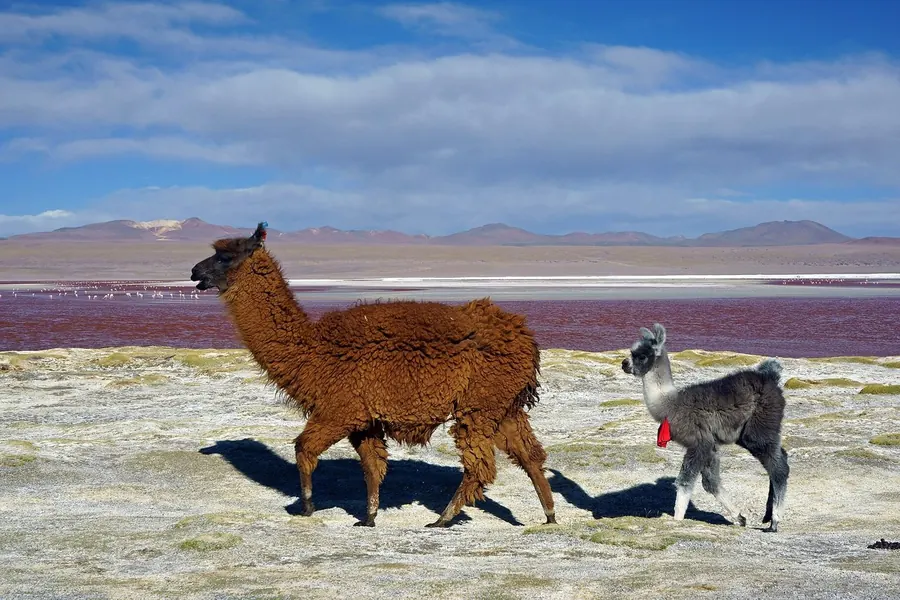
Llama — larger, banana-shaped ears, coarse coat, pack animal
Source: Wikimedia Commons
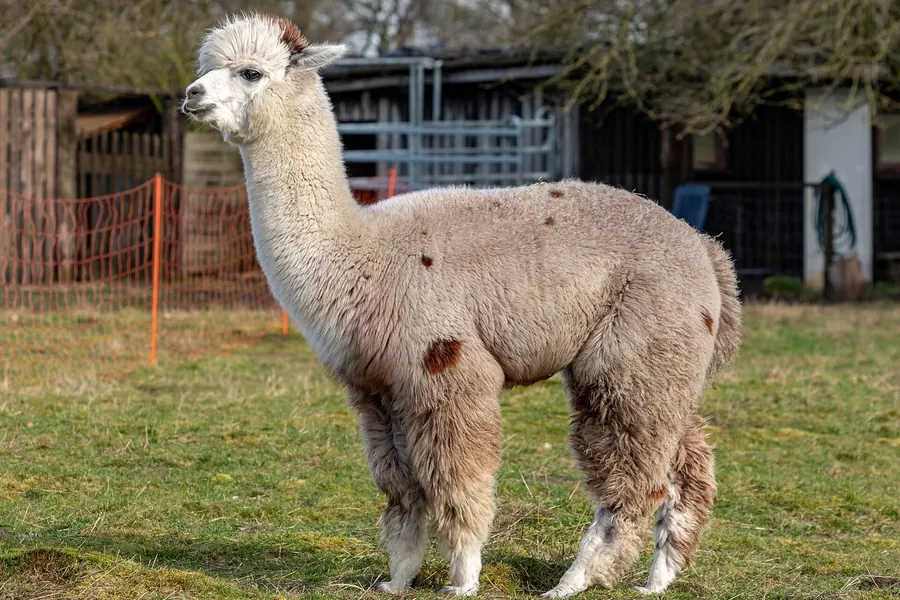
Alpaca — smaller, spear-shaped ears, fine fleece
Source: Wikimedia Commons
Llama vs Alpaca: At a Glance
| Feature | Llama | Alpaca |
|---|---|---|
| Scientific name | Lama glama | Vicugna pacos |
| Wild ancestor | Guanaco | Vicuña |
| Shoulder height | ~120 cm (47 in) | 81-99 cm (32-39 in) |
| Weight | 130-200 kg (285-440 lb) | 48-84 kg (105-185 lb) |
| Ears | Long, curved, banana-shaped | Short, straight, spear-shaped |
| Face shape | Long, elongated muzzle | Short, blunt, rounded face |
| Primary use | Pack animal, guard, meat | Fine fleece production |
| Lifespan | 15-30 years | 15-25 years |
| Conservation status | Domesticated (not IUCN-assessed) | Domesticated (not IUCN-assessed) |
Which is bigger & stronger?
The llama is much bigger and stronger, standing about 1.1 m at the shoulder and weighing roughly 130-200 kg, more than twice the alpaca's typical 48-84 kg.
Llamas and alpacas are both domesticated South American camelids in the family Camelidae, and both descend from wild ancestors on the Andean altiplano, but they were bred for entirely different jobs. The llama (Lama glama) was domesticated from the guanaco roughly 5,000-6,000 years ago primarily as a beast of burden and flock guardian, which is why it grew large, strong and confident. The alpaca (Vicugna pacos) was domesticated from the vicuña around the same period purely for its exceptionally soft fibre, which is why breeders favoured a smaller, fleece-dense animal over size or strength. Despite frequent confusion between the two, size, ear shape, face profile and temperament make them easy to tell apart once you know what to look for.
Size and build
Llamas are considerably larger and rangier, standing around 120 cm (47 in) at the shoulder and typically weighing 130-200 kg (285-440 lb), with long legs and a lean, upright frame suited to carrying loads across mountain terrain. Alpacas are noticeably more compact, standing 81-99 cm (32-39 in) at the shoulder and weighing only 48-84 kg (105-185 lb). Alpacas also appear fluffier and rounder because their dense fleece covers a smaller body, while a llama's coarser double coat sits over a visibly bigger skeleton. Side by side, the size gap alone is usually enough to identify which animal is which.
Ears and face shape
The fastest visual check is the head. Llamas have long, curved ears often described as 'banana-shaped', paired with an elongated, camel-like face and a pronounced Roman nose profile. Alpacas have short, straight, spear-shaped ears and a much shorter, blunter face that gives them a rounder, more teddy-bear-like appearance. These features are reliable even on animals of similar colour or fleece length, since ear and skull shape do not change with breeding for fibre.
Purpose of domestication and fleece
Llamas were bred chiefly as pack animals and flock guardians, valued for strength, stamina and a naturally protective temperament; they can carry roughly 25-30% of their body weight over several kilometres. Alpacas were bred almost exclusively for their fibre, producing a much finer, softer fleece prized for textiles. Alpacas come in two fleece types, huacaya (dense, crimped) and suri (long, silky locks), a distinction that has no equivalent in llamas, whose coarser outer coat is used more for rope and rugs than fine clothing.
Temperament and social behaviour
Llamas are typically bold and independent, often acting as guardians for herds of sheep, goats or alpacas; when a predator approaches, a llama may raise the alarm and actively chase or kick to defend its group. Alpacas are more timid individually but strongly herd-oriented, preferring the company of other alpacas and communicating through humming and body posture rather than confrontation. This difference in nerve and independence is precisely why llamas, not alpacas, are chosen as guard animals on farms.
Did you know?
Alpacas hum to communicate almost every emotion, from curiosity to distress, making them one of the most vocally expressive domesticated camelids despite having no roar, bray or bleat comparable to other livestock.
Llama vs Alpaca: FAQs
Is a llama the same species as an alpaca?
Which is bigger, a llama or an alpaca?
How can you tell a llama and an alpaca apart just by looking?
Can llamas and alpacas breed together?
Why are llamas used as guard animals but not alpacas?
Do llamas or alpacas produce better fleece?
These animals need us
Understanding wildlife is the first step to protecting it. WARN funds partner-led rescue and conservation where the need is greatest — your support keeps that work going.