Animal Comparison
Frog vs Toad
The main difference: toads have dry, warty skin and short hopping legs; frogs have smooth, moist skin and long legs built for leaping and swimming.
By the WARN Research & Conservation TeamChecked against IUCN Red List & CITES sourcesLast updated
In brief — Frog vs Toad
Dry, warty and short-legged means toad; smooth, moist and long-legged means frog.
The main difference is skin and legs: toads have dry, bumpy, warty skin and short back legs built for walking or short hops, while frogs have smooth, moist skin and long, powerful hind legs built for leaping and swimming. Taxonomically all toads are frogs — "toad" usually refers to species in the family Bufonidae, one branch within the much larger order Anura, which contains every frog and toad species.
See the difference
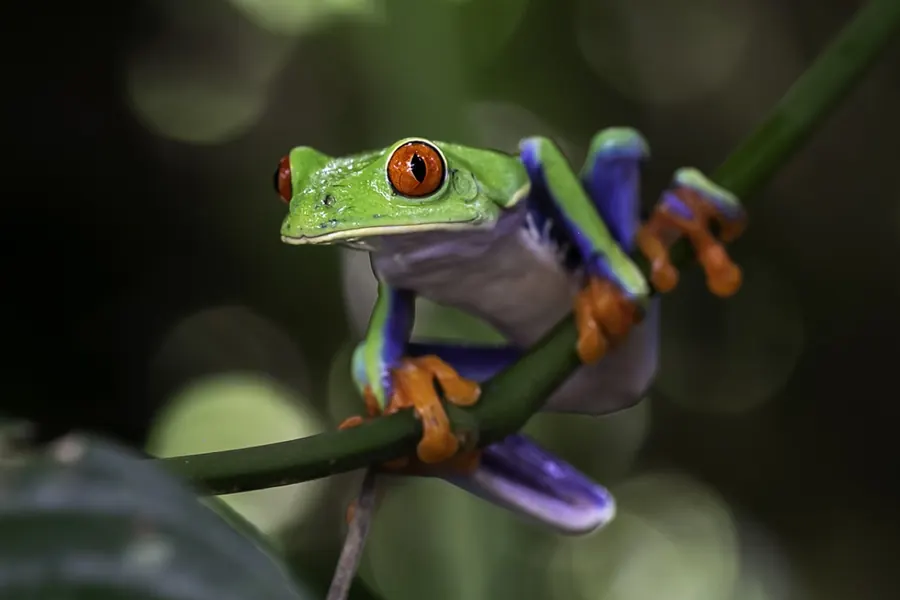
Frog — smooth moist skin, long legs, leaps
Source: Wikimedia Commons
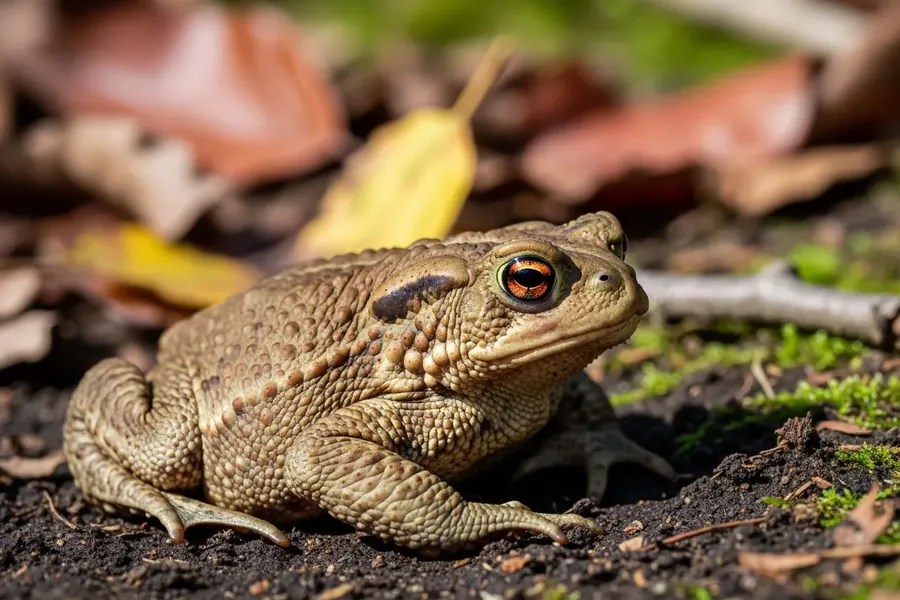
Toad — dry warty skin, short legs, walks and hops
Source: Wikimedia Commons
Frog vs Toad: At a Glance
| Feature | Frog | Toad |
|---|---|---|
| Scientific grouping | Order Anura; many families (e.g. Ranidae) | Order Anura; family Bufonidae ("true toads") |
| Skin texture | Smooth, moist, often shiny | Dry, thick, warty or bumpy |
| Hind legs | Long, muscular; built for leaping and swimming | Short, sturdy; built for walking and short hops |
| Eyes and glands | Large, bulging eyes; no parotoid glands | Smaller eyes; prominent parotoid glands behind each eye |
| Typical habitat | In or near water most of the time | Mostly on land; returns to water only to breed |
| Eggs | Laid in jelly-like clusters or masses | Laid in long paired strings or chains |
| Skin defence | Some species toxic (e.g. poison dart frogs); most are not | Most secrete bitter or toxic bufotoxin from parotoid glands |
| Typical lifespan | Roughly 5-10 years in the wild (varies by species) | Roughly 10-12 years in the wild (varies by species) |
| IUCN status (as a group) | Varies by species; over a third of all amphibians are threatened | Varies by species; over a third of all amphibians are threatened |
Which is bigger & stronger?
They overlap greatly, but the largest frog (the goliath frog at about 32 cm and 3 kg) exceeds the largest toad (the cane toad at about 24 cm), while toads tend to be squatter and stouter for their length.
"Frog" and "toad" are common names, not strict scientific ranks — every toad is technically a frog, since both sit inside the amphibian order Anura, which holds more than 7,000 described species worldwide. In everyday use, "true toads" refers specifically to the family Bufonidae, while "true frogs" usually means the family Ranidae, though many other tailless-amphibian families are casually called frogs too. Because the split is informal, the clearest way to tell them apart is by looking at the animal in front of you: its skin texture, leg length, eye shape, and where it lays its eggs. This guide compares frogs and toads across appearance, habitat, behaviour and life history, using the traits that field guides and biologists rely on to separate them at a glance.
Skin and body build
The fastest way to tell them apart is touch and texture. Frogs have smooth, moist, permeable skin that must stay damp to allow cutaneous respiration, which is why they rarely stray far from water. Toads have thicker, drier, keratinised skin covered in wart-like bumps that resists water loss, letting them roam gardens, woodland and even semi-arid ground far from any pond. Frogs also tend to have slender, streamlined bodies, while most toads are stockier and rounder, with a more squat, toad-shaped silhouette that suits a walking gait rather than a leaping one.
Legs and locomotion
Leg proportions reveal how each animal gets around. Frogs have long, powerful hind legs, often longer than the body itself, packed with the muscle needed for explosive jumps and strong swimming kicks; many frog species have webbed hind feet as a result. Toads have shorter, less muscular hind legs adapted for walking or taking small, low hops rather than dramatic leaps. If an amphibian is bounding several body-lengths in a single jump it is almost certainly a frog; if it is shuffling or hopping in short bursts, it is more likely a toad.
Glands, toxins and eggs
Most true toads carry a pair of prominent parotoid glands behind the eyes that ooze a milky, bitter toxin called bufotoxin when the animal is grabbed or bitten, a chemical defence that can sicken or kill small predators and irritate human skin. Frogs generally lack parotoid glands, though a minority of species, such as poison dart frogs, carry their own potent skin toxins through diet-derived alkaloids. Breeding also differs: frogs typically lay eggs in a floating, jelly-like clump, while toads lay theirs in long strings or chains often draped around submerged plants.
Habitat and range
Frogs are found on every continent except Antarctica and are generally tied closely to freshwater, spending most of their adult life in or beside ponds, streams and wetlands. Toads occupy an equally vast range but are far more terrestrial as adults, venturing into gardens, farmland, forests and even dry scrub, returning to water only to spawn. This difference in water dependency is one reason toads are often the amphibian people encounter away from a pond, while frogs are the ones seen swimming or basking at the water's edge.
Did you know?
A toad's warty appearance comes from keratinised skin glands, not warts in the human sense, and despite the old folk tale, handling a toad cannot give a person warts.
Frog vs Toad: FAQs
Is a toad technically a frog?
Which is bigger, a frog or a toad?
Can frogs and toads breed together?
How can you tell a frog and a toad apart quickly?
Are toads poisonous to touch?
Do frogs and toads live in the same places?
These animals need us
Understanding wildlife is the first step to protecting it. WARN funds partner-led rescue and conservation where the need is greatest — your support keeps that work going.