Animal Comparison
Deer vs Antelope
Deer vs antelope: deer grow branched antlers they shed yearly; antelope keep permanent horns. Compare size, speed, range, diet and how to tell them apart.
By the WARN Research & Conservation TeamChecked against IUCN Red List & CITES sourcesLast updated
In brief — Deer vs Antelope
Deer grow branched antlers shed and regrown yearly (Cervidae); antelope keep permanent unbranched horns of bone and keratin (Bovidae, the cattle family). That single trait separates the two groups.
The clearest difference is the headgear: deer grow branched bone antlers that are shed and regrown every year, while antelope keep permanent, unbranched horns with a bony core wrapped in keratin. They also belong to separate families — deer to Cervidae, antelope to the cattle family Bovidae — which sets apart nearly everything else about them, from where they live to which sex carries the headgear.
See the difference
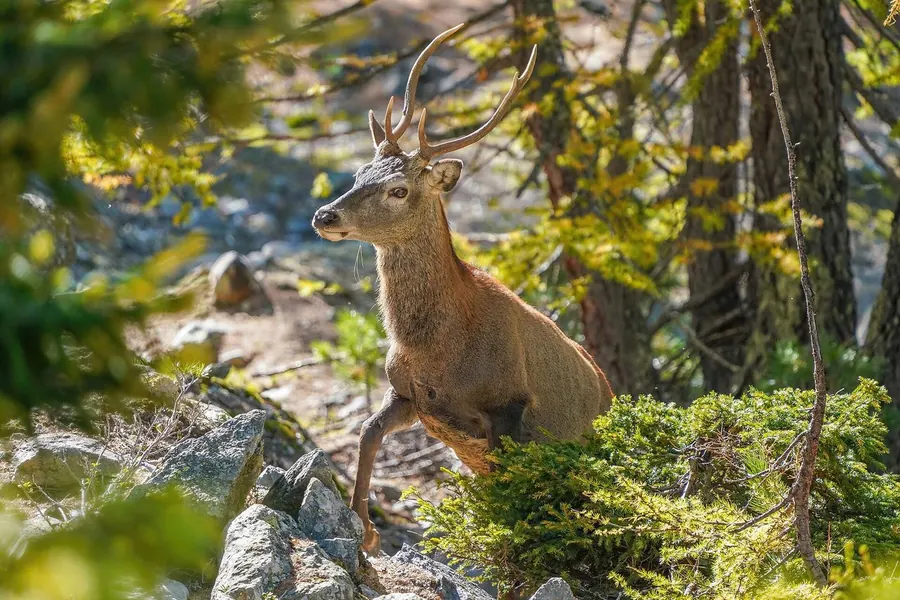
Deer — branched antlers, shed yearly, worldwide
Photo: Giles Laurent / Wikimedia Commons (CC BY-SA 4.0)
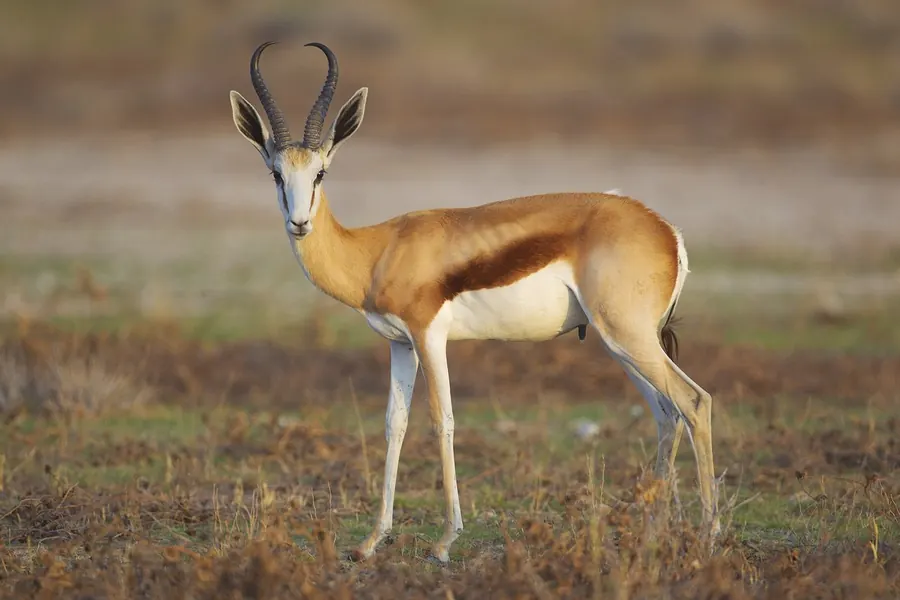
Antelope — permanent horns, mostly African bovids
Source: Wikimedia Commons
Deer vs Antelope: At a Glance
| Feature | Deer | Antelope |
|---|---|---|
| Family | Cervidae (deer family) | Bovidae (cattle, sheep, goats) |
| Headgear | Antlers — branched solid bone | Horns — unbranched bone core in a keratin sheath |
| Shed yearly? | Yes, shed and regrown each year | No, horns are permanent and grow for life |
| Who has it | Usually males only (reindeer: both sexes) | Often both sexes, especially in larger species |
| Number of species | ~45 species | ~90+ species |
| Native range | Europe, Asia, the Americas | Mainly Africa, some in Asia; none native to the Americas or Australia |
| Largest species | Moose — up to ~2.1 m, ~700 kg | Giant eland — up to ~1.8 m, approaching 900-1,000 kg |
| Smallest species | Northern pudu — ~35 cm, ~6 kg | Royal antelope — ~25 cm, ~2.5-3 kg |
| Top speed | White-tailed deer up to ~48 km/h (30 mph) | Many reach 80-90 km/h; springbok ~88 km/h |
| Diet | Herbivore — browses leaves, shoots, twigs | Herbivore — grazes grass or browses, varies by species |
| Lifespan (wild) | ~10-15 years typical | ~10-15 years typical |
| Conservation | Most species Least Concern; some threatened | Ranges from Least Concern to Critically Endangered |
Which is bigger & stronger?
The biggest deer, the moose, is the larger animal — up to about 2.1 m at the shoulder and 700 kg — while the largest antelope, the giant eland, stands up to 1.8 m and can approach 900 kg to 1,000 kg, so eland bulls can rival or exceed a moose in mass.
"Deer" and "antelope" are everyday words for two separate branches of the hoofed-mammal world. Deer make up the family Cervidae — roughly 45 species including red deer, roe, moose, elk and reindeer — and are native to Europe, Asia and the Americas. Antelope is a looser label for around 90-plus species within Bovidae, the family that also holds cattle, sheep and goats; almost all live in Africa, with a smaller number in Asia. The quickest way to tell them apart is the headgear: deer wear branched antlers of solid bone that drop off and regrow each year, while antelope keep permanent horns built on a living bony core. Sources below are drawn from Britannica, the IUCN Red List and Animal Diversity Web.
Antlers vs horns is the master clue
Deer grow antlers: branched structures of solid bone that are shed and regrown every single year, driven by the breeding season. Antelope grow horns: unbranched, made of a permanent bony core sheathed in keratin (the same material as your fingernails), and never shed. Spot branching and yearly shedding and you are looking at a deer; a single permanent spike or curve means an antelope.
They belong to different families
Deer sit in the family Cervidae. Antelope are not a single scientific group but a collection of species within Bovidae, the family of cattle, sheep and goats. This is why an antelope is, biologically, a closer relative of a cow than of a deer. The family split explains the different headgear, teeth and digestion.
Range barely overlaps
Deer are native across Europe, Asia and the Americas, and thrive from woodland to tundra. Antelope are overwhelmingly African, with a smaller group in Asia and the Middle East; there are no native antelope in the Americas or Australia. So in most of the world you only meet one group or the other in the wild.
Which sex carries the headgear
In almost all deer, only males grow antlers — reindeer (caribou) are the famous exception, where females also have them. In many antelope, especially larger species, both sexes carry horns, though the female's are usually shorter and thinner. If you see a female with headgear in Africa, it is far more likely an antelope than a deer.
Speed and escape strategy
Antelope are built for open-country sprinting: many species run at 80-90 km/h, and the springbok reaches roughly 88 km/h. Deer are quick but generally slower — a white-tailed deer tops out around 48 km/h (30 mph) — and rely more on cover, dodging and leaping through woodland than on flat-out prairie speed.
The pronghorn confusion
North America's 'antelope' — the pronghorn — is neither a true antelope nor a deer. It is the sole survivor of its own family, Antilocapridae, and sheds the keratin sheath of its horns each year, a halfway trait. It earns the 'antelope' nickname only by resembling African species through parallel evolution.
Did you know?
A moose can shed and regrow a full rack of antlers — sometimes spanning over 1.8 m tip to tip — in a single summer, one of the fastest bone-growth feats in the animal kingdom, whereas an antelope keeps the very same horns its whole life.
Deer vs Antelope: FAQs
Are deer and antelope the same animal?
Which is bigger, a deer or an antelope?
Can a deer beat an antelope in a fight?
How do you tell a deer from an antelope?
Is a pronghorn a deer or an antelope?
Which is faster, a deer or an antelope?
Do female deer and antelope have antlers or horns?
These animals need us
Understanding wildlife is the first step to protecting it. WARN funds partner-led rescue and conservation where the need is greatest — your support keeps that work going.