Animal Comparison
Crab vs Lobster
Crabs have a short tail folded under a wide round shell and walk sideways; lobsters have a long muscular tail and two big front claws. Here's how to tell them apart.
By the WARN Research & Conservation TeamChecked against IUCN Red List & CITES sourcesLast updated
In brief — Crab vs Lobster
Lobsters have a long extended tail and two big front claws; true crabs have a tiny tail tucked under a wide, round shell and usually scuttle sideways.
The clearest difference is the tail: a lobster keeps a long, muscular tail (abdomen) stretched out behind its body, which it flicks to shoot backwards, while a true crab's tail is tiny and folded flat underneath a wide, rounded shell. Both are ten-legged crustaceans (decapods) and close relatives, but crabs typically walk sideways on a compact body, whereas lobsters are longer-bodied, front-heavy with two large claws, and usually crawl forwards. They are different animals, not two names for the same creature.
See the difference
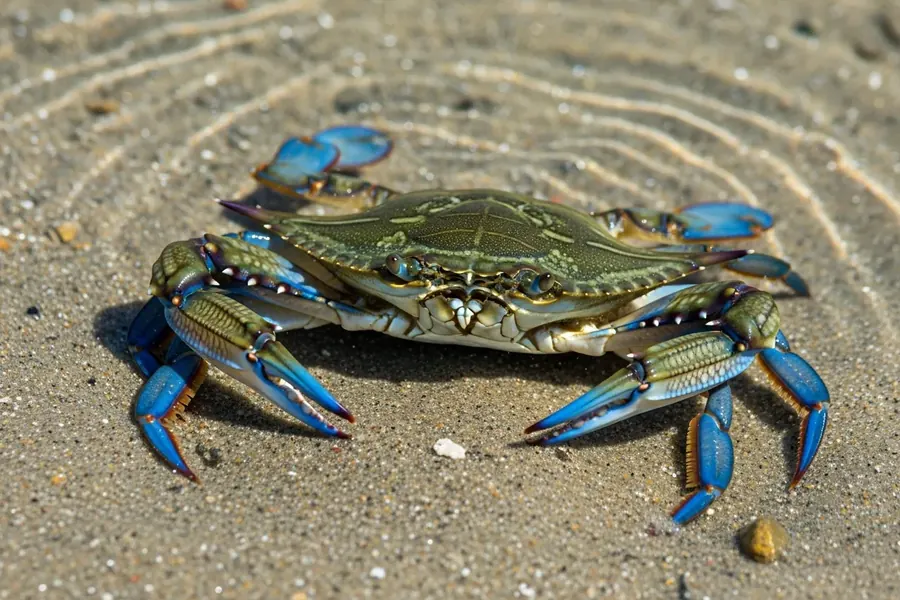
Crab — wide flat body, tiny tucked tail, walks sideways
Image: WARN wildlife library
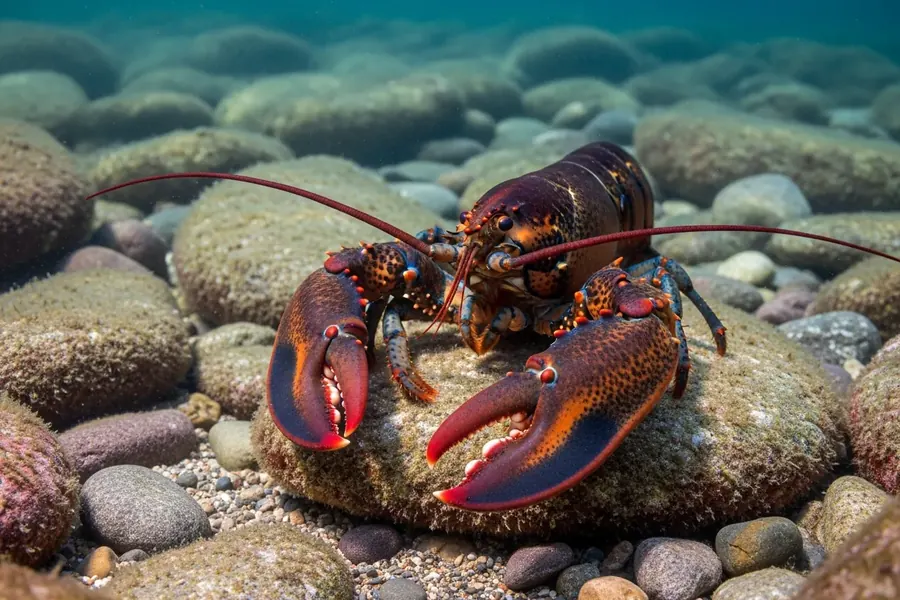
Lobster — long muscular tail, walks forwards
Image: WARN wildlife library
Crab vs Lobster: At a Glance
| Feature | Crab | Lobster |
|---|---|---|
| Group (infraorder) | True crabs — Brachyura | Clawed lobsters — Astacidea (e.g. Homarus) |
| Tail / abdomen | Short, reduced, folded flat under the body | Long, muscular, extended behind the body |
| Body shape | Wide, rounded, flattened shell | Longer, more cylindrical, front-heavy |
| Usual movement | Often walks sideways; some swim | Crawls forwards; flicks tail to dart backwards |
| Claws | One pair, often equal-sized | One pair of large, usually unequal claws (crusher + cutter) |
| Number of species | ~7,000 true crab species | Far fewer; ~30–50 true lobster species |
| Typical size | Pea crab a few mm to spider crab ~3.7 m leg-span | American lobster commonly 20–61 cm (8–24 in) body |
| Record weight | Japanese spider crab up to ~19 kg (42 lb) | American lobster up to ~20.1 kg (44.4 lb) |
| Habitat | Marine, freshwater and land | Almost all marine, on the sea floor |
| Diet | Mostly omnivorous scavengers | Omnivorous: molluscs, echinoderms, worms, fish |
| Conservation (as a group) | Not threatened overall; a few species at risk | Not threatened overall; managed as a fishery |
Which is bigger & stronger?
The lobster is heavier and the crab is wider: the American lobster is the heaviest crustacean on record at up to about 20 kg (44 lb), while the Japanese spider crab has the greatest leg-span of any arthropod at up to roughly 3.7 m (12 ft) claw to claw, though it weighs less at up to about 19 kg (42 lb).
Crabs and lobsters are both decapod crustaceans, meaning ten-legged animals with a hard external skeleton, and they sit close together on the crustacean family tree. That shared ancestry is why they can look confusingly similar on a fishmonger's slab, both armoured, both clawed, both scuttling. The decisive split is the tail: lobsters belong to a long-tailed group and keep a large muscular abdomen extended behind them, while true crabs (the group Brachyura, roughly 7,000 species) have evolved a much-shortened tail folded flat beneath a broad shell. This guide sets out the differences people actually search for, using widely cited figures from museum and reference sources, so you can tell the two apart at a glance and understand how each lives, feeds and grows.
The tail is the giveaway
The single fastest way to tell them apart is the tail, properly called the abdomen. A lobster keeps a long, segmented, muscular tail stretched out behind its body — the part most people eat — and can flick it to shoot backwards through the water. A true crab has an abdomen so reduced it is folded flat and hidden underneath its broad shell, used mainly in reproduction rather than swimming. If the animal has an obvious 'tail' behind it, it is a lobster (or a lobster relative); if the back end is tucked away under a wide shell, it is a crab.
Body shape and how they move
Crabs have a wide, rounded, flattened shell (carapace) and legs angled so they move most efficiently sideways, giving them their famous 'crabwise' scuttle, though some walk forwards and others swim. Lobsters are longer and more cylindrical, front-heavy with their two large claws, and generally crawl forwards over the sea floor on their walking legs, reserving the backward tail-flick for escape. Both are decapods with five pairs of legs, but the crab's compact build and the lobster's elongated one are visible even before you look at the tail.
Claws, size and strength
Both carry a front pair of claws (chelae), but lobster claws are usually large and noticeably unequal — a heavy, blunt 'crusher' for breaking shells and a slimmer 'cutter' or 'ripper' for tearing — whereas many crabs have a more even, symmetrical pair. On raw scale, the two groups hold different records: the American lobster is the heaviest crustacean ever recorded at around 20 kg (44 lb), while the Japanese spider crab has the largest leg-span of any arthropod at up to roughly 3.7 m (12 ft) from claw to claw, even though it weighs a little less at up to about 19 kg (42 lb).
Range, habitat and diet
True crabs are extraordinarily varied, with around 7,000 species living in the sea, in fresh water and even on land, from millimetre-wide pea crabs to giant spider crabs. Lobsters are a much smaller group and almost entirely marine, living on the sea floor; the American lobster, for example, ranges from Labrador to North Carolina and is usually found from a few metres down to around 480 m (1,570 ft). Both are broadly omnivorous — crabs are mostly opportunistic scavengers, while lobsters take molluscs, echinoderms, worms and small fish — so their menus overlap even where their bodies differ.
Lifespan and conservation
Lobsters are famously long-lived for invertebrates; clawed lobsters can survive for many decades, with some estimates for large specimens running to 50 years or more, and they keep growing by moulting throughout life. Crab lifespans vary enormously by species, from a few years in small shore crabs to reportedly 60 years or more in some large species. Neither crabs nor lobsters are threatened as a whole group — most familiar species are common and, in the lobster's case, managed commercially — though a handful of individual crab species face localised pressure.
Did you know?
Several unrelated animals have independently evolved a crab-like body — a wide flat shell with the tail tucked underneath — from lobster-like ancestors. Biologists call this repeated trend 'carcinisation', and it is why some 'crabs', such as king crabs, are not true crabs at all but close cousins of hermit crabs.
Crab vs Lobster: FAQs
Which is bigger, a crab or a lobster?
Are crabs and lobsters the same animal?
How do you tell a crab and a lobster apart?
Can a crab beat a lobster in a fight?
Do both crabs and lobsters have claws?
Which lives longer, a crab or a lobster?
Is a hermit crab a true crab or a lobster?
These animals need us
Understanding wildlife is the first step to protecting it. WARN funds partner-led rescue and conservation where the need is greatest — your support keeps that work going.