Animal Comparison
Caiman vs Alligator
Caimans lack a bony nose septum and have a raised bony brow ridge; alligators have that septum and a smoother, broader snout. Compare size, range and lifespan.
By the WARN Research & Conservation TeamChecked against IUCN Red List & CITES sourcesLast updated
In brief — Caiman vs Alligator
Look for the bony brow ridge between the eyes: caimans have one, alligators do not.
The clearest way to tell a caiman from an alligator is the face: caimans have a raised bony ridge across the top of the snout between the eyes, giving a "spectacled" look, and lack a bony septum between the nostrils, while alligators have a smooth brow with no eye ridge and a bony nasal septum. Caimans (native to Central and South America) are also generally smaller than the American alligator (native to the south-eastern United States) and carry heavier bony armour on the belly.
See the difference
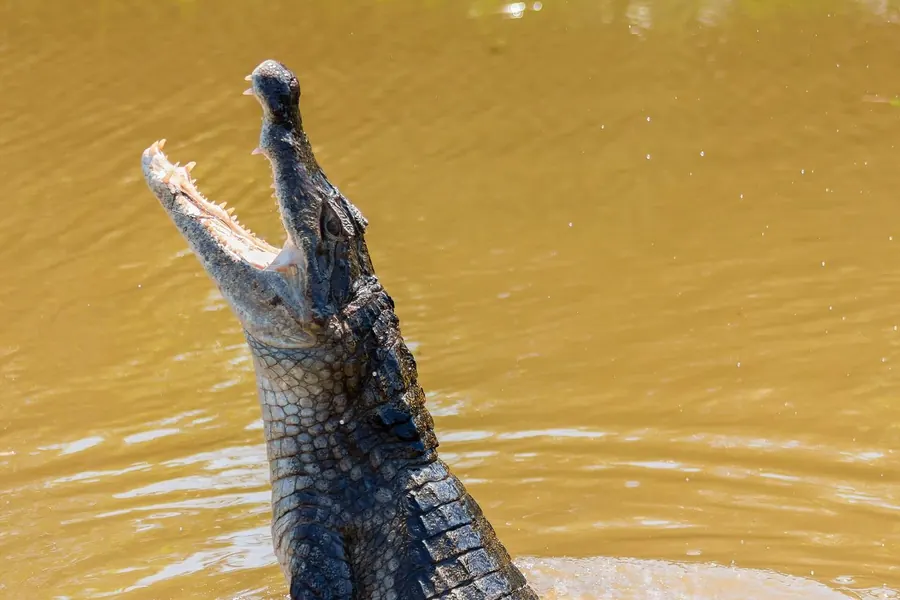
Caiman — bony ridge between the eyes, smaller
Photo: Fernando Flores / Wikimedia Commons (CC BY-SA 2.0)
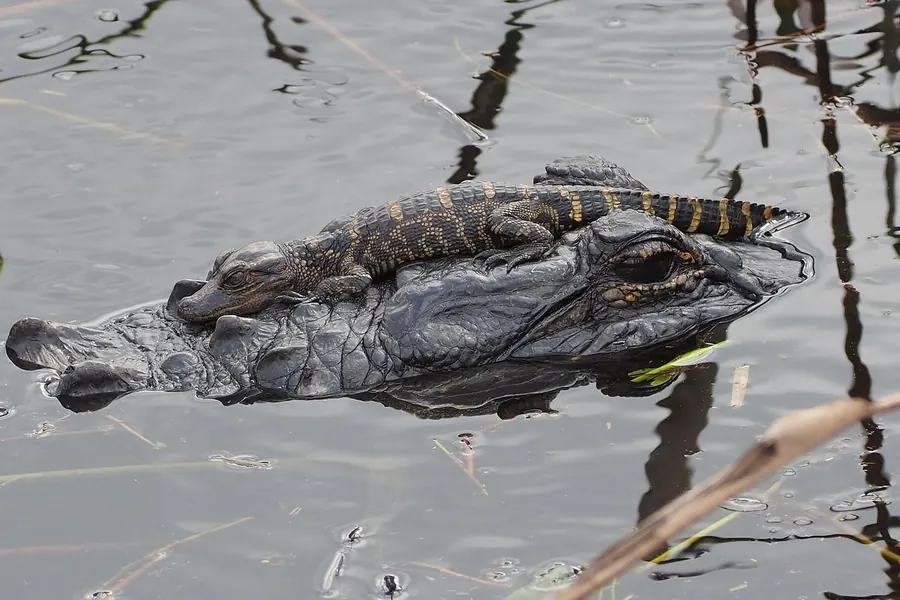
Alligator — no eye-ridge, broader and larger
Source: Wikimedia Commons
Caiman vs Alligator: At a Glance
| Feature | Caiman | Alligator |
|---|---|---|
| Scientific name | Caiman crocodilus (spectacled caiman) | Alligator mississippiensis |
| Bony septum between nostrils | Absent | Present |
| Eye ridge | Raised bony ridge ("spectacled") | No ridge; smooth brow |
| Typical adult length | 1.4-2.5 m (4.6-8.2 ft) | 2.6-4.8 m (8.5-15.7 ft) |
| Typical adult weight | 7-40 kg (15-88 lb) | Up to 450 kg (1,000 lb) |
| Ventral armour | Heavy bony osteoderms on belly | Fewer belly osteoderms |
| Native range | Central & South America | South-eastern United States |
| Lifespan in the wild | 20-40 years | 35-50 years |
| IUCN Red List status | Least Concern | Least Concern |
Which is bigger & stronger?
The alligator is usually bigger, with the American alligator reaching about 4 m and 300-450 kg versus roughly 2-2.5 m and 40 kg for a common spectacled caiman, though the exceptional black caiman (up to 5-6 m) outsizes it.
Caimans and alligators are close cousins within the family Alligatoridae, and both are often confused with crocodiles. Caimans (subfamily Caimaninae) are a group of six species native to Central and South America, of which the spectacled caiman (Caiman crocodilus) is the most widespread and commonly encountered. Alligators (subfamily Alligatorinae) include just two living species, the American alligator (Alligator mississippiensis) and the Chinese alligator, with the American alligator the one most people mean by the name. Despite sharing the broad, rounded snout that separates both groups from crocodiles, caimans and alligators differ in facial bone structure, typical size, skin armour and native range.
Facial bone structure
The fastest way to separate the two is a close look at the face. Caimans have a raised bony ridge running across the snout in front of the eyes, giving them a distinctive "spectacled" appearance (most visible in the spectacled caiman, which takes its name from this feature), and they lack a bony septum, or dividing wall of bone, between the nostrils. The American alligator has the opposite arrangement: a smooth, unridged brow and a bony nasal septum separating the nostrils. Both features are visible from a good photograph and do not depend on size or age.
Size
Alligators are, on average, the larger animal. Adult American alligators typically reach 2.6-4.8 m (8.5-15.7 ft) and can weigh up to 450 kg (1,000 lb) in exceptional males. Most caiman species are smaller: the widespread spectacled caiman grows to only 1.4-2.5 m (4.6-8.2 ft) and 7-40 kg (15-88 lb). The main exception is the black caiman (Melanosuchus niger) of the Amazon basin, which rivals the American alligator in length and can exceed 4 m (13 ft).
Skin armour and teeth
Caimans carry heavier bony plates, or osteoderms, on the belly and flanks, giving their hides a stiffer, more armoured feel; alligator bellies are comparatively smoother with fewer ventral osteoderms. Caiman teeth also tend to be narrower and sharper, and a lower tooth is often visible even with the mouth closed, whereas an alligator's upper jaw largely hides its lower teeth when its jaws are shut.
Range and habitat
Caimans are native to freshwater wetlands, rivers and swamps of Central and South America, from southern Mexico down to Peru, Brazil and Argentina. The American alligator is native only to the south-eastern United States, concentrated in Florida and Louisiana, where it inhabits freshwater rivers, lakes, swamps and marshes and occasionally brackish water. Spectacled caimans have also become established as an invasive species in parts of South Florida since the late 1970s, so wild caimans and alligators now do overlap there.
Did you know?
The spectacled caiman gets its common name from the bony ridge between its eyes, which resembles a pair of spectacles or eyeglasses.
Caiman vs Alligator: FAQs
How can you tell a caiman from an alligator?
Is a caiman just a small alligator?
Which is more dangerous, a caiman or an alligator?
Are caimans and alligators the same species?
Do caimans and alligators live in the same place?
Are caimans or alligators endangered?
These animals need us
Understanding wildlife is the first step to protecting it. WARN funds partner-led rescue and conservation where the need is greatest — your support keeps that work going.