Animal Comparison
African elephant vs Asian elephant
The biggest difference: African elephants have huge, Africa-shaped ears and two trunk "fingers"; Asian elephants have smaller, rounded ears and one.
By the WARN Research & Conservation TeamChecked against IUCN Red List & CITES sourcesLast updated
In brief — African elephant vs Asian elephant
Big ears, two trunk fingers, tusked males and females: African. Small round ears, one trunk finger, a twin-domed head: Asian.
The single clearest way to tell them apart is ear size and shape: African elephants (Loxodonta africana and L. cyclotis) have very large, jagged ears shaped roughly like the African continent, while Asian elephants (Elephas maximus) have smaller, more rounded ears. African elephants are also larger overall, have a concave (dipped) back, two finger-like lips at the trunk tip, and both sexes can grow tusks, whereas in Asian elephants only some males do.
See the difference
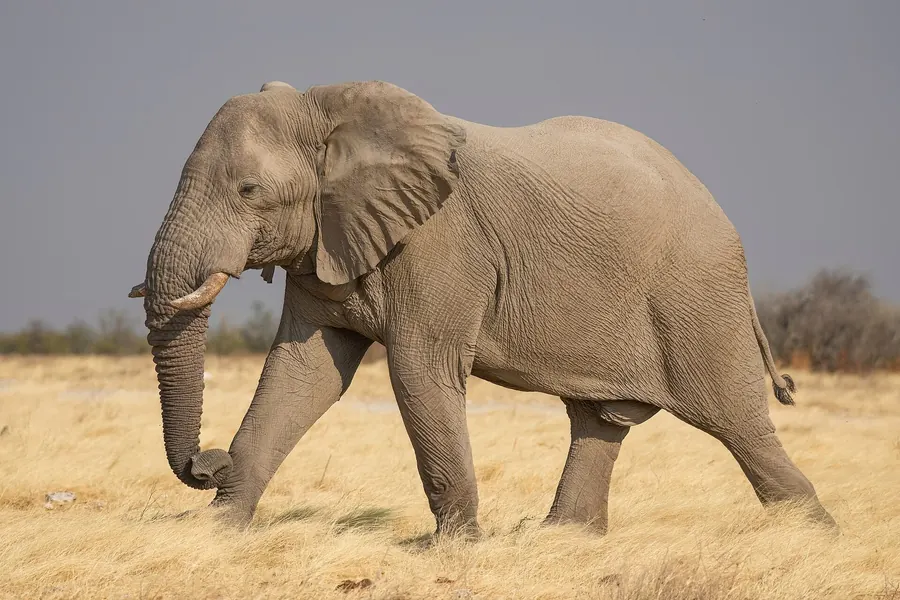
African elephant — huge ears over the shoulders, dipped back
Photo: Giles Laurent / Wikimedia Commons (CC BY-SA 4.0)
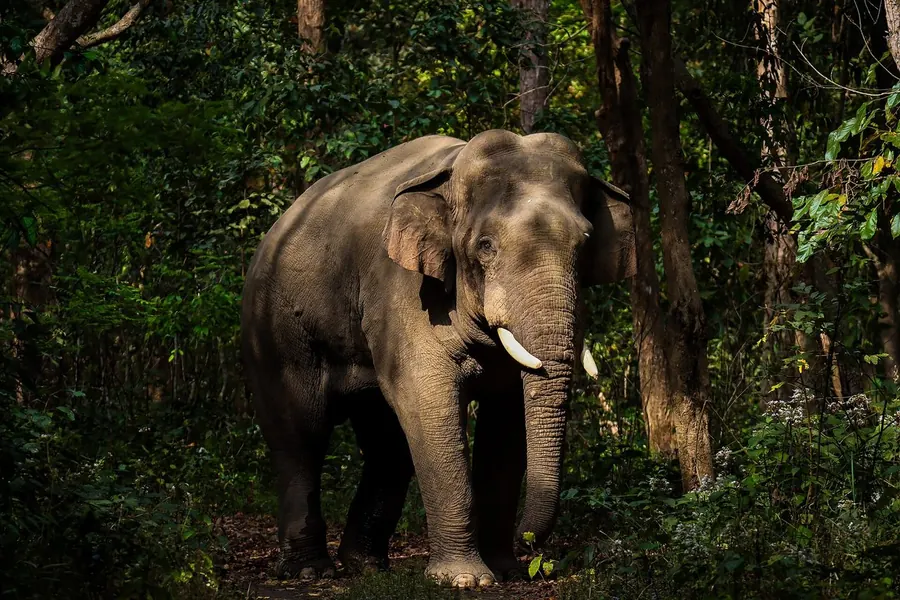
Asian elephant — small ears, twin-domed head, arched back
Photo: Shadow Ayush / Wikimedia Commons (CC BY-SA 4.0)
African elephant vs Asian elephant: At a Glance
| Feature | African elephant | Asian elephant |
|---|---|---|
| Scientific name | Loxodonta africana (bush) / L. cyclotis (forest) | Elephas maximus |
| Ear shape | Large, jagged, shaped like Africa | Smaller, rounded |
| Shoulder height (bulls) | Up to 3.2-4 m (10.5-13 ft) | 2.4-3 m (8-10 ft) |
| Body mass (bulls) | Up to 6-7 t (avg), largest recorded ~10 t | Up to 5-6 t |
| Tusks | Both sexes usually grow tusks | Only some males; females rarely, tushes only |
| Trunk tip | Two finger-like projections | One finger-like projection |
| Back profile | Concave (dips in the middle) | Convex or level, highest at the shoulder |
| Range | Sub-Saharan Africa (savanna and rainforest) | South and Southeast Asia |
| IUCN status | Endangered (bush) / Critically Endangered (forest) | Endangered |
Which is bigger & stronger?
The African (savanna) elephant is the larger and stronger, with bulls averaging about 5-6 tonnes and standing 3-4 m at the shoulder, against roughly 4-5 tonnes and up to 3.5 m for the Asian elephant.
The African elephant and Asian elephant are the two surviving lineages of the elephant family, separated by roughly 7.6 million years of evolution and now confined to different continents. African elephants (genus Loxodonta, comprising the African bush elephant and the smaller African forest elephant) range across sub-Saharan Africa, while the Asian elephant (Elephas maximus) is found in fragmented forest and grassland habitats from India through Southeast Asia. Though both are highly intelligent, socially complex megaherbivores built around a family matriarch, they differ markedly in size, ear shape, tusk presence, skin texture, trunk anatomy and skull profile. All three species are threatened, chiefly by poaching, habitat loss and human-wildlife conflict, and understanding these differences matters for conservation, since each faces distinct pressures across very different ranges.
Ears, tusks and trunk anatomy
The fastest way to identify either elephant is the ears: African elephants carry large, deeply notched ears roughly shaped like the African continent, used to radiate excess body heat, while Asian elephants have noticeably smaller, more rounded ears. Tusks follow a similar split — in African elephants both males and females typically grow visible tusks, whereas in Asian elephants only a proportion of males develop true tusks (others, called makhnas, remain tuskless), and females at most grow small tushes that rarely show past the lip. The trunk tip differs too: African elephants have two opposing finger-like lips for delicate grasping, while Asian elephants have only one, so they often wrap the whole trunk tip around an object instead of pinching it.
Size and body shape
African elephants are the larger of the two, and the African bush elephant is the largest living land animal: bulls typically stand 3-3.4 m (10-11 ft) at the shoulder and weigh 5.2-6.9 tonnes, with exceptional individuals far heavier. Asian elephant bulls are smaller, usually 2.4-3 m (8-10 ft) tall and 3.5-6 tonnes. Body shape also differs: African elephants have a back that dips in the middle (concave), a more rounded head, and a single dome at the top of the skull, while Asian elephants have a back that is level or highest at the shoulder (convex), a twin-domed head with a visible central dip, and up to four bumps on the forehead.
Range, habitat and social structure
African elephants are spread across savanna, woodland and rainforest habitats throughout sub-Saharan Africa, from Kenya's grasslands to the dense forests of Central Africa. Asian elephants occupy a much smaller and more fragmented range across the Indian subcontinent and Southeast Asia, from India and Sri Lanka to Sumatra, in tropical forest, grassland and scrub. Both species live in tight matriarchal family herds led by the oldest female, with males leaving to live more solitary or bachelor-group lives at maturity, but Asian elephant herds are typically somewhat smaller than African bush elephant herds.
Conservation status and threats
All elephants face serious pressure, but the details vary. Since a landmark 2021 IUCN reassessment split the African genus into two species, the African bush elephant is listed as Endangered and the African forest elephant as Critically Endangered, both driven mainly by ivory poaching and habitat loss. The Asian elephant has been listed as Endangered since 1986, with only an estimated 30,000-50,000 remaining across a range now reduced to about 5% of its historical extent, primarily due to habitat fragmentation and conflict with expanding human settlements.
Did you know?
An elephant's trunk contains no bones or joints yet packs an estimated 40,000-plus muscles, giving African elephants' two-fingered tip enough dexterity to pluck a single blade of grass while still being strong enough to uproot a tree.
African elephant vs Asian elephant: FAQs
Which is bigger, an African or Asian elephant?
Do both African and Asian elephants have tusks?
Can African and Asian elephants interbreed?
How can you tell an African elephant from an Asian elephant by its ears?
Are African or Asian elephants more endangered?
How many trunk 'fingers' do African and Asian elephants have?
These animals need us
Understanding wildlife is the first step to protecting it. WARN funds partner-led rescue and conservation where the need is greatest — your support keeps that work going.