Geo-programme · East Kalimantan, Indonesia
Orangutan Rehabilitation & Release in East Kalimantan
Funding the journey from illegal pet-trade confiscation back to protected lowland forest — through partner-led rescue, forest school and release.
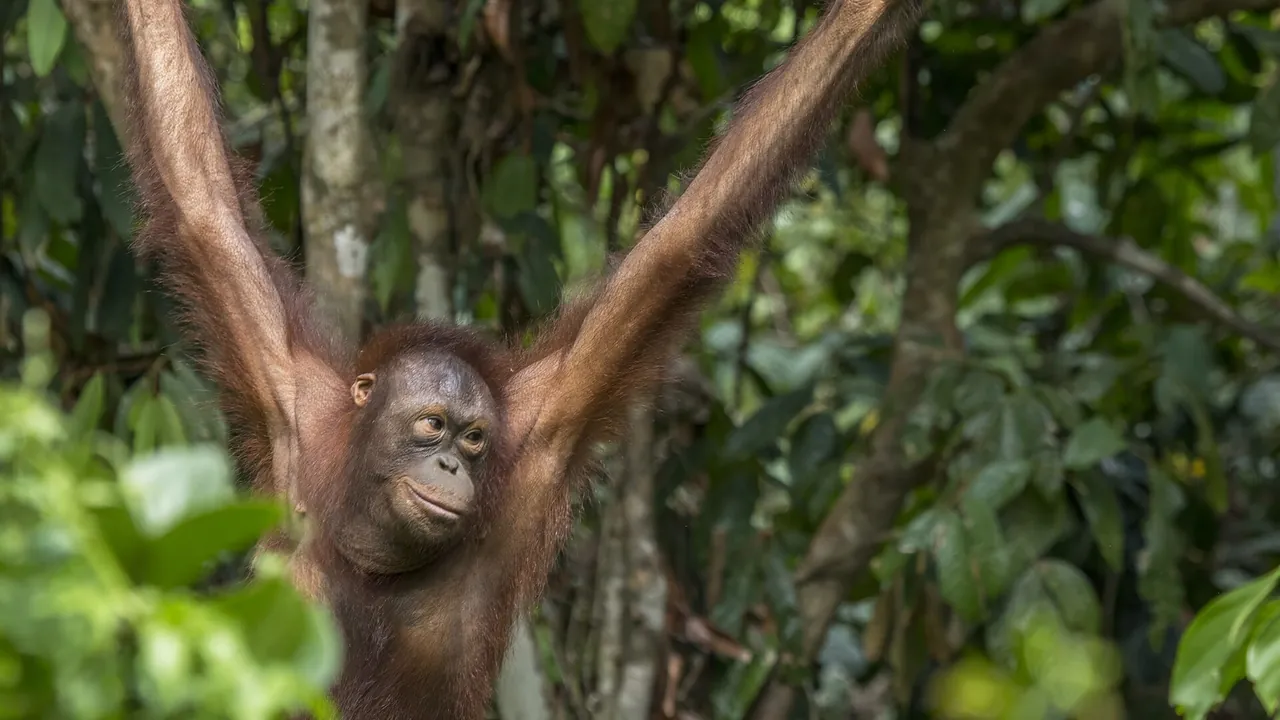
In brief
East Kalimantan is a frontline for Bornean orangutan rescue — confiscation from the illegal pet trade, years of forest-school rehabilitation, and release into protected lowland forest such as Gunung Batu Mesangat. WARN funds partner-led rehabilitation and release programmes in Indonesia through grants, not WARN-run centres.
Programme at a glance
- Species
- Bornean orangutan (Pongo pygmaeus)
- IUCN status
- Critically Endangered
- Programme area
- East Kutai Regency, East Kalimantan, Indonesia
- Operational focus
- Confiscation-to-sanctuary rehabilitation and wild release
- WARN funding model
- Partner grants — target at least 80% programme delivery
From Confiscation to the Wild
In June 2026, three rehabilitated Bornean orangutans — Bagus, Eboni and Ruby — were released into the Gunung Batu Mesangat protected forest in East Kutai regency, East Kalimantan, after years in forest-school rehabilitation following rescue from the illegal pet trade. That release was coordinated by Indonesian authorities and conservation partners; it shows what the confiscation-to-sanctuary pipeline can achieve when funding holds steady.
WARN does not run its own orangutan centres. It funds vetted in-country partners delivering rescue, veterinary triage, forest school and release support — the operational work that turns a confiscated infant into a wild animal again. Read the full sourced timeline in our East Kalimantan field briefing.
Confiscation & quarantine
Infants and juveniles seized from the illegal pet trade arrive malnourished and without wild survival skills. Partner vets run health checks, treat trauma and begin quarantine before any forest contact.
confiscation-to-sanctuary pipeline
Forest school & foraging training
Over several years, rehabilitated orangutans relearn nest-building, canopy travel and identification of hundreds of wild foods — skills a mother would have taught. This is the longest, most expensive phase.
foraging training · nest-building rehabilitation
Pre-release assessment
Before release, each individual must pass veterinary clearance and prove it can cope with seasonal food shortages — often on cage-free pre-release islands for a full wet and dry season.
soft-release readiness
Deep-forest release & monitoring
Transport to gazetted protected forest — such as Gunung Batu Mesangat in East Kutai — is followed by post-release ranger monitoring to confirm animals are thriving, not returning to plantations.
wild release · post-release monitoring
Partnering with Local Conservation Authorities
Orangutan releases in East Kalimantan are not NGO-only operations. The June 2026 release was coordinated by East Kalimantan's Natural Resources Conservation Agency (BKSDA), working with the provincial forestry authority, a local forest-management unit and the conservation partners who ran rehabilitation.
WARN's role is transparent international fundraising for partner programmes that align with that authority-led model — grants for veterinary capacity, forest-school staffing, transport and post-release monitoring, not parallel WARN-branded infrastructure.
The Crisis Facing Pongo pygmaeus
Three pressures drive orangutan decline in Kalimantan — and define what rehabilitation must overcome.
-
Palm oil & habitat fragmentation
Lowland dipterocarp and peat-swamp forest in Kalimantan has been cleared for plantations and mining, leaving fewer connected areas with year-round food for orangutans.
-
Illegal pet trade
Infants are poached for the pet market after their mothers are killed. Every orphan represents multiple wild deaths and years of rehabilitation before release is possible.
-
Human–wildlife conflict
Orangutans stranded inside active concessions or near villages face shooting, capture or starvation when forest fragments cannot support them.
Deeper species context: orangutan wildlife guide · why orangutans are endangered
Fund the Next Rescue
Gifts fund partner-led orangutan programmes in Indonesia — quarantine, forest school and release logistics. Checkout attributes your gift to the Borneo orangutan appeal.
£25
Veterinary triage
Helps fund initial health assessment and treatment for a confiscated infant at partner intake.
£50
Forest-school week
Covers roughly one week of specialised diet and foraging enrichment during rehabilitation.
£100
Release logistics
Contributes to transport, veterinary clearance and monitoring for a protected-forest release.
Secure checkout · Certificate emailed within 4 hours of payment.
WARN is a registered global not-for-profit animal welfare organisation, not a charity, so it cannot claim Gift Aid. The donation case is transparency: low fixed costs and partner-led delivery in the countries where orangutans actually live.