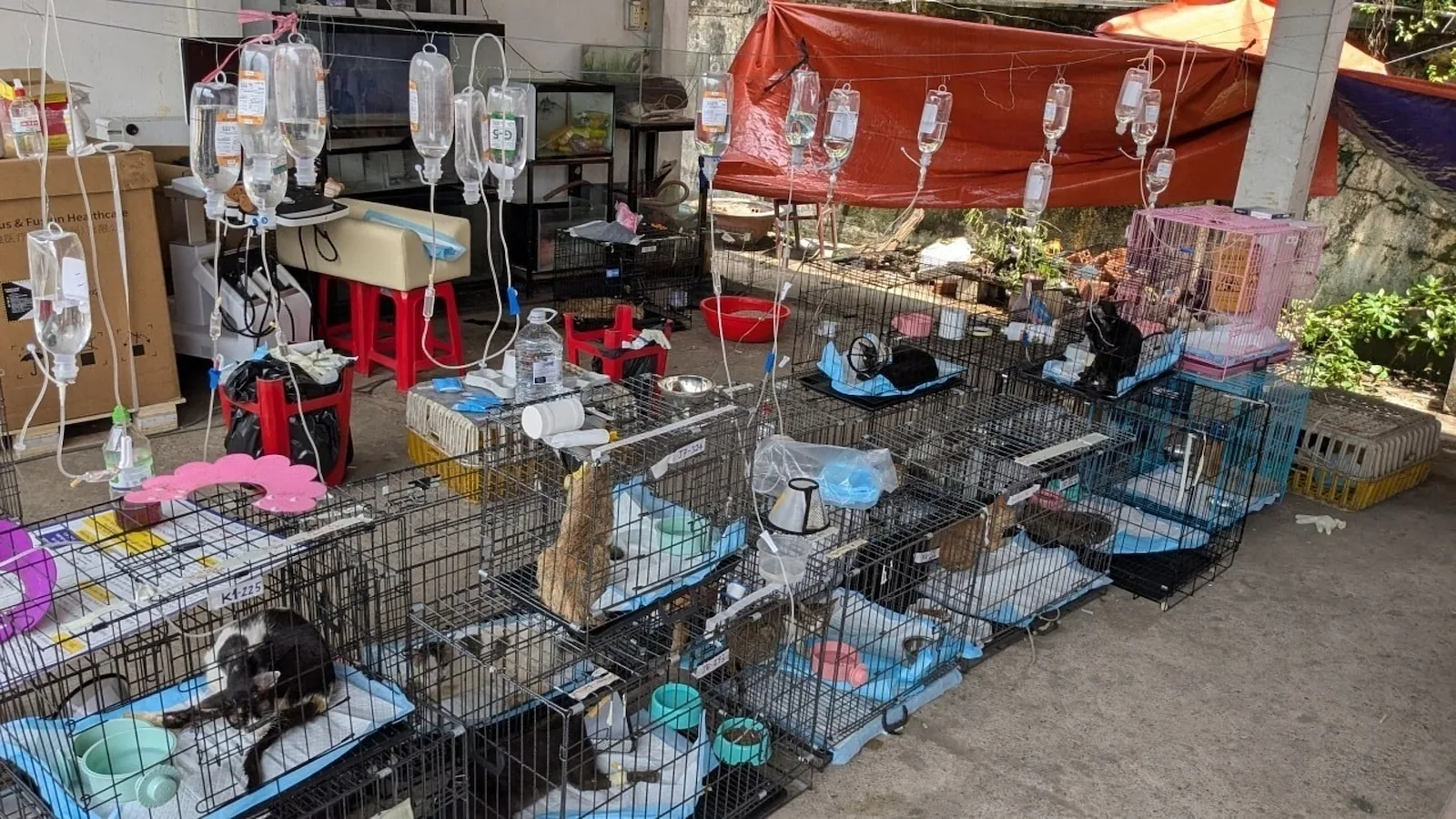
Trade ban appeal · Vietnam · Cambodia · Indonesia · Malaysia
How to Help End the Dog and Cat Meat Trade
Vietnam alone kills about a million cats for meat each year — many stolen pets. Help fund partner-led rescue and advocacy across Southeast Asia.
- Give on this page — one-off or monthly, card, Apple Pay or Google Pay
- Vietnam, Cambodia, Indonesia and Malaysia are the funded geography
- You do not get a named dog or cat
- This is rescue and advocacy, not a confirmed unit cost for one surgery
Give now
Trade ban appeal · Vietnam · Cambodia · Indonesia · Malaysia · one-off or monthly
How often
Choose an amount
Supports the rescue-to-sanctuary journey for a trafficked animal.
Where should it go?
Secure payment · You'll be directed to a secure checkout.
Secure donation · accepted methods
256-bit SSL encryption · PCI-DSS compliant · Powered by Stripe — WARN never stores your card details.
In brief
Give on this page to help end the dog and cat meat trade. Your gift funds partner-led rescue, safe-house capacity and legal advocacy across Vietnam, Cambodia, Indonesia and Malaysia. An estimated ten million dogs and cats are killed for meat in the region each year — many of them stolen pets. You do not get a named dog or cat. Cancel a monthly gift any time.
By the WARN Research & Conservation TeamChecked against IUCN Red List & CITES sourcesLast updated
~1M
Cats killed in Vietnam each year
~5M
Dogs killed in Vietnam each year
~10M
Dogs and cats across the region
4
Countries in WARN’s focus
Figures: open-source welfare investigations (2020); WHO rabies data. See sources below.
Who should skip this
This is not the right page if you want
- Rehoming a dog or cat from the trade into a UK home this week — contact a local registered rescue for that.
- A named kennel dog or cattery cat with photo updates. WARN does not offer that. Symbolic wording is adopt a dog and adopt a cat.
- Karachi street-dog CNVR. That is Karachi street-dog appeal — a different programme, not this trade appeal.
- Gift Aid or a UK charity receipt — that is registration status, not this page.
- Posting food, cages or medicines from Britain unless a partner has asked in writing.
- Funding a meat-trade business, a cull, or a named surgery invoice. This page helps fund rescue and advocacy, not a unit cost.
How to help end the dog and cat meat trade
Give on this page. This URL funds partner-led rescue, safe-house capacity and legal advocacy against the dog and cat meat trade in Vietnam, Cambodia, Indonesia and Malaysia, not a named pet and not UK rehoming. Read the regional split, skip the parcels, then pay by card, Apple Pay or Google Pay.
- 1
Confirm you want trade-rescue fieldwork, not a UK pet
Stay here for partner grants across Vietnam, Cambodia, Indonesia and Malaysia. If you wanted a UK dog or cat, stop and call a local registered rescue. Street dogs in Karachi are Karachi street-dog appeal. Monthly sponsorship wording is sponsor a dog and sponsor a cat.
- 2
Give on this page
Choose one-off or monthly, pick an amount, pay by card, Apple Pay or Google Pay. Stripe emails a receipt. Entry-tier gifts pool across the programme — they are not a named-animal invoice.
- 3
Or give monthly if partners need a calendar
Monthly is what lets partners keep safe-house beds and interception teams on a calendar. Symbolic adoption wording is adopt a dog and adopt a cat. Unrestricted monthly without this appeal is monthly giving.
- 4
Skip parcels unless a partner asked
Do not post food, blankets or equipment from Britain unless a partner asked in writing. Money buys supplies where the animals live. That is faster than a parcel. Trade briefings: newsroom briefing and newsroom briefing.
Why does the dog and cat meat trade need ending?
An estimated ten million dogs and cats are killed for meat each year across Vietnam, Cambodia and Indonesia — many of them stolen pets, not strays. Vietnam is the scale centre: roughly five million dogs and about one million cats a year — the largest documented cat-meat trade in the region. Cambodia is a major dog-meat market. The trade is not subsistence; it is an organised commercial industry that profits from theft, extreme animal suffering and weak enforcement.
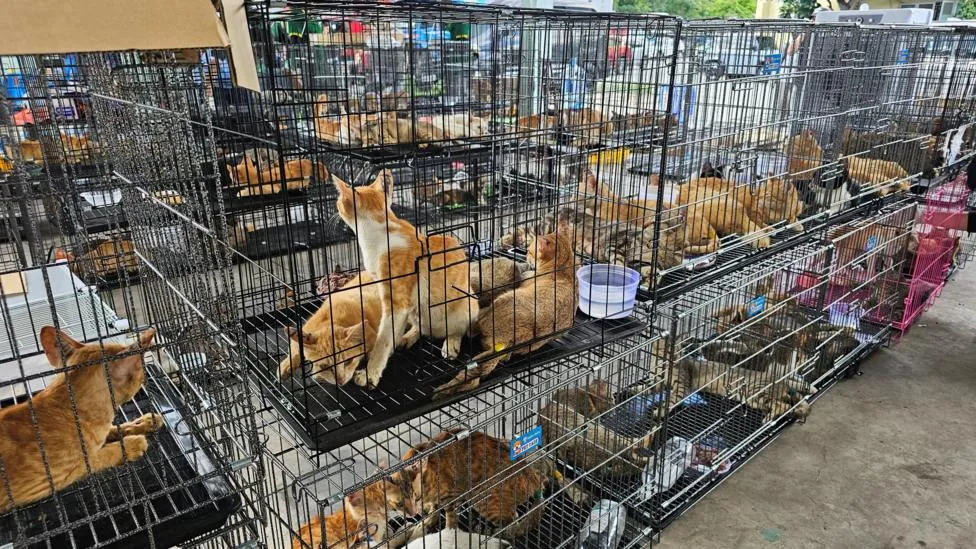
Animals are transported in inhumane conditions — crammed into wire cages, often without food or water for 18 hours or more — and killed in ways that fall far below any accepted humane-slaughter standard. The trade also poses serious public health risks: unvaccinated animals mixed at live markets are a recognised route for rabies and other zoonoses.
WARN funds vetted local partners across Vietnam, Cambodia, Indonesia and Malaysia — rescue operations, safe-house capacity and legal advocacy, with Vietnam’s cat-meat trade a primary rescue pressure point. Read the regional trade briefing and the Vietnam cat meat trade explainer.
What does the trade look like?
Five realities define the dog and cat meat trade. They overlap — stolen pets feed transport networks, and transport networks amplify disease risk.
Theft from families
Demand outstrips the stray supply in many areas, so collectors sweep pet dogs and cats from yards and village streets. Owners often watch their animals taken — the trade is organised crime, not subsistence.
Field investigations document stolen pets as a major supply source
Transport cruelty
Animals are crammed into wire cages on trucks and motorbikes, often without food or water for journeys of 18 hours or more — sometimes across national borders.
Documented transport conditions in open-source welfare investigations (2020)
Inhumane slaughter
Documented methods include drowning, hanging, beating and blowtorching — far below any accepted humane-slaughter standard and causing extreme suffering.
Practices documented in multi-country welfare investigations
Rabies and zoonotic risk
Unvaccinated dogs and cats of unknown origin are mixed at high density in live markets and backyard slaughter points — a recognised route for rabies and novel zoonoses.
WHO: dog-mediated transmission dominates human rabies worldwide
Weak or inconsistent law
Laws vary by country, province and city. Some municipalities have banned or committed to phase out the trade, but national enforcement remains patchy — and traffickers exploit the gaps.
Hanoi, Hoi An and Siem Reap among cities moving to end the trade
Where does the trade operate?
| Region / country | Scale (est.) | Legal status (overview) | WARN scope |
|---|---|---|---|
| Vietnam | ~5M dogs and ~1M cats/year — largest cat-meat trade | No national ban; some cities phasing out | WARN in-network — primary cat-meat and rescue focus |
| Cambodia | ~3M dogs/year; Phnom Penh hotspot | Partial city commitments; weak national law | WARN in-network |
| Indonesia | Share of ~10M regional total | Growing advocacy pressure; enforcement inconsistent | WARN in-network |
| Malaysia | Smaller documented trade | Legal pressure increasing; enforcement gaps remain | WARN in-network |
| China and Korea | Separate national trades | Varies by province and city | Educational context only |
Scale estimates: open-source welfare investigations (2020). WARN operational scope for this appeal: Vietnam, Cambodia, Indonesia and Malaysia. Country pages: Vietnam, Cambodia, Indonesia and Malaysia.
Dogs versus cats in the trade
| Factor | Dogs | Cats |
|---|---|---|
| Estimated regional share (VN/KH/ID) | Majority of ~10M total | Roughly one million/year in Vietnam alone |
| Typical source | Stolen pets and strays | Stolen pets and community cats |
| Transport | Wire cages on trucks; long journeys | Often smaller cages; same route networks |
| Public health risk | Rabies amplification in live markets | Same zoonotic concerns at slaughter points |
| Rescue need | Quarantine, vaccination, behaviour support | Quarantine, FIV/FeLV testing, socialisation |
| Reform trend | Urban youth turning away; city bans spreading | Cat-meat trade less visible but growing concern |
Quick facts about the trade
| Stolen pets | Many animals are owned companions taken from yards — not strays |
|---|---|
| Transport | Documented journeys of 18+ hours without food or water |
| Rabies link | WHO: dogs cause >99% of human rabies; trade routes undermine control |
| WARN focus | Vietnam, Cambodia, Indonesia and Malaysia — rescue, safe-houses and legal advocacy |
| Reform momentum | Cities including Hanoi, Hoi An and Siem Reap have moved to end the trade locally |
| Attitudes shifting | 2020 Hanoi survey: 44% of respondents said they would refuse dog meat in future |
What does WARN fund?
WARN funds partner-led work across Vietnam, Cambodia, Indonesia and Malaysia — interception, safe-houses and the legal advocacy that turns seizures into lasting reform.
Rescue and interception
Funding partner operations with local authorities — including Vietnam cat-meat seizures — to intercept transport and confiscate animals before slaughter.
Safe-house capacity
Secure holding for rescued dogs and cats — quarantine, vaccination and behaviour support before rehoming, with Vietnam’s high cat-trade volume a core capacity need.
Legal advocacy
Supporting lawyers and NGOs across Vietnam, Cambodia, Indonesia and Malaysia pushing for formal trade bans and stronger enforcement.
Community behaviour change
Education and demand-reduction work so reform comes from affected communities, not outside pressure alone.
What a gift provides
Choose an amount on this page. These are contribution claims — they help fund the work named below. They are not a named-animal invoice.
| Gift | What it funds |
|---|---|
| £25 | Helps fund rescue, wound care and food for dogs and cats seized from the trade. |
| £75 | Helps fund safe-house capacity — quarantine, veterinary care and holding for confiscated animals. |
| £200 | Helps fund partner interception and legal advocacy so seizures can become lasting reform. |
How does my donation reach dogs and cats in the trade?
You give on this page. WARN holds the gift for this appeal and grants it to a vetted partner in Vietnam, Cambodia, Indonesia or Malaysia. They run interception, safe-houses and legal advocacy where the trade is active.
Buying locally is faster, and it is kinder. WARN's target is for at least 80% of unrestricted donations to fund programme delivery — grants to partner shelters, sanctuary capacity, veterinary care and rescue across the network. That 80% figure is a target, not an audited result. The spend path is at where your money goes.
Card gifts are processed straight away. Monthly income is what lets a partner plan the next clinic, patrol or intake before the last one ends. A one-off gift still matters — use the toggle on the form.
Related programmes
The form above is enough to give. These pages are the matching guides, country context and sibling appeals.
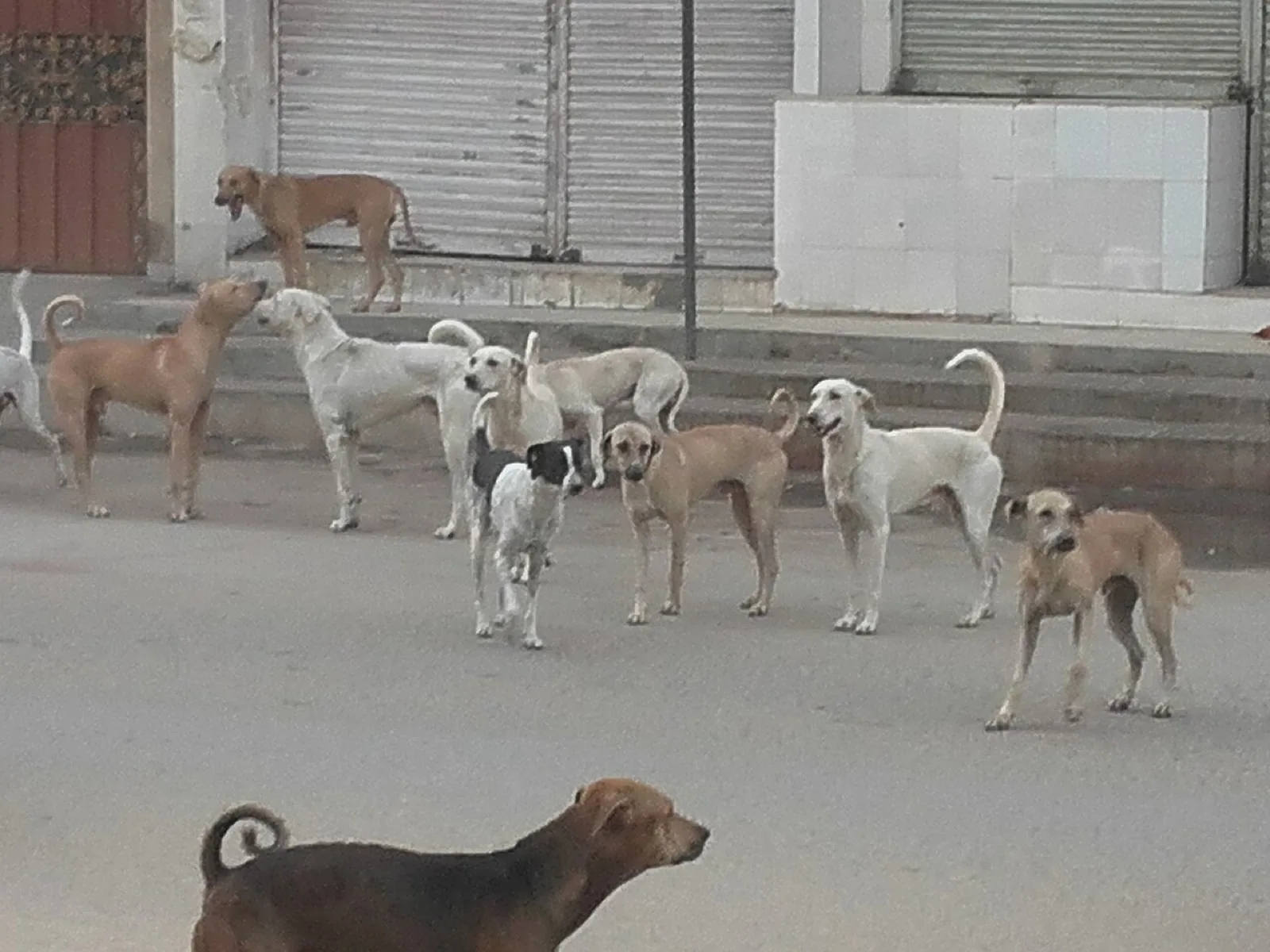
Karachi Street Dogs
Catch-Neuter-Vaccinate-Return for street dogs in Karachi — a different programme, not this trade appeal.
Open this page
How to sponsor a cat
Monthly gifts for community cat TNVR and meat-trade quarantine abroad — not a named cattery cat.
Open this page
How to sponsor a dog
Monthly CNVR from £5 — the complete dog guide, with checkout on the page.
Open this page
Animal rescue in Vietnam
Vietnam is the scale centre for the documented cat-meat trade — country context for this appeal.
Open this pageAlso: Adopt a cat · Adopt a dog · Cambodia · Indonesia · Malaysia · Regional trade briefing · Vietnam cat meat trade · 400 stolen cats rescued · All appeals
Give on this page
Dog and cat meat trade: frequently asked questions
Is the dog and cat meat trade legal?
How many dogs and cats are killed for meat each year?
Why focus on Vietnam for cats?
Are the animals in the trade stolen pets?
How does WARN help end the dog and cat meat trade?
Why is the trade a public health concern?
Where does WARN's dog and cat meat work happen?
What happens to rescued dogs and cats?
Is the trade ending anywhere?
How do I donate to help dogs and cats in the meat trade?
How can I help dogs and cats in the meat trade from the UK?
Can I give monthly to help dogs and cats in the meat trade?
How does my donation reach dogs and cats in the meat trade?
Is this Gift Aid eligible or US tax-deductible?
Should I post parcels or supplies from the UK?
Ready to help end the dog and cat meat trade?
Give on this page. Every gift funds partner-led rescue and advocacy — not a named pet, and not a parcel from Britain.
Donate to end the trade